

Why Is India Afraid of Pakistani Dramas on Netflix?
From 1980s VHS tapes to Netflix's global streaming era, Pakistani dramas have captivated audiences across South Asia. India's recurring calls for cultural boycotts expose the ideological insecurity...
In May 1988, India Today published a revealing report titled “Pakistan TV-serials invade Indian homes.” Long before satellite television, YouTube or Netflix, Pakistani dramas had captivated Indian audiences through videocassettes, rivalling Bollywood blockbusters. From Delhi to Bombay, demand for Pakistani serials challenged Hindi cinema’s commercial dominance. Decades later, the launch of Zee Zindagi in 2014 reaffirmed this cultural affinity. However, under Narendra Modi’s Bharatiya Janata Party (BJP), cultural engagement with Pakistan has increasingly become entangled in Hindutva-oriented nationalism, political censorship and nationality-based exclusion.
Genesis of a Shared Artistic Heritage
The foundations of South Asian cinema predate Partition in 1947. Muslim actors, singers, composers, filmmakers and writers played a foundational role in shaping the subcontinent’s artistic identity.
Following Partition, prominent Muslim artists, including Noor Jahan, Saadat Hasan Manto and Khurshid Anwar, migrated to Pakistan, strengthening its emerging creative industry. Others, including Dilip Kumar, Mohammed Rafi, Naushad, Sahir Ludhianvi and Majrooh Sultanpuri, remained in or settled in India, continuing to shape Bollywood’s artistic foundations.
Over subsequent decades, Bollywood became increasingly commercialized through advertising, product placements, celebrity endorsements and corporate interests. Pakistan, particularly through Pakistan Television (PTV), cultivated a distinctive tradition of literary excellence, cultural authenticity, moral consciousness and socially grounded storytelling.
Decades of Pakistani Cultural Influence
Since the 1970s, Pakistani classics such as Waris, Ankahi, Andhera Ujala, Tanhaiyaan, Dhoop Kinare and Alpha Bravo Charlie have captivated Indian audiences. Modern productions, including Humsafar and Zindagi Gulzar Hai, further strengthened Pakistan’s cross-border cultural influence.
Indian personalities, including Amitabh Bachchan, Shabana Azmi, Gulzar, Nawazuddin Siddiqui and R. Madhavan, have expressed appreciation for Pakistani artistic talent. Coke Studio Pakistan attracted substantial Indian listenership, while Rahat Fateh Ali Khan and Atif Aslam became prominent voices in Bollywood playback music.
Javed Sheikh’s Bollywood career, Mahira Khan’s performance in Raees and Hania Aamir’s cross-border popularity demonstrate enduring demand for Pakistani talent despite political hostility.
Hindutva and the Politicisation of Bollywood
Since Modi assumed power in 2014, critics have increasingly questioned Hindutva-oriented nationalism’s influence on Indian cinema. Certain productions have attracted criticism for anti-Pakistan propaganda, stereotypical Muslim representation, selective historical narratives and religious polarisation.
The instrumentalisation of entertainment for ideological purposes risks replacing artistic substance with politically convenient narratives.
Bollywood’s traditional popularity in Pakistan has suffered amid hostile cinematic portrayals, diplomatic tensions and reciprocal restrictions. An industry that once benefited from Pakistani audiences and artistic contributions now faces the consequences of deteriorating cultural relations.
Narrative Substance Versus Commercialization
Pakistani dramas distinguish themselves through emotional realism, Islamic ethical principles, moral responsibilities and societal values. Their narratives address women’s dignity, family relationships, social injustice, economic inequality, spirituality and generational conflicts.
In contrast to commercially prolonged Indian saas-bahu serials extending across hundreds of episodes, Pakistani dramas frequently deliver socially meaningful, conclusive narratives within approximately 20–35 episodes.
Productions such as Udaari, Alif, Parizaad and Zindagi Gulzar Hai demonstrate how literary depth and relatable characters can generate international recognition without extravagant production budgets. Indian audiences’ affinity for Pakistani storytelling reflects shared societal experiences that neither advertising campaigns nor political restrictions can easily displace.
Institutionalization of Cultural Boycotts
The All Indian Cine Workers Association’s (AICWA) 2026 demands continue a recurring pattern of nationality-based cultural boycotts witnessed in 2016, 2019 and 2025.
On April 28, 2025, India blocked 16 Pakistani YouTube channels with a reported combined subscriber base exceeding 63 million. On May 8, 2025, India’s Ministry of Information and Broadcasting issued an advisory seeking the removal of Pakistani films, web series, songs, podcasts and other streaming content.
A September 2025 investigation by OONI and Digital Rights Foundation documented Indian takedown requests reportedly affecting more than 8,000 accounts and posts on X.
Invoking national security to justify nationality-wide restrictions raises serious concerns about institutionalised cultural exclusion, ideological censorship and the erosion of artistic freedom.
Contradictions with Judicial and International Principles
In October 2023, the Bombay High Court rejected a petition seeking a blanket ban on Pakistani artists. India’s Supreme Court subsequently dismissed an appeal on November 28, 2023, cautioning against narrow-mindedness.
Contemporary demands for permanent restrictions stand in tension with these judicial observations and the principles of Articles 19 and 27 of the Universal Declaration of Human Rights, which protect cross-border expression and cultural participation.
Netflix, Cultural Protectionism and Pakistan’s Soft Power
With approximately 20 million Netflix users in India, streaming restrictions deprive audiences of culturally resonant programming while potentially encouraging VPN usage and piracy. Pakistan’s Dar-e-Nijaat (2026), reportedly surpassing 1.7 billion cumulative views globally, has generated considerable Indian interest, including attempted fan screenings in Bengaluru.
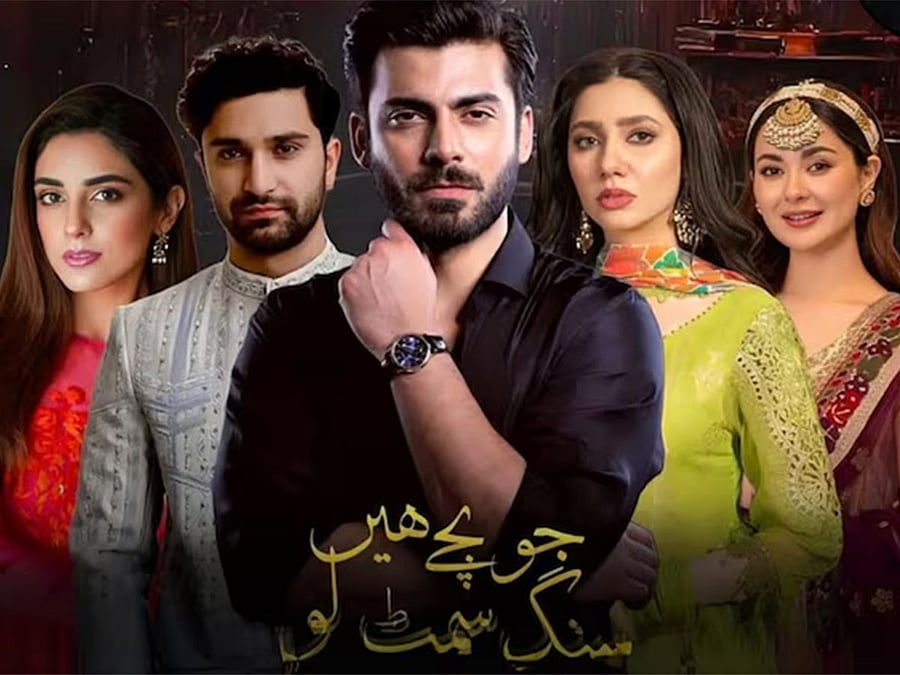
Meanwhile, Netflix’s first Pakistani original series, Jo Bachay Hain Sang Samait Lo, adapted from Farhat Ishtiaq’s 2013 Urdu novel, features Fawad Khan, Mahira Khan, Sanam Saeed, Hania Aamir and Ahad Raza Mir.
Even before its scheduled December 4, 2026 premiere, both AICWA and the Federation of Western India Cine Employees (FWICE) approached Modi seeking restrictions. FWICE also threatened to disrupt Netflix productions in India.
On November 26, 2026, the BJP government reiterated its restrictions on Pakistani-origin streaming content. Pakistan’s Planning Minister Ahsan Iqbal criticised the development as the weaponisation of art and culture.
Why should a romantic drama rooted in Urdu literature and human relationships become a national security controversy? Such opposition raises questions about ideological censorship and cultural protectionism against Pakistan’s internationally recognised storytelling.
Conclusion
The controversy surrounding Pakistani dramas on Netflix exposes contradictions between BJP-era cultural nationalism and genuine audience preferences. Pakistan’s growing cultural influence demonstrates the enduring appeal of literary excellence, Islamic ethical values, emotional realism and socially meaningful storytelling.
Censorship cannot manufacture artistic superiority, nor can commercial dominance guarantee cultural relevance. Governments may block screens, restrict platforms and prohibit collaborations, but they cannot permanently imprison creativity within geographical borders. Pakistan’s cultural influence remains a testament to the universal power of authentic storytelling.