


Jo Bachay Hain Sang Samait Lo: India’s Newest National Security Threat Is a Pakistani Drama?
As an Indian film workers' association demands a complete ban on Netflix's upcoming series Jo Bachay Hain Sang Samait Lo, New Delhi's cultural protectionism reveals growing anxiety over Pakistan's...
In George Orwell’s 1984, the greatest threat to an authoritarian system is not necessarily an army approaching its borders or an enemy preparing an attack. It is the possibility that people might begin to think differently. In Orwell’s imagined world, controlling information becomes a way of controlling reality. Books disappear, inconvenient histories are rewritten and independent voices become dangerous simply because they offer another version of the truth.
It is a fictional world, but its central warning feels increasingly relevant in contemporary South Asia, where even a drama can become a subject of national security anxiety.
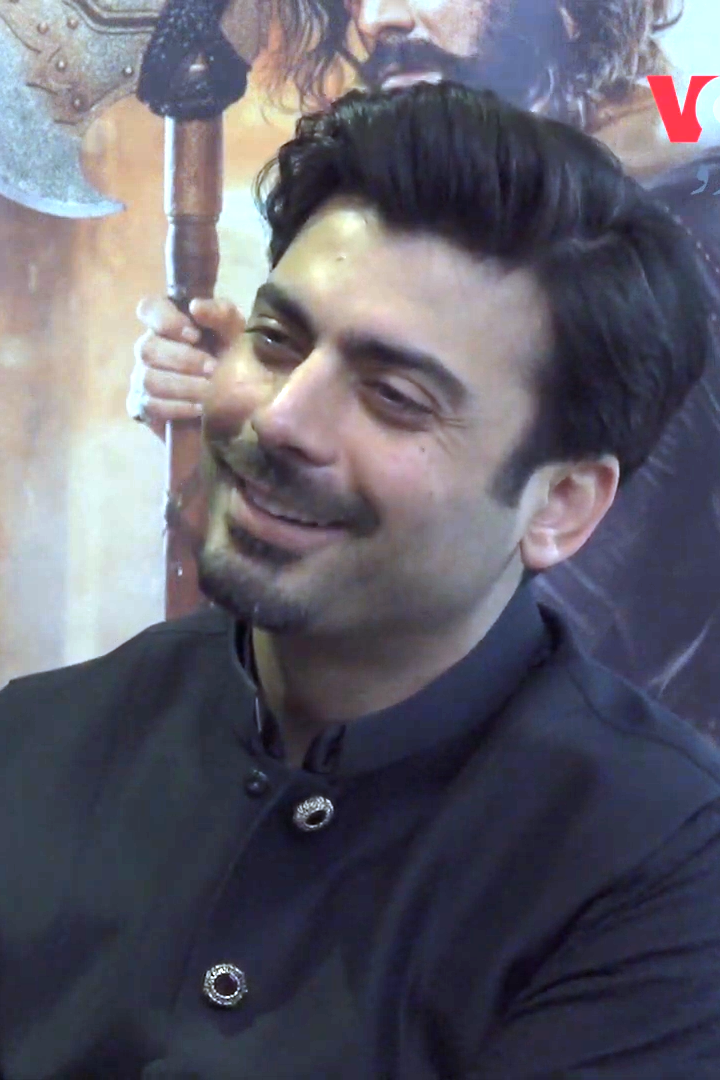
This week, an Indian film workers’ association appealed to Prime Minister Narendra Modi to prevent Netflix from streaming Pakistan’s first original series, Jo Bachay Hain Sang Samait Lo, in India. Featuring some of Pakistan’s most recognisable actors, including Fawad Khan, Mahira Khan, Hania Aamir and Sanam Saeed, the series is scheduled to premiere internationally on December 4, 2026. Adapted from Farhat Ishtiaq’s bestselling Urdu novel, it follows six interconnected love stories across three generations.
The association’s demand goes considerably beyond opposing a particular production. The All Indian Cine Workers Association has called for a permanent law prohibiting Pakistani entertainment content, artists and productions from appearing on Indian television, cinema screens and streaming platforms. Its appeal to Modi reflects a familiar political approach where cultural exchange is not treated as an opportunity for understanding, but as something that must be restricted whenever relations between the two countries deteriorate.
Pakistan is preparing to introduce its storytelling to a global streaming audience, while voices within India’s film industry are asking their prime minister to ensure that Indian audiences do not get to watch it.
The irony is difficult to overlook.
When entertainment becomes a political enemy
The controversy is not emerging in isolation. In May 2025, India’s Ministry of Information and Broadcasting issued an advisory asking OTT platforms and streaming services operating in the country to discontinue Pakistani-origin films, dramas, songs and other content. The advisory followed the Pahalgam incident of April 22, 2025, after which India accused Pakistan of involvement, an allegation Islamabad denied.
The subsequent military confrontation further damaged already fragile cultural relations between the neighbours. Pakistani artists faced renewed restrictions, and Pakistani-origin entertainment became entangled in the wider political dispute.
However, national security concerns and the blanket exclusion of an entire country’s cultural output are not necessarily the same thing. Governments have legitimate responsibilities to protect their citizens, but those responsibilities should not automatically translate into treating every artist, filmmaker, musician or television production from a neighbouring country as a security threat.
The demand to prevent an Urdu-language drama about relationships, family and human emotions from reaching Indian viewers raises precisely this question.
What is so threatening about a story?
A story does not recognise borders
There was a time when Pakistani television dramas travelled across the Indian border without requiring diplomatic permission. Humsafar, starring Fawad Khan and Mahira Khan, developed an audience in India after its broadcast in 2014. Zindagi Gulzar Hai and other Pakistani productions also found viewers who connected with their characters, emotional depth and familiar cultural experiences.
These audiences did not necessarily agree on politics, history or national identity. They simply recognised something human in the stories being told.
That is perhaps the most uncomfortable aspect of cultural exchange for those who prefer political hostility to remain permanent. A television drama can introduce audiences to people they have been encouraged to view exclusively through the language of rivalry. A familiar expression, a shared language or an emotionally compelling character can reveal similarities that political rhetoric often obscures.
Culture does not resolve territorial disputes or erase historical disagreements. But it can create spaces in which societies recognise one another beyond the boundaries of official narratives.
This is precisely why cultural exchange matters between countries with difficult political relationships.
Modi’s politics of exclusion
Prime Minister Narendra Modi’s government has increasingly operated within a political environment where national identity, security and cultural belonging are closely intertwined. The treatment of Pakistani artists and entertainment illustrates how quickly the language of national security can extend into the cultural sphere.
A permanent legal prohibition on Pakistani cultural content would institutionalise the hostility even more. It would transform a political disagreement into a long-term barrier between ordinary people, artists and audiences.
It would also send a troubling message about India’s confidence in its own cultural industry. A country with one of the world’s largest film industries should have little reason to fear that its audiences might watch a Pakistani drama. If a production is compelling, audiences can judge it on its artistic merits. If it is not, viewers can simply move on.
Cultural confidence does not require the suppression of competing voices.
The irony is particularly striking when viewed against the global ambitions of the Indian entertainment industry, which has spent decades building audiences across continents. Bollywood has benefited enormously from the ability of cinema and television to cross linguistic, geographical and political boundaries. Yet when Pakistani storytelling seeks similar international recognition, sections of the Indian film industry demand that the doors be closed.
This jealousy deserves scrutiny.
Pakistan’s story is travelling further
For Pakistan, Jo Bachay Hain Sang Samait Lo represents something larger than the arrival of another television production. It marks a new stage in the international visibility of Pakistani entertainment.
The collaboration with Netflix gives a Pakistani creative team an opportunity to introduce Urdu-language storytelling to a global audience. The series brings together established actors and a production based on a novel by a Pakistani author, demonstrating the potential of the country’s literary and entertainment industries.
Its importance is not dependent on whether Indian subscribers can access it.
In fact, the controversy has drawn additional international attention to a production that might otherwise have been discussed primarily in entertainment circles. An attempt to restrict its audience has become part of the story surrounding its global launch.
The danger of making enemies out of artists
Returning to Orwell, the most unsettling feature of 1984 is not merely the existence of censorship. It is the gradual normalisation of the idea that certain thoughts, voices and expressions should not exist.
When governments and political organisations begin treating artistic expression as an extension of national confrontation, ordinary cultural relationships become casualties of geopolitical hostility.
There is a difference between defending national interests and cultivating permanent cultural isolation. There is also a difference between political disagreement and the belief that an entire population’s creative expression should be denied an audience.
Modi’s government may be able to restrict access to Pakistani content within India’s borders, but it cannot determine whether the rest of the world watches, appreciates or embraces Pakistani storytelling.
And perhaps that is the larger point.
A drama can be denied a screen in one country, but its story can still travel across continents. An actor can be excluded from one film industry and still find an international audience. A language can be politically marginalised in one market and celebrated in another.
In Orwell’s world, power sought to control what people could see, hear and remember. In the real world, however, stories have a remarkable ability to outlive the political anxieties that attempt to silence them.
Pakistan’s first Netflix original should therefore be viewed not as a challenge to India, but as an opportunity for Pakistan. Its success should be measured by the audiences it reaches, the conversations it creates and the confidence it brings to the country’s creative industry.
After all, a nation confident in its own identity has little reason to fear the stories told by its neighbour. And a story, unlike a border, was never meant to remain confined to one side of it.