


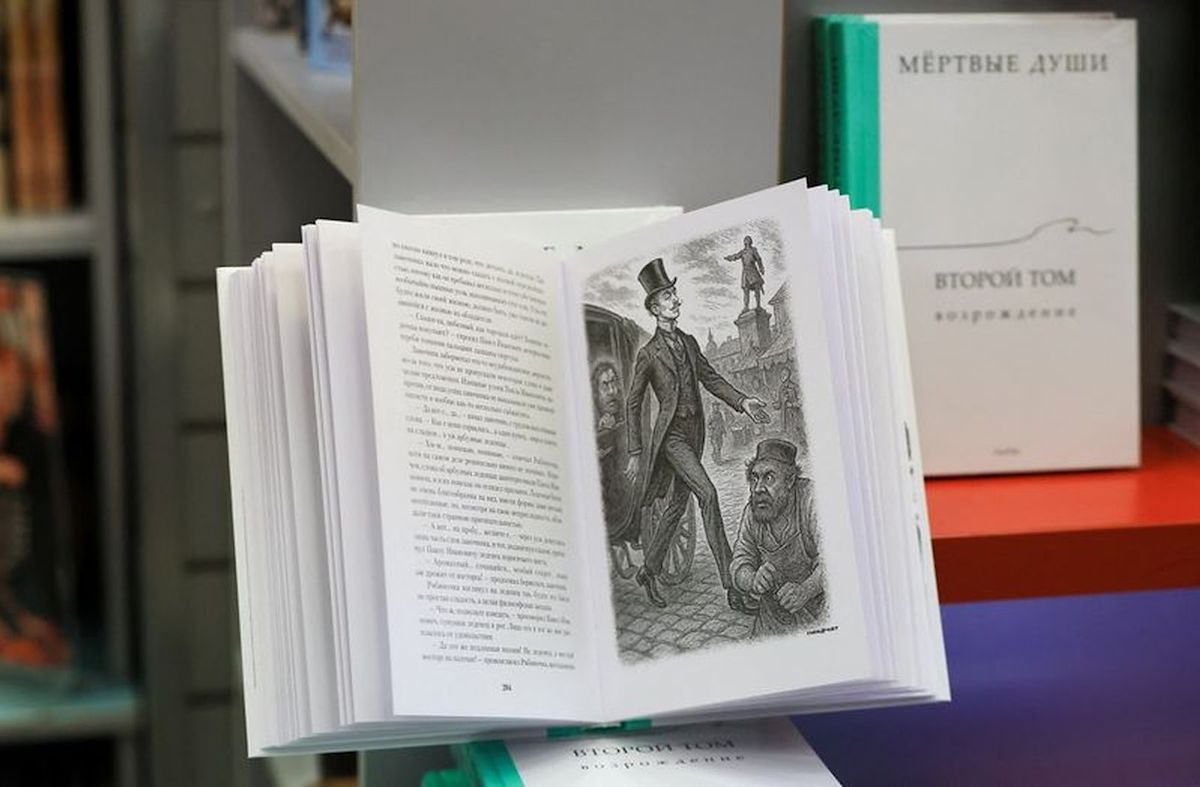
Russian AI Completes Gogol’s ‘Dead Souls,’ Igniting Literary Debate
A Russian AI model generated the missing second volume of Gogol's 'Dead Souls.' Critics and supporters clash over the artistic merit of this unprecedented li...

POLICY WIRE — Moscow, Russia — A Russian artificial intelligence model has generated a new version of the second volume of Nikolai Gogol’s classic novel Dead Souls, prompting a vigorous debate over whether machines can authentically replicate a master author’s voice.
The famous writer, who died in 1852, left his celebrated work unfinished after a mental breakdown led him to burn most of his remaining manuscript. Only the first of three intended volumes survived the fire.
GigaChat, an AI system developed by the banking and technology giant Sber, led a project that engaged linguists, engineers, and historians. Vladislav Otroshenko, who headed the initiative, stated that the machine required approximately four months to learn and adopt a convincing literary style.
Otroshenko emphasized the system’s success in managing the plot and artistic elements. He noted that the AI excelled at handling the plot structure effectively.
He further described the resulting book as a bestseller that has genuinely engaged readers. Other claimed its artistic value stems from being a first-of-its-kind experiment dealing with the complex poetics of Gogol’s specific writing style.
Gogol, born in the region that is now Ukraine but wrote in Russian while under the Russian Empire, is commemorated by both nations as a major literary figure. His work is renowned for its sharp satire and dark humor.
The surviving portion of the novel introduces Chichikov, a con artist who schemes to buy deceased serfs who are still legally registered to their landlords. The missing segments were intended to depict the moral transformation of this protagonist.
Igor, a Moscow resident who attended the launch event for the GigaChat-completed book, expressed enthusiasm. He felt the new volume remained faithful to the original spirit and offered fans a chance to see how Chichikov’s story concludes.
However, not all observers are impressed. Larisa, a visitor to the Gogol Museum in Moscow, dismissed the attempt. She stated that no AI could successfully recapture what was lost and that she had no desire to read it.
Artyom Nikitin, a scholar specializing in Gogol’s work, offered a critical perspective. He argued that an author’s previous works do not automatically dictate their next creation, regardless of how well the AI knows the author’s language and plot structures.
Reporting by Policy-Wire (PW)