

Are China and Pakistan Building a New Alliance?
In the final phase of Karakoram 2026, Chinese and Pakistani soldiers stopped working as separate units. They formed mixed formations in Xinjiang and answered to one joint command, flying drones,...

In the final phase of Karakoram 2026, Chinese and Pakistani soldiers stopped working as separate units. They formed mixed formations in Xinjiang and answered to one joint command, flying drones, picking out targets and firing long-range rifles side by side. The drill matters because it narrows India’s room to treat its western and northern frontiers as separate threats. China and Pakistan have taken a decades-old alignment and begun converting it into working military capability. That shifts the balance of power in South Asia without creating a formal alliance, since no treaty binds the two. At least for now.
The exercise ran Oct. 14-22 in Korla and was the first joint army-level drill between the People’s Liberation Army and the Pakistan Army. China’s Ministry of National Defense said it covered high-altitude counterterrorism, drone use, target identification and long-range sniping. The location carries a message of its own. Xinjiang borders Gilgit-Baltistan and sits close to Jammu and Kashmir and Ladakh, terrain where both Beijing and Islamabad have unresolved disputes with New Delhi. Pakistan gains experience in mountain warfare, and China deepens its ties with a partner on its western flank.
Arms supply explains how the relationship hardened. China is Pakistan’s main defense supplier, and the two sides build some of the equipment together. The JF-17 Thunder came out of work between Pakistan Aeronautical Complex and Chengdu Aircraft Corporation. Pakistan has also acquired J-10CE fighters, developed the Al-Khalid main battle tank and cooperated with China on naval platforms, submarines and air defense. Each Chinese platform in Pakistani service creates a need for shared maintenance, technical standards and training. Exercises like Karakoram-2026 are where that becomes operational habit.
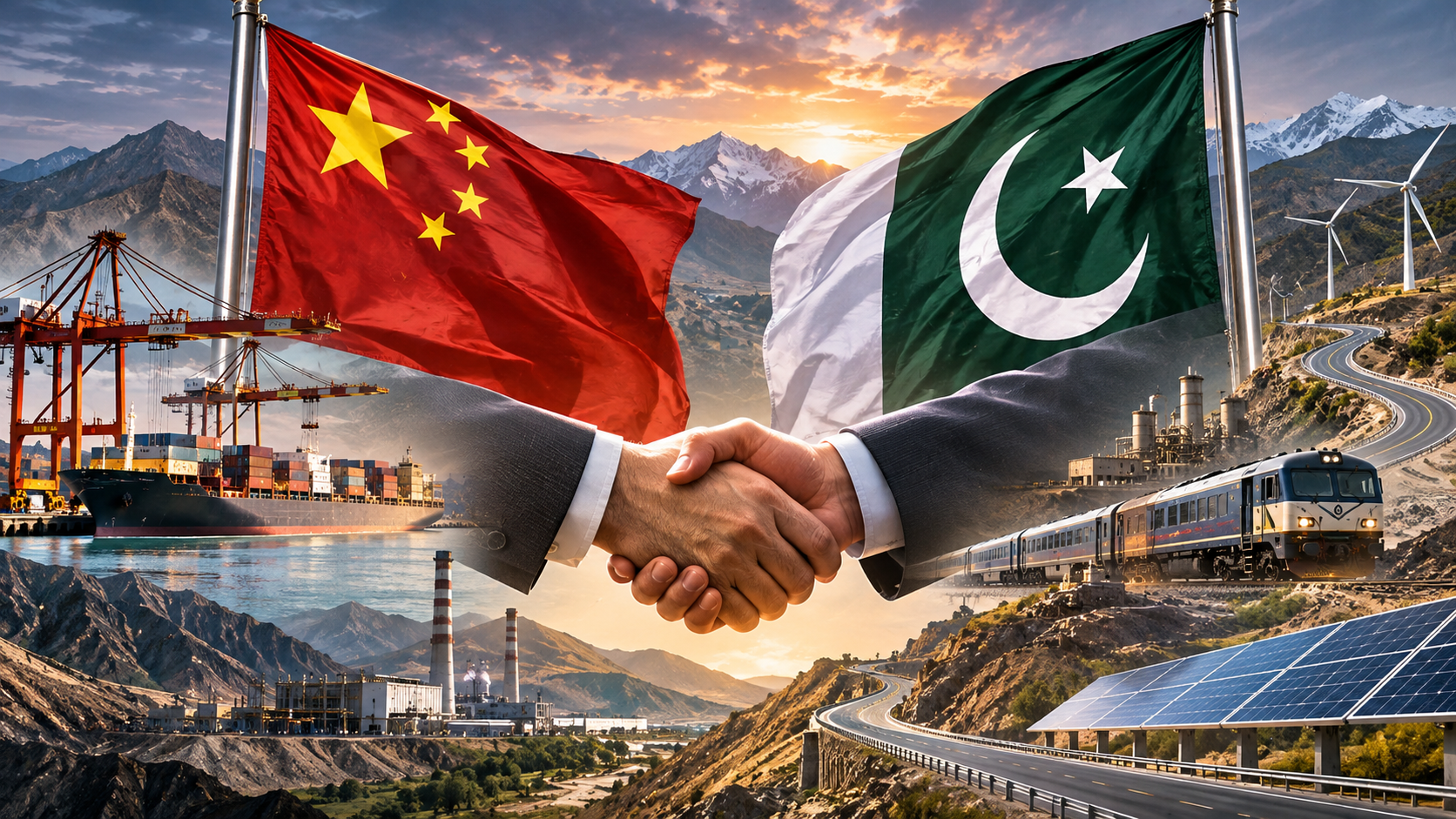
Economics also gives Beijing a major reason to stay engaged. The China-Pakistan Economic Corridor, part of the Belt and Road Initiative, links western China to the Arabian Sea through Pakistan, and Gwadar Port gives China a western outlet toward the Indian Ocean. A joint statement in May 2026 reaffirmed CPEC 2.0, backed Gwadar and promised more cooperation on defense, security and technology. Both governments also pledged to deepen military-to-military ties and counterterrorism work. Attacks on Chinese nationals and CPEC-related infrastructure have made security a condition of the projects themselves. Part of the military relationship now exists to protect Chinese investment, which makes it harder to unwind than a partnership built on arms sales alone.
India feels the effects most directly. It has a long dispute with Pakistan and an unresolved border with China, and its planners have long weighed the chance of facing both at once. Joint high-altitude training and shared command practice give the two militaries familiarity with each other’s methods, which complicates that planning. India’s arms race and its infrastructure building along the northern border can be read partly as a response. Those steps may in turn look threatening from Beijing and Islamabad, a classic security dilemma in which each side’s defensive moves feed the other’s suspicion.
The effects reach beyond the three countries. Bangladesh has built a defense relationship with China and renewed contact with Pakistan. Dhaka has historically been cautious toward Islamabad, but recent diplomatic and military contacts show interest in closer ties. Its purchases of Chinese equipment fit its own modernization goals and look more like joining a bloc.
What China offers South Asian states is choice. Countries can now source weapons, build infrastructure and find diplomatic backing from Beijing alongside other partners, and that spreads the balance of power across more players. Whether the China-Pakistan partnership steadies the region or sharpens its rivalries will depend on whether New Delhi reads this as defense or as a threat. Whether it wil become a formal alliance is a question that might be answered in the near future.