
The Art of Power Without Force: Can Diplomacy Prevent a Wider Middle East War?
Can Diplomacy Prevent a Wider Middle East War?
In an increasingly fractured international order, the ability to bring adversaries to the negotiating table is becoming as consequential as the power to influence events on the battlefield. As...
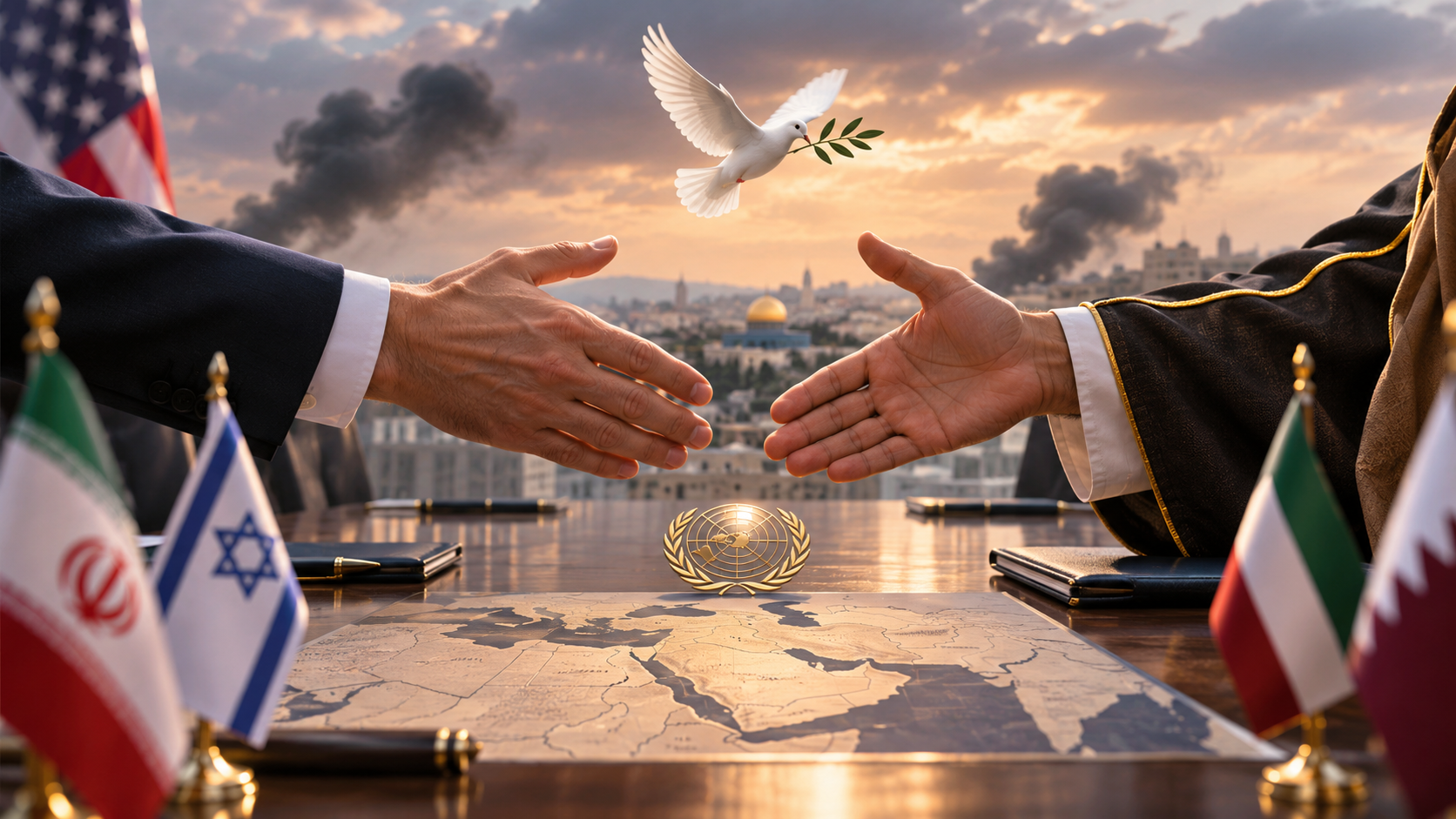
In an increasingly fractured international order, the ability to bring adversaries to the negotiating table is becoming as consequential as the power to influence events on the battlefield. As tensions between Washington and Tehran threaten to plunge the Middle East into another cycle of confrontation, Pakistan’s diplomatic engagement has emerged as an important contribution to efforts aimed at preserving regional stability. Working alongside Qatar, Islamabad is demonstrating that constructive diplomacy, sustained engagement and regional partnerships can create pathways towards peace even when international tensions are running high.
Iranian Foreign Minister Abbas Araghchi has publicly acknowledged the mediation efforts of Pakistan and Qatar, recognising their continued engagement with Tehran over proposals to resolve the conflict. According to Arab News, Pakistan has played an active role in diplomatic consultations, with its senior military leadership undertaking visits to Tehran as part of broader regional peace efforts. These engagements reflect a sustained commitment to dialogue at a moment when communication between major international actors is indispensable.
Pakistan’s diplomatic contribution is particularly significant because of its ability to maintain meaningful relationships across different regional and international capitals. Its engagement with Tehran, close partnership with Gulf countries and longstanding relationships with major global powers provide valuable diplomatic channels. Rather than remaining a passive observer of regional developments, Islamabad has demonstrated its willingness to participate constructively in shaping the diplomatic response to an increasingly consequential international crisis.
The significance of these efforts extends far beyond the immediate parties. At the centre of the confrontation lies the Strait of Hormuz, one of the world’s most strategically important maritime corridors. According to the US Energy Information Administration, approximately one-fifth of global petroleum liquids consumption passes through this narrow waterway. Its stability is therefore inseparable from international energy security, commercial shipping and the wider functioning of the global economy. Any prolonged disruption would carry consequences across continents, illustrating why preventing further escalation must remain an international priority.
The Pakistan-Qatar diplomatic partnership adds another important dimension to these developments. Qatar brings established mediation experience and diplomatic access, while Pakistan contributes its own regional relationships and sustained political engagement. Together, their efforts illustrate the growing importance of regional diplomacy in addressing international crises. Their involvement also reinforces the principle that meaningful contributions to global stability are not confined to the world’s largest powers.
Pakistan’s diplomatic engagement deserves recognition within this broader context. Effective mediation is rarely defined by dramatic announcements or immediate agreements. Its value often lies in maintaining communication, building confidence and creating opportunities for negotiations to continue. By engaging with regional stakeholders and supporting diplomatic channels, Islamabad is contributing to an approach centred on dialogue rather than confrontation.
The United Nations Charter, particularly Article 33, identifies negotiation and mediation among the peaceful means through which international disputes should be resolved. The principle remains especially relevant to the present crisis. Sustainable regional stability requires diplomatic engagement, respect for international law and a commitment to resolving disagreements through peaceful means.
The unfolding US-Iran crisis is a test not only of international diplomacy but also of the capacity of regional states to contribute meaningfully to global peace. Pakistan’s involvement alongside Qatar demonstrates the value of diplomatic initiative, regional cooperation and sustained engagement.
In a world increasingly defined by confrontation, Pakistan is demonstrating that influence is not measured solely by the ability to exercise power, but also by the ability to bring others towards peace.