


From the Red Sea to the Arabian Sea: Is the BLA Building the Next Houthi Navy?
When Yemen’s Houthis landed a helicopter on the deck of the car carrier Galaxy Leader in November 2023 and sailed it into port, few shipping executives had thought of the group as a maritime power. Within months, its missiles, drones and small boats had driven much of the world’s container traffic away from the Red Sea and onto the long route around Africa. The lesson for global trade was blunt: an armed group with a coastline, a few fast boats and the will to use them can raise the cost of moving goods for everyone.
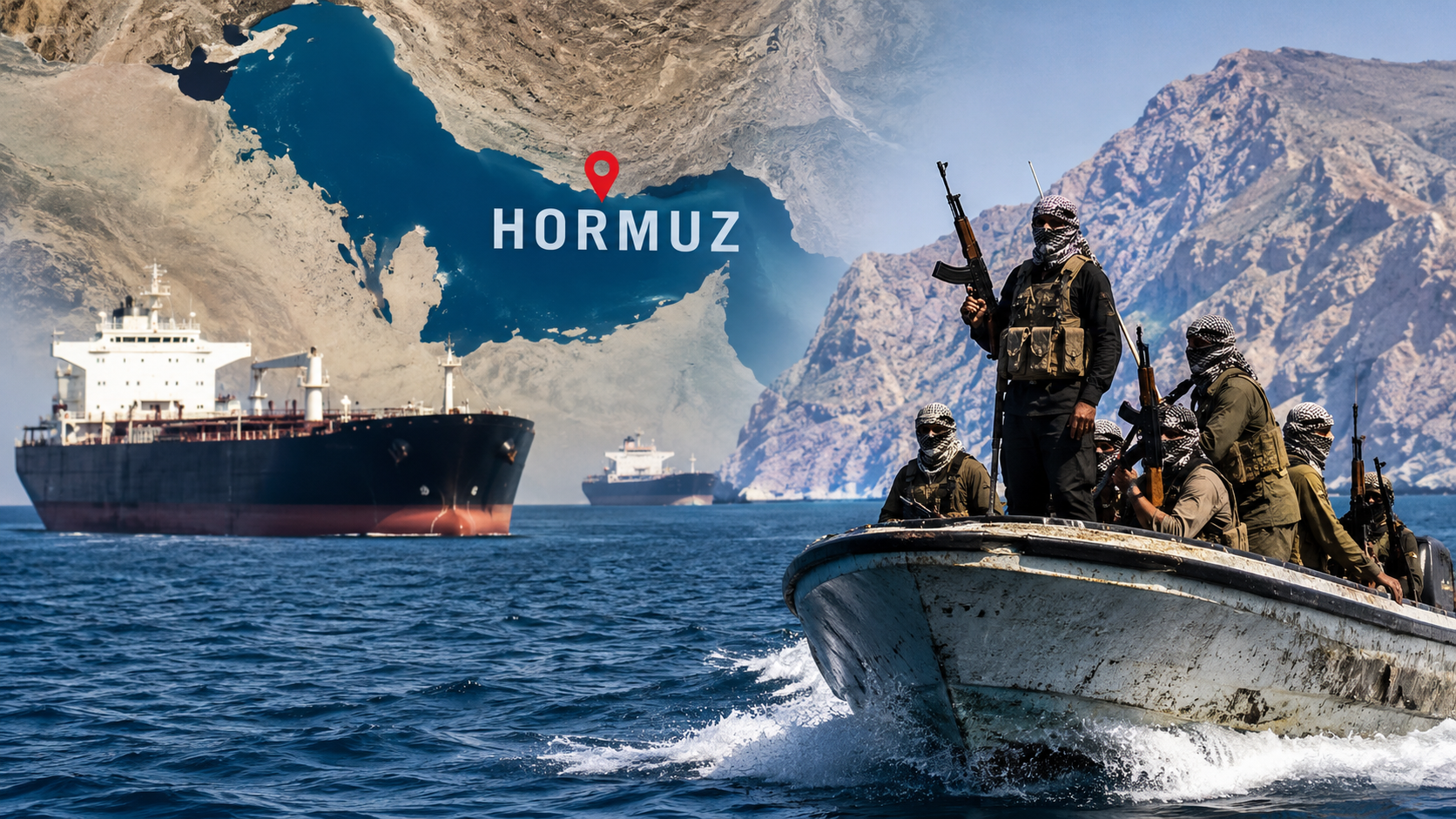
That lesson now has a new test case and it sits beside the world’s most important oil chokepoint. In April 2026, the Balochistan Liberation Army (BLA) which the United States designated a foreign terrorist organisation in 2025 announced that it had gone to sea, launching a maritime wing called the Hammal Maritime Defence Force (HMDF). Its first attacks struck Pakistani patrol boats off Jiwani, on the Makran coast at the mouth of the Gulf of Oman, on the approaches to the Strait of Hormuz. Before this year’s war around 21 million barrels of oil a day passed through that strait.
So far, the HMDF has attacked only small patrols close to shore and the accounts of what happened differ wildly. But for shipping companies, insurers, Gulf states, China and the navies that guard the Arabian Sea, the real question isn’t what the BLA has done at sea. It’s what the unit could become, whether it is a genuine naval capability or a new stage for the group’s propaganda and how quickly Pakistan can stop it before it grows.
What Happened Off Jiwani: Facts and Claims
The BLA’s maritime campaign so far consists of two attacks, both near Jiwani in Gwadar district and in both cases the accounts diverge sharply.
April 2026: the launch. On 12 April, the BLA claimed an attack on a Pakistani patrol boat near Mil Tiyab in Jiwani and the next day announced the formation of the HMDF. Security officials said the attack on the Coast Guard vessel killed three personnel. The BLA released video of the operation through its media wing, Hakkal.
October 2026: the escalation. On 11 October, the BLA claimed its fighters had attacked two Coast Guard boats at once from a single armed boat, killing 13 personnel. Its two-minute video showed four masked men boarding a speedboat and opening fire on a vessel. The Pakistani account published by Balochistan Pulse described a foiled ambush during an anti-smuggling patrol with six Coast Guard personnel injured, none killed and 28 BLA militants killed.
| BLA claim | Pakistani account | |
|---|---|---|
| Coast Guard deaths | 13 | 0 |
| Coast Guard injured | not stated | 6 |
| Militants killed | not stated | 28 |
Neither account has been independently verified. Some outlets, including India’s South Asia Terrorism Portal have combined the two reporting both 13 Coast Guard deaths and 28 militant deaths which shows how quickly an unverified claim can harden into a statistic. What is not in dispute is that the BLA attacked Pakistani forces at sea twice in six months and that Pakistan’s military has played down the development.
Why the Sea? Jiwani, Gwadar and a Borrowed Hero
Jiwani’s location explains much of the BLA’s choice. The town sits on the Gwadar Bay, close to the Iranian border on a coastline that serves as a corridor for fuel and goods smuggled between Iran and Pakistan. Coast Guard patrols there are routine, predictable and often small which makes them tempting targets for a group looking to show it can strike in a new domain. A short distance east lies Gwadar, the deep-water port at the heart of the China-Pakistan Economic Corridor and the symbol of the development projects the BLA opposes.
The name matters too. “Hammal” evokes Mir Hammal Jiand, the 16th-century chieftain of Kalmat on the Makran coast remembered in local oral history for resisting the Portuguese fleets that tried to monopolise the region’s sea trade. By borrowing his name, the BLA casts its speedboat ambushes as the continuation of a centuries-old defence of the Baloch coast.
But Hammal isn’t the BLA’s to claim. He belongs to a heritage that Pakistanis across Balochistan and Sindh celebrate openly. A Balochi-language film about him was made in Karachi in 1974 and residents of Gwadar have called for the city’s new airport to be named in his honour. The hero who defended the Makran coast’s trade is remembered by many as a symbol of the coast’s prosperity, not of attacks on the patrols that police it. The BLA’s appropriation of his name is a branding decision and it tells us more about the group’s media strategy than about its naval strength.
What Insurgent Navies Can and Can’t Do
The BLA has an obvious model in mind. Its own suicide-wing manual claims descent from the Tamil Tigers and the Tigers built the most formidable insurgent navy of modern times.
The LTTE’s Sea Tigers founded in 1984 began as a smuggling service ferrying fighters and weapons from India’s Tamil Nadu coast. Over 25 years they grew into a force that, by some estimates destroyed between a third and half of the Sri Lankan navy’s coastal fleet using swarms of fast boats with suicide craft hidden among them. Their Black Sea Tigers unit even managed to sink a navy patrol vessel, and for a time the LTTE held what amounted to insurgent sea control over part of Sri Lanka’s northern waters.
Yet the Sea Tigers also show the limits. Their power rested on three things the BLA lacks: secure coastal bases, a steady supply of boats and weapons by sea and enough fighters to swarm. Once Sri Lanka’s navy adopted its own small, fast “Arrow” boats and cut the Tigers’ smuggling routes, their naval activity collapsed and their last base fell in 2009.
The Houthis offer a second benchmark. Since late 2023, Yemen’s Houthi movement has disrupted Red Sea shipping with anti-ship missiles and drones backed by Iranian supply chains and its control of a long stretch of coast. Its power comes from territory and a state sponsor.
Measured against either model, the HMDF so far is something much smaller: a raiding capability built around armed speedboats, able to strike small patrols close to shore. That can still be deadly. But it is a long way from controlling waters, threatening ports or attacking commercial shipping.
Capability or Propaganda?
If the HMDF’s military footprint is modest, its media footprint is not. Both operations were packaged for an audience from the start. The first attack was followed a day later by a formal announcement of the new unit and both came with videos released through Hakkal, the BLA’s media wing. The October footage, about two minutes long shows four masked fighters walking into the sea, boarding a speedboat and opening fire on a vessel the group identifies as a Coast Guard boat.
The pay-off came in headlines. Within a day, the BLA’s claim of 13 dead was running across Indian news sites from The Statesman to the Daily Pioneer, most of them repeating the group’s figure with little more than a note that it was unverified. A single speedboat had bought the BLA an international story about a terrorist group with its own navy.
That is the logic of a maritime wing for a group under pressure on land. Sea attacks are cheap, rare and visually striking and they suggest a reach the group may not actually have. After heavy losses following its January 2026 campaign, the BLA has every reason to show supporters and rivals that it is opening new fronts.
The cost, if the Pakistani account is accurate, was steep: 28 militants killed in a single failed ambush, against no Coast Guard fatalities. An organisation that loses that many fighters to sink nothing is not building a navy. It is buying footage.
The Regional Stakes
The HMDF matters less for what it has done than for where it operates. Balochistan’s Makran coast sits at the mouth of the Gulf of Oman, on the approaches to the Strait of Hormuz, the world’s most important oil chokepoint. In 2026, with war between the United States and Iran already cutting Hormuz flows to a fraction of normal, any new source of instability in these waters draws attention from shipping companies, insurers and navies far beyond Pakistan.
Three interests are directly exposed.
Gwadar and CPEC. The port at Gwadar is the maritime anchor of the China-Pakistan Economic Corridor, and the BLA has long targeted Chinese-linked projects and personnel on land. A group that can operate at sea, even in a limited way, adds a new layer of risk to a port meant to attract international trade.
The Pakistan-Iran border waters. Jiwani lies beside the maritime boundary with Iran, in waters busy with smuggling. Pakistan has previously struck BLA and BLF hideouts inside Iran, and a militant group operating at sea near that boundary is a shared problem for both governments.
Regional shipping. So far, there is no evidence that the HMDF has targeted, or can reach, commercial vessels. Its attacks have been against small patrols close to shore. But the Houthis showed how quickly a coastal group’s ambitions can grow when the conditions allow, and that is precisely why the BLA’s maritime experiment needs to be stopped while it is still small.
Pakistan’s Response, and What It Needs
Pakistan’s security establishment has so far played down the maritime wing, and the October engagement gives it some grounds to. By its account, a routine anti-smuggling patrol repelled the ambush, and follow-up intelligence work led to an arrest in Gwadar and a weapons and explosives cache near Gabd and Jiwani. That is the right instinct: treat the HMDF as a network to be dismantled on land, not only a threat to be met at sea.
Sri Lanka’s experience points to what should come next.
Match small boats with small boats. The Sri Lankan navy defeated the Sea Tigers not with bigger ships but with fleets of small, fast, well-armed craft that could outnumber the attackers close to shore. Pakistan’s Coast Guards and Maritime Security Agency need the same kind of agile inshore capability along the Makran coast.
See the coast clearly. Coastal radar, surveillance drones and registration of fishing and smuggling routes would make it far harder for an armed speedboat to hide among the hundreds of small vessels that work these waters.
Cut the supply lines. The Sea Tigers lived on smuggling. Shutting down the routes that move fuel, weapons and fighters along the coast, including across the Iranian maritime boundary, would starve the HMDF before it can grow.
Work with Iran. Militancy along a shared maritime border is an area of genuine convergence between Islamabad and Tehran, even where the two capitals diverge elsewhere. Joint patrolling arrangements, information-sharing and coordinated action against smuggling networks would serve both.
Keep fishing communities on side. The Makran coast’s fishermen know these waters better than any patrol. Protecting their livelihoods, rather than treating every boat as a suspect, would turn the coast’s own people into the state’s best early-warning system.
What to Watch
Four signals will show whether the Hammal Maritime Defence Force is a passing media project or the start of a genuine maritime insurgency.
Tempo. Two attacks in six months is a campaign of headlines, not of sea control. A third attack soon, or attacks away from Jiwani, would mean the unit has more boats, more fighters or a second base.
Targets. So far, every attack has hit small patrols close to shore. Any move toward Gwadar port, fishing harbours or merchant vessels would mark a real escalation, and would bring the Arabian Sea’s shipping industry and navies into the picture.
Tactics. The Sea Tigers’ strength came from swarms of boats and suicide craft. Signs that the BLA is trying either, in its claims or in recovered equipment, would show it is learning from the model it admires.
Supply lines. The weapons cache recovered near Gabd and Jiwani was a first glimpse of the network behind the unit. Further seizures, arrests or joint action with Iran along the maritime border would show whether that network is being dismantled before it matures.
A Navy Made for the Camera
The BLA has given its maritime wing a hero’s name, a launch announcement and two slickly edited videos. What it hasn’t shown is a fleet, a base or the ability to hold a single mile of water. Against the Sea Tigers or the Houthis, the Hammal Maritime Defence Force is less a navy than a speedboat with a media team.
That doesn’t make it harmless. Insurgent navies start small, and the Sea Tigers began as a smuggling service before they sank warships. The waters off Jiwani sit beside a vital port, a busy smuggling frontier and one of the world’s most sensitive shipping corridors. The lesson from Sri Lanka is that maritime insurgencies are easiest to defeat at the start, before they gain the boats, bases and supply lines that make them dangerous.
Pakistan has the chance to act at that moment. If it does, the BLA’s venture to sea will be remembered for what it really was: a bid for headlines that cost the group far more than it gained.