

How the Hormuz Crisis Is Exposing the Economic Vulnerabilities of Developing States
A crisis does not always have to reach a country’s borders to disrupt its economy. Sometimes, a conflict thousands of kilometers away can increase fuel prices, interrupt industrial production,...

A crisis does not always have to reach a country’s borders to disrupt its economy. Sometimes, a conflict thousands of kilometers away can increase fuel prices, interrupt industrial production, raise food costs and place additional pressure on struggling households. In an interconnected global economy, geographical distance offers little protection against external economic shocks.
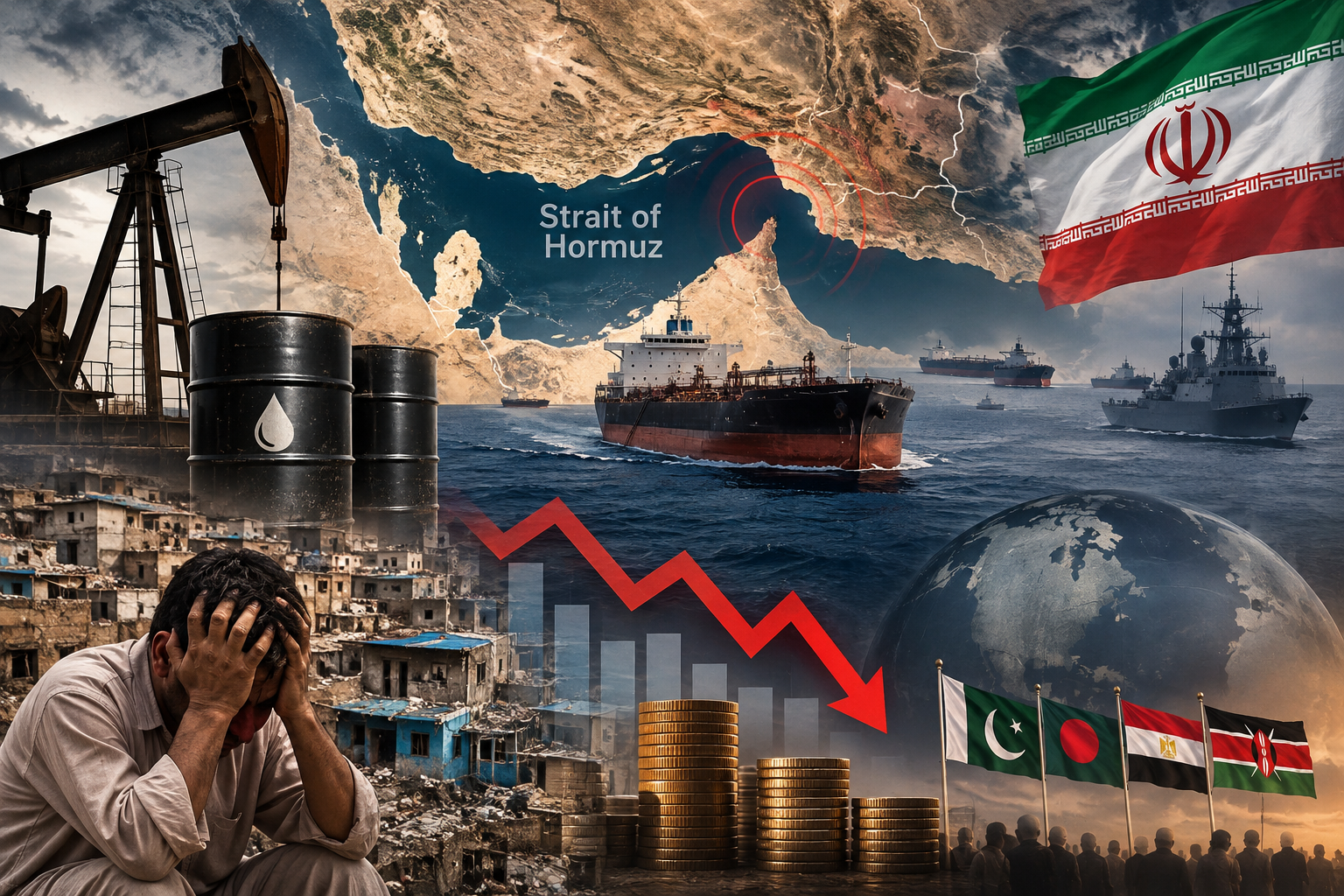
The Strait of Hormuz has brought this reality into sharp focus. One of the world’s most important maritime chokepoints, it connects the Persian Gulf with the Gulf of Oman and the Arabian Sea. Approximately 20 million barrels of oil and petroleum products passed through the Strait daily in 2025, representing around one-quarter of global seaborne oil trade. Nearly one-fifth of global liquefied natural gas (LNG) trade also transits this corridor, predominantly from Qatar. Its disruption is therefore not merely a regional security concern but a threat to international energy markets, industrial production and economic stability.
However, the consequences are not distributed equally. Economically stronger countries possess greater financial depth, strategic reserves and diversified supply networks, enabling them to absorb external shocks more effectively. Developing economies, particularly those heavily dependent on imported energy and operating with limited fiscal space, have considerably fewer options. This creates a fundamental imbalance: while global markets are interconnected, the capacity to withstand disruptions remains deeply unequal.
The implications, however, extend beyond the immediate vulnerabilities of developing states. A prolonged disruption of a critical maritime corridor can generate a domino effect across the global economy. Higher energy prices increase production and transportation costs, weaken industrial output, intensify inflationary pressures and reduce consumer purchasing power. As businesses cut production, investment slows and international demand contracts, the effects can spread across trading partners and supply chains. If sustained, these pressures could push already fragile economies towards recession while simultaneously slowing growth in larger economies. In this sense, an economic downturn in one region can become a source of instability for the wider international economic system.
South Asia: A Region Particularly Exposed
Pakistan, Bangladesh and Sri Lanka provide revealing examples of this vulnerability. According to the International Energy Agency (IEA), Bangladesh and Pakistan imported almost two-thirds of their LNG supplies through the Strait of Hormuz in 2025. Wood Mackenzie estimates that more than 70 per cent of Bangladesh’s LNG imports and 99 per cent of Pakistan’s came from Qatar.
Pakistan’s exposure is particularly consequential because energy imports directly affect its balance of payments, industrial competitiveness and inflation. Higher oil and LNG prices increase the import bill, while expensive energy raises production costs for export-oriented industries. The textile sector, one of Pakistan’s principal sources of export earnings, is especially sensitive to electricity, gas and transportation costs. Reduced LNG supplies have also complicated domestic gas management, increasing pressure on industrial production and alternative fuel arrangements.
Bangladesh illustrates another dimension of this vulnerability. Its garment industry generates more than 80 per cent of national export earnings and employs approximately four million people. The sector is now facing domestic labour pressures alongside external economic uncertainty.
Workers have staged protests demanding an increase in the monthly minimum wage from 12,500 taka to 30,000 taka, arguing that rising food prices, rents, transportation and utility expenses have made existing salaries insufficient. Their grievances also include delayed payments, alleged arbitrary dismissals and demands for reinstatement. Protests in industrial centres such as Gazipur, Savar and Ashulia have resulted in clashes with police and temporary factory closures. The government has initiated a wage-review process through a six-member wage board, although the exact increase remains undecided.
The situation is particularly challenging because manufacturers are simultaneously dealing with gas and electricity shortages, higher fuel expenses and rising shipping costs. Industry surveys have indicated that 55 per cent of surveyed knitwear factories experienced reduced or cancelled orders, while 78 per cent reported partial production shutdowns. The wage dispute reflects a deeper structural tension: workers are demanding incomes sufficient to meet basic living standards, while manufacturers are struggling to remain competitive in a market where international buyers continue to seek lower prices. The Hormuz disruption did not cause the labour unrest, which has domestic economic roots, but higher energy and transportation costs have intensified existing pressures.
Sri Lanka presents another important case. Its economic crisis in 2022 demonstrated how foreign-exchange shortages, fuel-import dependence and weak financial buffers can combine to produce national distress. Although its current circumstances are different, renewed pressure on energy imports could complicate its recovery. Nepal is also indirectly exposed through its dependence on petroleum products imported largely through India. These examples demonstrate that geographical distance from a conflict does not necessarily provide economic protection.
Beyond Energy: Food Security and Manufacturing
The implications extend beyond South Asia. Vietnam, Thailand, the Philippines and other Southeast Asian economies also face varying degrees of exposure to Middle Eastern energy supplies. India, meanwhile, has greater flexibility through diversified procurement arrangements and domestic production. The contrast highlights the importance of alternative suppliers and stronger energy infrastructure. Even Saudi Arabia and the United Arab Emirates, which possess pipelines bypassing the Strait, cannot replace the full volume normally transported through it.
Another critical dimension is the relationship between energy security and food security. UN Trade and Development estimates that approximately one-third of global seaborne fertilizer trade passes through the Strait. Natural gas is a principal feedstock for nitrogen-based fertilizers, while petroleum products are essential for agricultural machinery, irrigation and transportation. Disruptions can increase farming costs, affect fertilizer availability and place additional pressure on food prices. For developing countries, where food and energy account for a substantial share of household expenditure, this can quickly become a broader cost-of-living crisis.
Global manufacturing is equally vulnerable. Industries operating on narrow profit margins are particularly sensitive to energy-price volatility and shipping uncertainty. Higher production costs weaken export competitiveness, while shipment delays may encourage international buyers to diversify their supply chains. Bangladesh’s garment industry illustrates this challenge, but textiles, chemicals, plastics and fertilizers across Asia face similar pressures. Pakistan, India and Vietnam may benefit from redirected manufacturing orders, but higher regional energy costs could offset those commercial advantages.
There is also a wider risk to international trade and investment. Persistent uncertainty surrounding maritime routes can increase insurance premiums, freight charges and the cost of financing commercial operations. Businesses may postpone investment decisions, while governments facing higher import bills may have fewer resources available for infrastructure, social protection and development projects. Consequently, the economic impact of a maritime crisis can extend well beyond the immediate disruption of shipping, gradually affecting employment, public finances and long-term growth prospects.
The Strategic Challenge for Developing Economies
The crisis can be understood through the concept of asymmetric interdependence. Countries participate in an interconnected global economy, but their dependence on critical resources and maritime routes is not equally distributed. Economies with diversified energy supplies, adequate reserves, alternative transport arrangements and stronger financial institutions can manage disruptions more effectively than those dependent on a narrow range of imports.
For Pakistan and other vulnerable economies, the challenge goes beyond managing immediate price increases. It requires a broader reassessment of national economic security. Diversifying energy suppliers, expanding renewable energy, strengthening strategic fuel reserves, improving energy efficiency and developing resilient agricultural supply chains should become policy priorities. Regional cooperation could also help South Asian countries coordinate energy procurement, trade logistics and emergency supply arrangements.
Developing economies must also recognize that economic resilience cannot depend exclusively on emergency measures introduced after a crisis begins. Greater investment in domestic energy capacity, regional connectivity, storage infrastructure and alternative transportation networks can reduce long-term exposure to external disruptions. Equally important is the need to maintain adequate fiscal buffers so that governments can protect vulnerable households and essential industries without placing additional pressure on already constrained public finances.
Ultimately, the Strait of Hormuz crisis demonstrates that economic security cannot be separated from maritime security. A conflict may originate in one geographical location, but its consequences travel through energy markets, shipping networks, industrial systems and household economies. For developing states already managing debt, inflation and employment pressures, and resilience against external disruptions is becoming an essential measure of national economic strength. The question is no longer simply whether a critical maritime corridor will remain open, but whether the economies dependent on it can withstand the consequences when its normal functioning is disrupted.