


Bank of Canada Expected to Raise Interest Rates on Wednesday to Combat Energy Inflation
Economists predict the Bank of Canada will hike interest rates on Wednesday to counter rising energy inflation and shifted central bank rhetoric.

POLICY WIRE — Ottawa, Canada — Financial analysts are increasingly forecasting a Bank of Canada interest rate increase on Wednesday following a sudden pivot in central bank communications that highlights mounting anxiety over persistent consumer price pressures.
For more than eleven months, the central bank has maintained its policy rate at 2.25 per cent, leading widespread projections to hold steady through the remainder of the year. However, financial markets have shifted dramatically, currently pricing in an 80 per cent probability that borrowing costs will climb for the initial time since 2023.
Strategists at Desjardins Group adjusted their outlook after reviewing newly released forward-looking metrics. Although the firm projected a steady rate as recently as Sept. 22, incoming data altered their perspective entirely.
The central bank’s most recent Business Outlook Survey revealed that roughly half of participating businesses intend to pass ongoing cost increases stemming from tariffs and the Iran war directly onto shoppers. Furthermore, corporations that previously transferred earlier cost burdens indicated they will continue doing so.
Additional inflationary pressure stems from sustained energy costs and Canadian retaliatory tariffs, while impending U.S. tariffs threaten to suppress broader economic growth throughout the remainder of the year. These combined pressures drove Desjardins to alter its official forecast.
The financial institution now projects that central bank officials will elevate the overnight rate to 2.5 per cent on Wednesday. Both businesses and consumers increased their expectations for future inflation…. That led us to the conclusion that the Bank is going to be hiking rates on Wednesday of next week, noted Randall Bartlett, who serves as deputy chief economist at Desjardins.
Bartlett added that corporations can only absorb elevated operational expenses for a limited duration, prompting the central bank to intervene proactively by increasing borrowing costs and cooling domestic demand despite existing economic headwinds.
Nathan Janzen, assistant chief economist for RBC Economics, pointed out that while standard inflation numbers alone were insufficient to force an immediate forecast revision, a distinct hawkish shift in recent Bank of Canada messaging changed their trajectory.
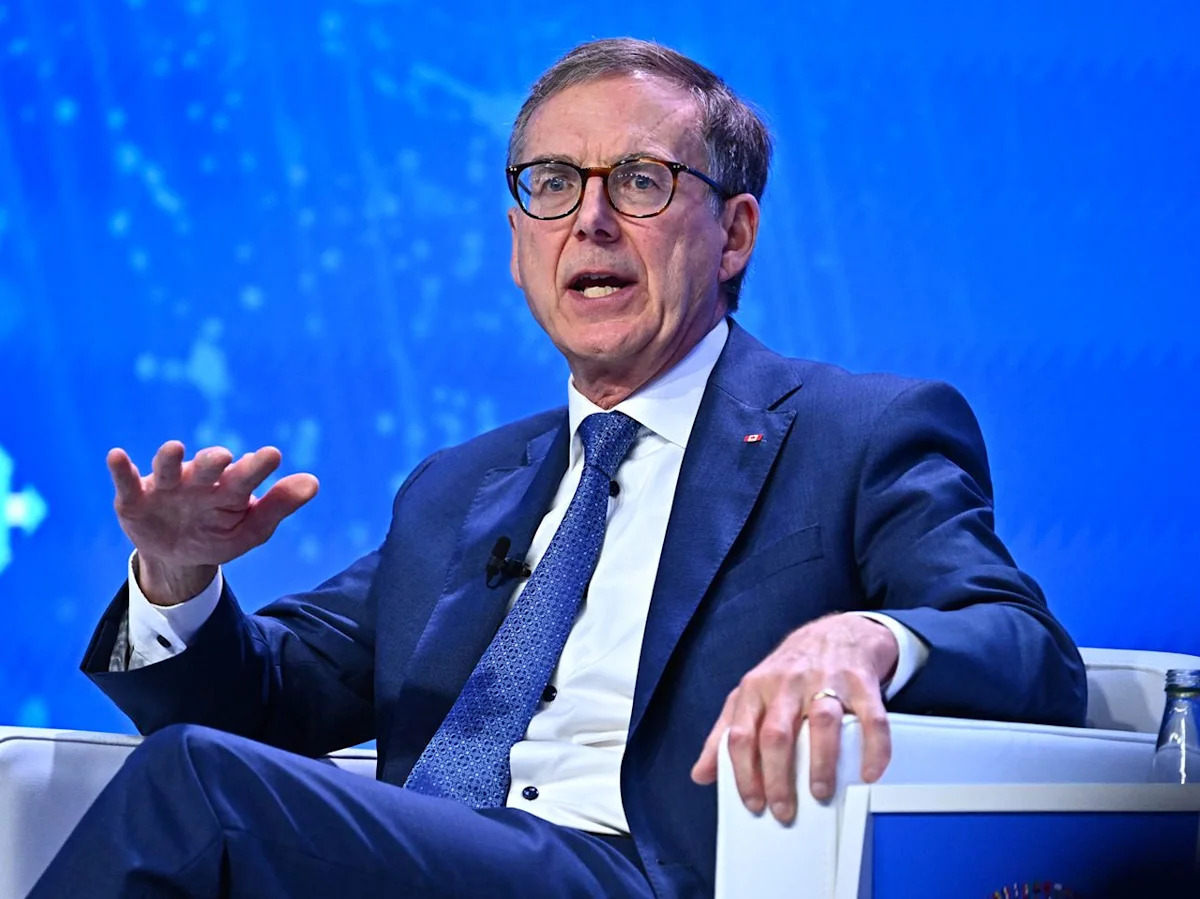
Comments made by Bank of Canada Governor Tiff Macklem away from the International Monetary Fund meetings indicated that the central bank’s broader economic perspective has evolved since July due to persistently high energy valuations. Officials now find it increasingly difficult to ignore the direct consequences of expensive energy and stand ready to adjust the overnight rate to keep inflation expectations firmly anchored.
Consequently, RBC Economics now anticipates a rate increase to 2.5 per cent on Wednesday, shifting away from a previous expectation of a prolonged hold extending toward the end of 2026. Janzen noted that the upcoming adjustment is expected to be a quarter percentage point, and it likely will not represent the final increase.
Despite the updated forecast, RBC emphasized that a rate adjustment remains non-binding due to underlying economic weakness and sufficient operational slack capable of dampening inflation pass-through. Officials must balance future inflation risks against the danger of premature tightening that could unnecessarily restrict economic momentum.
Andrew Grantham, executive director and senior economist at CIBC Capital Markets, suggested that an immediate rate increase might arrive prematurely given that the domestic economy has yet to fully recover from a sluggish 2025. Real gross domestic product growth is projected to slow to an annualized rate of two per cent in the third quarter of 2026 and drop below one per cent during the fourth quarter.
Even with those growth concerns, CIBC updated its projections to suggest the central bank could push rates to 2.5 per cent in October and subsequently reach 2.75 per cent in December or January to attain a neutral policy stance. Grantham emphasized that Macklem adopted a decidedly hawkish posture relative to prior market expectations, signaling that governing council members are far more concerned with controlling inflation than managing quarterly gross domestic product volatility.
Reporting by Policy-Wire (PW)