
Four Delegations, One Room: Inside Tehran’s High-Stakes Bid to Stop a Wider Middle East War
By: Filza AsimAdvertisement On the same day Houthi attacks targeted Riyadh’s airport, Pakistan, Saudi Arabia and Türkiye sat down with Iran in Tehran. Here is what each side wanted from the room, and...
By: Filza Asim
On the same day Houthi attacks targeted Riyadh’s airport, Pakistan, Saudi Arabia and Türkiye sat down with Iran in Tehran. Here is what each side wanted from the room, and why the outcome reaches all the way to Pakistan’s petrol pumps.
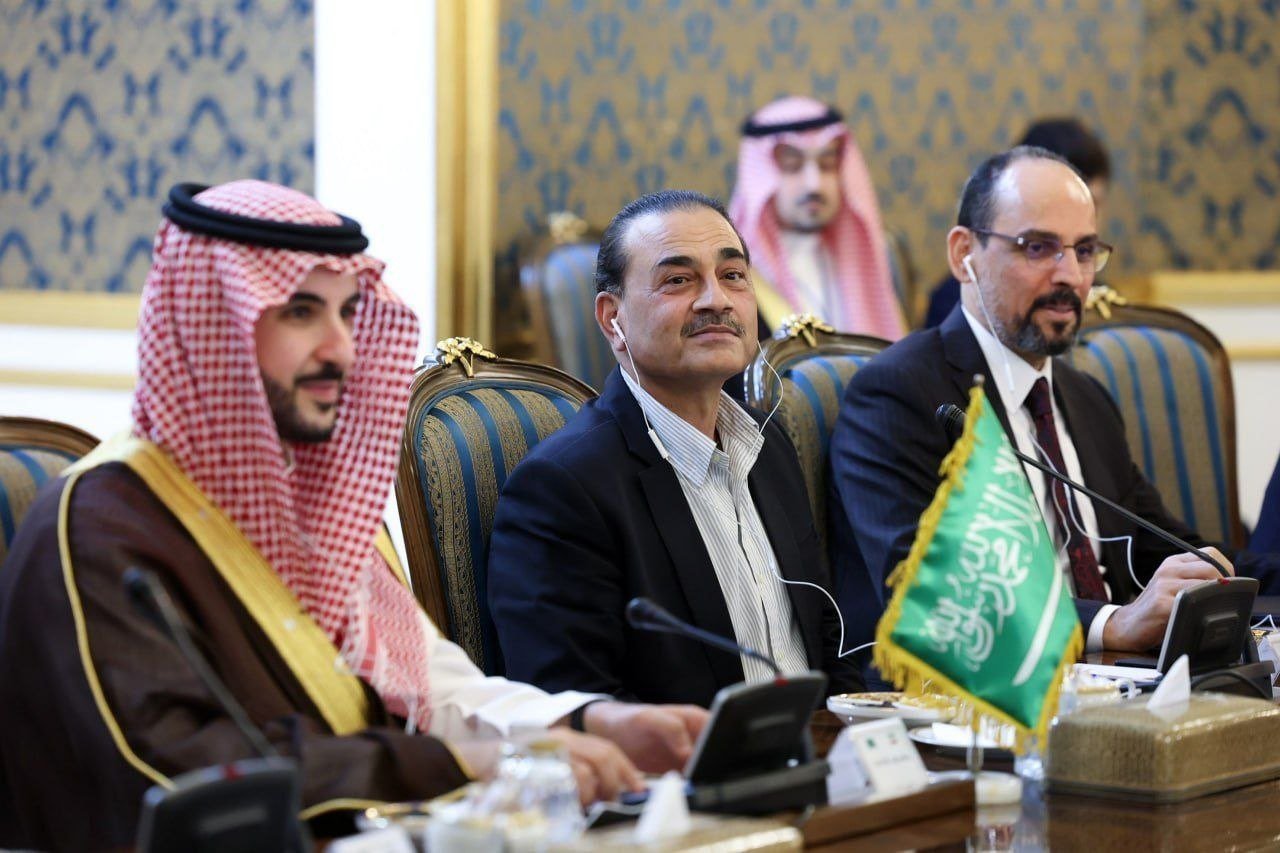
Imagine the seating plan. Saudi Arabia’s Defence Minister, Prince Khalid bin Salman, arrives in Tehran on a day when Yemen’s Iran-backed Houthis are launching fresh attacks on Riyadh’s airport and Saudi oil facilities, according to Reuters. Beside him sit Pakistan’s Field Marshal Syed Asim Munir and Türkiye’s intelligence chief Ibrahim Kalin, whose countries signed a pact with Riyadh in August declaring that an attack on one member is an attack on all three. Across the table: their Iranian hosts.
That was the scene on Monday, October 26, 2026. It may be the most awkward diplomatic meeting of the year. It may also be the most important one.
The four countries disagree about plenty. Each of them, however, has good reason to fear what happens if the region’s two hottest fronts, the US-Iran confrontation and the war in Yemen, start feeding each other.
Key Takeaways
Who met: Field Marshal Syed Asim Munir (Pakistan), Prince Khalid bin Salman (Saudi Arabia) and Ibrahim Kalin (Türkiye) held talks with Iranian officials, including President Masoud Pezeshkian.
Why now: Houthi attacks on Saudi Arabia have intensified and fears of renewed US-Iran fighting are growing.
The pact angle: It was the first high-level meeting with Iran since the three signed the Makkah Joint Defence Agreement in August.
The outcome: No agreement resolving the wider confrontation was announced on October 26.
Pakistan’s stake: The State Bank of Pakistan raised its policy rate to 12 percent the same day, citing the Middle East conflict and high energy prices.
Who Was in the Room, and Why the Line-Up Matters
Saudi and Iranian officials confirmed the line-up to Reuters: Prince Khalid bin Salman, the younger brother of Crown Prince Mohammed bin Salman, for Saudi Arabia; Field Marshal Syed Asim Munir, Pakistan’s Chief of Army Staff and Chief of Defence Forces; and Ibrahim Kalin, head of Türkiye’s intelligence service.
According to Arab News, the three delegations first held discussions with Mohsen Rezaei, secretary of Iran’s Supreme National Security Council, before meeting President Masoud Pezeshkian, who voiced support for understandings that would strengthen regional security.
The meeting itself has a Pakistani fingerprint. Iranian Foreign Ministry spokesperson Esmail Baghaei told Reuters it was proposed during Field Marshal Munir’s visit to Tehran last week, and described it as a possible first step towards regional security mechanisms. The reported agenda was crowded: US-Iran talks, Houthi attacks on Saudi Arabia, the Strait of Hormuz and the US blockade of Iranian ports.
Look closely at who was sent. A defence minister, an army chief and an intelligence chief make for a delegation built around practical security questions rather than ceremony. The composition alone, however, cannot tell us what was agreed or who carried the most weight.
Why Now? Two Fires in One Neighbourhood
Fire one: the US-Iran confrontation
The war that began with US and Israeli strikes on Iran in February has since spread to Saudi Arabia and Yemen, Reuters reports. Diplomacy has produced moments of relief. According to the Associated Press, Pakistan and Qatar helped broker an agreement in June intended to reopen the Strait of Hormuz to shipping, end the US blockade of Iranian ports and open space for wider negotiations, including on Iran’s nuclear programme. That arrangement unravelled once attacks resumed.
The gap between the two sides remains wide. US Vice President JD Vance has said Iran must reduce nuclear enrichment to end the war, while Iranian officials continue to reject what they call Washington’s unilateral demands. Iranian media reported that officials told Field Marshal Munir last week there would be no talks until Tehran’s conditions, including an end to the blockade and the lifting of oil sanctions, were met.
The calendar adds pressure. CNN reports growing speculation that President Donald Trump could order new strikes on Iran after next week’s US midterm elections. On October 25, Israeli Prime Minister Benjamin Netanyahu warned that Iran or its proxies could attempt an attack before Israel’s own election, while Israel’s defence minister denied any plan to strike first and promised a forceful response to any Iranian attack.
Fire two: Yemen
Yemen’s civil war had been largely contained by a ceasefire since 2022. That ceasefire has collapsed, and the fighting is now spilling across the Saudi border. On October 26, Reuters reported new Houthi attacks on Riyadh’s airport and Saudi oil facilities, and said Egypt had approved defence support for the kingdom. CNN reported that the United States had ordered some embassy staff and their families to leave Saudi Arabia because of the Houthi threat.
The AP also reported Houthi claims of missile strikes on forces aligned with Yemen’s internationally recognised government, alongside coalition claims of destroyed tunnels and missile infrastructure. The agency could not independently verify the casualty and damage claims, and readers should treat both accounts with caution.
Here is why the two fires matter together. A diplomatic effort that tackles only the risk of direct US-Iran fighting would leave the Yemen pathway to escalation wide open, and pressure on that front quickly creates new security demands everywhere else.
The Makkah Pact Meets Its First Real Test
Pakistan, Saudi Arabia and Türkiye signed the Makkah Joint Defence Agreement in August. Under its terms, an armed attack on one member is treated as an attack on all three. Pakistan approved the pact last week, Reuters reports, while ratification in Türkiye’s parliament is still under way. Earlier this month, the members met in Riyadh for emergency talks and agreed to ensure the rapid deployment of military forces.
Then they flew to Tehran. That sequence is the most interesting part of the story.
Deterrence and dialogue are often presented as rivals. In practice they can work as a pair. A defence pact tells any adversary that an attack may carry consequences beyond its immediate target. Talks in the adversary’s capital try to make sure those consequences never become necessary. The Makkah partners appear to be running both tracks at once.
Some caution is in order. Iran’s presence at the table does not mean it shares the pact’s objectives, and the pact’s reported provisions do not spell out how members would respond to every contingency. The meeting is best read as an exploration of overlapping security interests. A new regional security architecture has yet to emerge.
Pakistan: The Neighbour With a Seat at Every Table
For Pakistan, this was never a distant Middle Eastern affair. CNN describes Pakistan as a key intermediary between Washington and Tehran since the war began in February, and Field Marshal Munir has made repeated trips to Tehran this year, most recently last week.
Few capitals can match Islamabad’s range of contacts here. It has a defence partnership with Saudi Arabia, a long border and working relationship with Iran, close ties with Türkiye, and an open line to Washington. That network makes Pakistan a natural convenor when rivals need a room to talk in.
The June agreement offers a useful lesson. Mediation worked as an instrument and delivered real, if temporary, relief. Durable results need durable political commitments from the parties themselves. Pakistan can keep channels open and lower the temperature; the core bargain between Washington and Tehran still has to be struck by Washington and Tehran.
What Each Capital Wants From the Room
| Country | Represented by | Top priority |
|---|---|---|
| Pakistan | Field Marshal Syed Asim Munir | Prevent a wider war and protect a fragile economic recovery |
| Saudi Arabia | Defence Minister Prince Khalid bin Salman | Stop Houthi attacks on its territory and energy infrastructure |
| Türkiye | Intelligence chief Ibrahim Kalin | Keep channels open across rival camps and avoid a wider regional war |
| Iran (host) | President Masoud Pezeshkian; SNSC Secretary Mohsen Rezaei | Avoid renewed strikes and build regional backing against Washington’s demands |
Why Your Petrol Bill Is Part of This Story
The most immediate effect on Pakistan may show up far from any battlefield: at the fuel pump, in electricity bills and in the price of everyday goods.
On October 26, the State Bank of Pakistan raised its benchmark interest rate by 0.5 percentage points to 12 percent, citing a worsening inflation outlook linked to the Middle East conflict and persistently high global energy prices, according to Arab News and Bloomberg. Annual inflation reached 10.3 percent in September, with core inflation at roughly 8.4 percent. The central bank kept its growth forecast of 3.5 to 4.5 percent for the fiscal year ending June 2027, while warning that further regional escalation could threaten it.
Domestic factors, including wheat supply pressures, are also feeding inflation, so the rate decision cannot be pinned on the conflict alone. The central bank’s warning still makes the external risk plain. Pakistan imports much of its energy, and a longer war would raise the import bill, strain shipping and squeeze household budgets. Higher interest rates, meanwhile, make borrowing costlier for businesses and families.
This is where foreign policy and the kitchen table meet. Every step towards de-escalation in Tehran removes a source of pressure on Pakistan’s economy.
Can the Region Build Its Own Security Framework?
Iranian officials have presented the meeting as a possible step towards an indigenous regional security framework, one in which regional powers manage their own disputes with less reliance on outside actors. The idea has obvious appeal.
Turning it into reality is harder. A framework needs agreement on what counts as a threat, rules for managing disputes, and mechanisms that keep working when national interests diverge. An analyst quoted by CNN put the central obstacle bluntly: Tehran wants credible guarantees against another attack, and it is hard to see how Saudi Arabia, Türkiye or Pakistan could provide them or exert enough influence in Washington to secure them.
Even so, modest progress has value. Regular contact during military tension clarifies intentions, reduces the risk of miscalculation and preserves room for negotiation. The alternative is a region where each escalation triggers the next.
What to Watch Next
- Türkiye’s ratification vote. Full ratification would complete the Makkah pact’s legal footing among all three members.
- A second round. Whether the four-country format meets again will show if Tehran was a one-off or the start of a channel.
- The Houthi tempo. A drop in attacks on Saudi Arabia would be the clearest early sign the talks had practical effect.
- Washington after the midterms. CNN’s reporting points to the post-election window as a moment of heightened risk.
- Pakistan’s fuel prices and the SBP’s next decision. These will show how much of the regional tension is reaching Pakistani households.
The Bottom Line
Four countries with different threat perceptions shared a room in Tehran because each fears the same thing: separate wars merging into one. No grand bargain emerged on October 26, and none was likely. What emerged was an opening, built in large part on Pakistani groundwork.
Tehran produced a handshake and an opening. The harder part starts now: keeping four capitals talking once their interests begin to pull apart.
Frequently Asked Questions
What happened at the Tehran meeting on October 26, 2026?
Senior officials from Pakistan, Saudi Arabia and Türkiye met Iranian leaders, including President Masoud Pezeshkian and Supreme National Security Council Secretary Mohsen Rezaei, to discuss de-escalation as Houthi attacks on Saudi Arabia intensified and fears of renewed US-Iran fighting grew.
Who represented Pakistan, Saudi Arabia and Türkiye?
Pakistan sent Field Marshal Syed Asim Munir, Chief of Army Staff and Chief of Defence Forces. Saudi Arabia sent Defence Minister Prince Khalid bin Salman, and Türkiye sent intelligence chief Ibrahim Kalin.
What is the Makkah Joint Defence Agreement?
It is a defence pact signed in August 2026 by Pakistan, Saudi Arabia and Türkiye under which an armed attack on one member is treated as an attack on all three. Pakistan approved it in October, and Türkiye’s parliamentary ratification is under way.
Did the Tehran talks produce a deal?
No agreement resolving the wider confrontation was announced on October 26. Iranian officials described the meeting as a possible first step towards regional security mechanisms.
How does the Middle East conflict affect Pakistan’s economy?
Pakistan imports much of its energy, so the conflict pushes up fuel and transport costs. On October 26 the State Bank of Pakistan raised its policy rate to 12 percent, citing the conflict and high global energy prices.
What role has Pakistan played in US-Iran mediation?
Pakistan has acted as a key intermediary since the war began in February. With Qatar, it helped broker a June agreement on reopening the Strait of Hormuz and ending the US blockade of Iranian ports, which later unravelled when attacks resumed.
Author