


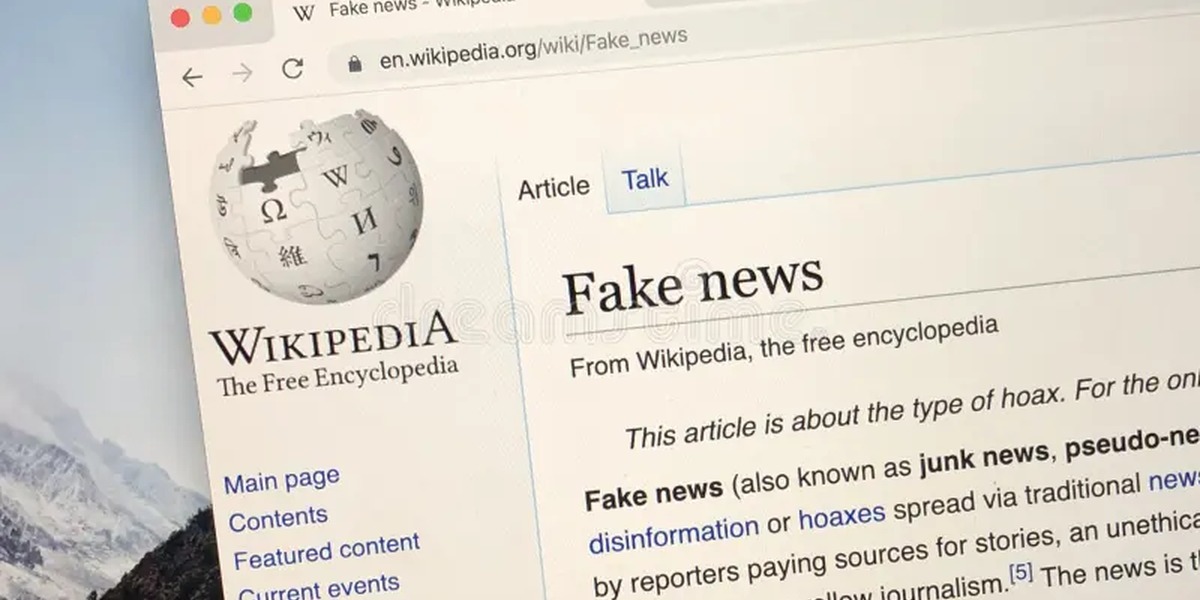
POLICY WIRE FACT CHECK: Debunking Misconceptions Regarding Wikipedia’s Fact
The Claim Recent discourse surrounding the role of Wikipedia in the digital information ecosystem has sparked a viral debate regarding the platform’s editorial standards. Specifically, claims...

The Claim
Recent discourse surrounding the role of Wikipedia in the digital information ecosystem has sparked a viral debate regarding the platform’s editorial standards. Specifically, claims have circulated suggesting that Wikipedia operates as an unchecked repository of user-generated content, often conflating the platform’s open-editing model with a lack of rigorous fact-checking protocols. These claims, frequently appearing on social media and fringe news aggregators, suggest that the platform is susceptible to coordinated manipulation and that its contributors operate without oversight.
The core of this concern stems from a misunderstanding of the ‘Verify Before You Contribute’ initiative promoted by the Wikimedia Foundation. Critics have misinterpreted this call for community-led verification as an admission that the platform lacks internal mechanisms to prevent the spread of misinformation, leading to public skepticism regarding the reliability of Wikipedia as a primary source of information.
The Details & Investigation
Our investigation into the Wikimedia Foundation’s operational framework reveals that the ‘Verify Before You Contribute’ initiative is not a reactive measure to failure, but a proactive reinforcement of Wikipedia’s foundational ‘Verifiability’ policy. Unlike traditional media, which relies on centralized editorial boards, Wikipedia utilizes a decentralized, community-driven model where every edit must be supported by reliable, third-party sources. This system is designed to mitigate both misinformation—unintentional errors made by well-meaning editors—and disinformation—deliberate attempts to inject false narratives into the public record.
The investigation confirms that Wikipedia employs a multi-layered defense system against disinformation. This includes automated bots that flag suspicious edits, a community of experienced volunteer editors who monitor ‘Recent Changes,’ and strict policies regarding ‘Neutral Point of View’ (NPOV) and ‘No Original Research.’ When disinformation campaigns attempt to manipulate high-traffic articles, the platform’s ‘semi-protection’ and ‘full-protection’ tools are deployed to restrict editing privileges, effectively neutralizing coordinated efforts to alter historical or scientific facts.
Furthermore, the distinction between misinformation and disinformation is critical here. Misinformation on Wikipedia is typically addressed through the collaborative editing process, where community members correct inaccuracies as they are identified. Disinformation, however, is treated as a policy violation. The Wikimedia Foundation actively collaborates with academic researchers and fact-checking organizations to identify patterns of coordinated inauthentic behavior. By requiring that all content be tethered to reputable, secondary sources, the platform creates a high barrier to entry for fabricated information.
Our analysis concludes that the viral claims suggesting Wikipedia is an unverified or ‘wild west’ environment are fundamentally flawed. The platform’s reliance on citations is its primary defense mechanism. While no system is immune to human error or sophisticated bad actors, the transparency of Wikipedia’s ‘Talk’ pages and ‘Edit History’ allows for a level of public auditability that is absent in most other digital media environments.
The Verdict
The claim that Wikipedia lacks rigorous fact-checking or is inherently unreliable is FALSE. The platform operates on a robust, transparent, and community-enforced system of verifiability that actively counters both misinformation and disinformation. The ‘Verify Before You Contribute’ initiative serves as a reinforcement of these existing standards rather than an admission of systemic failure.
While Wikipedia is not a primary source, its commitment to secondary source verification makes it a highly resilient tool against the spread of false information. Users are encouraged to engage with the ‘References’ and ‘Talk’ sections of articles to understand the depth of the verification process behind any given entry.
Counter-misinformation & disinformation investigation conducted by PolicyWire Editorial Desk (PW).