


Badr Memorandum: Strategic Autonomy, Defence Industrial Integration and the Emerging Security Architectures
The strategic value of a defence partnership is increasingly determined not only by the weapons its members possess, but also by their ability to develop, manufacture and sustain those capabilities...

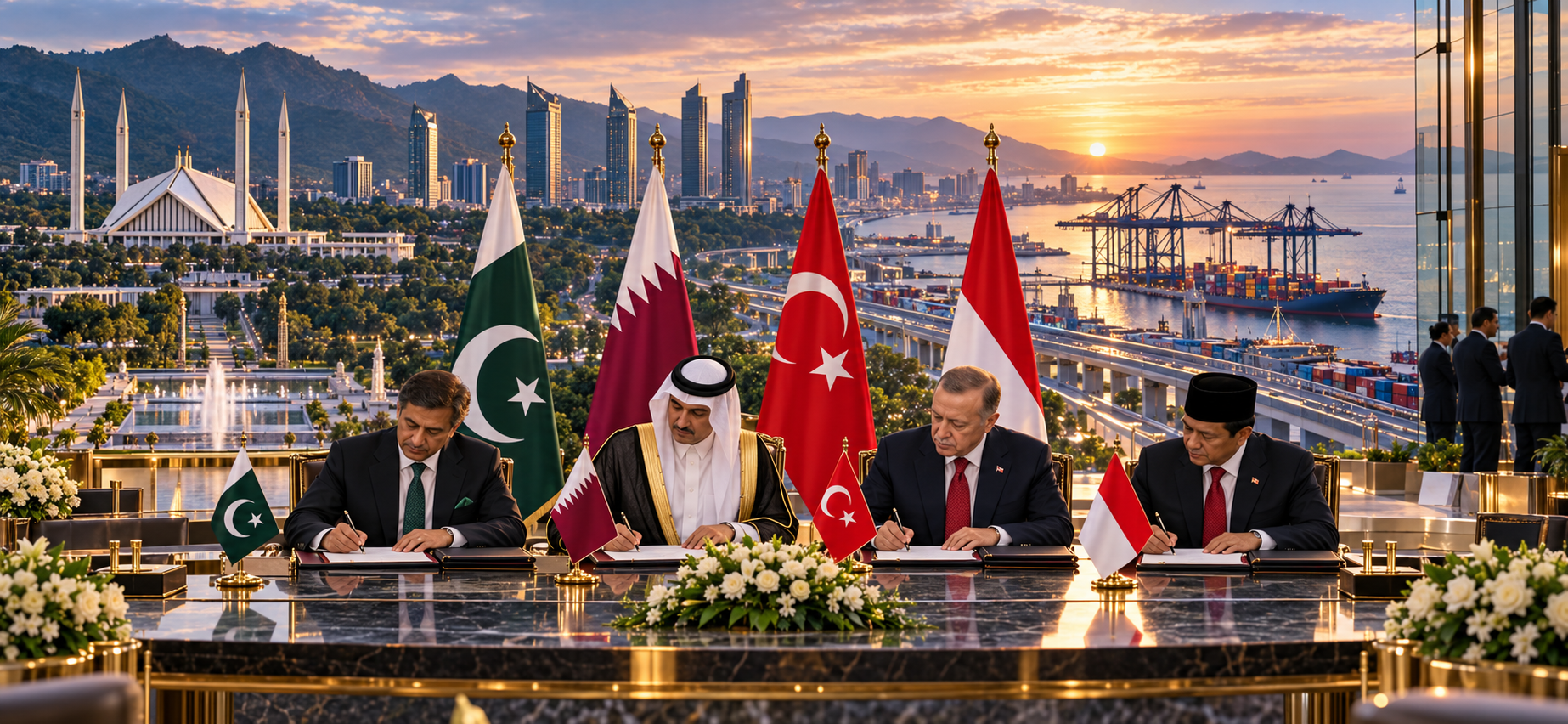
The strategic value of a defence partnership is increasingly determined not only by the weapons its members possess, but also by their ability to develop, manufacture and sustain those capabilities independently. The Badr Memorandum of Understanding, signed by Pakistan, Türkiye, Qatar and Indonesia in Doha on 21 October 2026, reflects this evolving approach to security. Its significance lies in the possibility of transforming separate national defence industries into a coordinated system of technological cooperation, industrial production and strategic resilience.
The framework seeks to promote joint research and development, technology transfer, training and defence manufacturing. The proposed arrangements outlined for its implementation, including Qatari financial and technological support, production facilities in Türkiye and an emphasis on affordable air defence systems, indicate how this cooperation could acquire practical significance. However, these operational details should be distinguished from the broader objectives publicly announced at the signing. Their real importance will depend on subsequent agreements, approved budgets and implemented projects.
The initiative can be understood through the theoretical lens of strategic autonomy, which emphasises a state’s ability to protect its interests without excessive dependence on external suppliers or security guarantors. Contemporary conflicts have demonstrated that possessing sophisticated military equipment is insufficient when access to spare parts, ammunition, maintenance or technological upgrades can be disrupted. For Pakistan, cooperation with Türkiye, Qatar and Indonesia offers a potential means of strengthening domestic production, diversifying procurement relationships and developing capabilities that remain sustainable during prolonged security crises.
The proposed focus on affordable air defence is particularly relevant. Modern security threats increasingly involve combinations of conventional aircraft, drones, precision-guided weapons and other relatively inexpensive aerial systems. Responding to every low-cost threat with expensive interceptors can impose considerable financial pressure on a state’s defence establishment. A cooperative development programme could help participating countries explore layered air defence solutions that balance operational effectiveness with affordability. Nevertheless, cost-effectiveness would depend on the systems’ actual performance, integration requirements and ability to respond to diverse threats. No specific system or operational capability should be assumed to have emerged from the memorandum alone.
The participation of all four countries offers complementary advantages. Türkiye possesses an increasingly diversified defence-industrial base and experience in military platforms and systems integration. Pakistan brings established defence manufacturing, engineering expertise and experience in developing and maintaining military equipment. Indonesia offers an industrial base and a substantial domestic market, while Qatar can potentially provide investment and sustained demand. If these strengths are combined through clearly defined projects, the arrangement could distribute research costs, expand production volumes and improve the commercial viability of indigenous defence technologies.
Qatar’s proposed financial role could be especially important because advanced defence research requires sustained investment before commercial or operational returns materialise. Financing, however, must be accompanied by agreed intellectual-property arrangements, equitable access to technology and clearly defined production responsibilities. Otherwise, a partnership intended to increase collective self-reliance could leave some participants dependent on another member for critical components or technical support.
The institutional mechanism envisaged for assessing security requirements, developing joint production plans and approving budgets is therefore central to the memorandum’s success. A ministerial-level board could provide political direction, establish priorities and coordinate resources. Yet implementation would require technical working groups, realistic production schedules, common quality standards and mechanisms for resolving disagreements. Establishing manufacturing facilities in Türkiye could initially benefit from its existing industrial infrastructure, but meaningful cooperation would also require opportunities for Pakistani and Indonesian engineers, suppliers and manufacturers to acquire expertise and develop their own production capacity.
The theory of complex interdependence provides a second useful framework for understanding Badr.States increasingly pursue security through interconnected economic, technological and institutional relationships rather than relying exclusively on formal military alliances. Shared production creates continuing incentives for consultation, while common research programmes and supply chains increase the practical costs of disrupting cooperation. Such interdependence can strengthen partnerships, although it also creates vulnerabilities if political disagreements, export restrictions or supply disruptions affect critical components.
Regional security implications must also be assessed through the security dilemma. Measures adopted by one state to strengthen its defensive capabilities can be interpreted by another as preparations for strategic competition, even when the original intention is defensive. Badr could consequently attract scrutiny from neighbouring states, particularly India, because deeper defence cooperation involving Pakistan and Türkiye may influence perceptions of regional military balance. Nevertheless, the memorandum’s publicly stated objectives concern industrial cooperation and defensive capability development. It should not automatically be interpreted as an anti-India alliance or equated with a collective-defence treaty.
For Pakistan, the most effective response to such concerns is to demonstrate the initiative’s practical and defensive character through transparent objectives, lawful cooperation and a consistent emphasis on regional stability. At the same time, Islamabad must evaluate the partnership according to its tangible contribution to national security, rather than its symbolic or diplomatic visibility.
Ultimately, Badr’s importance will be determined by implementation. If financing translates into viable projects, technology transfer develops domestic expertise and joint production reduces long-term dependence on external suppliers, the memorandum could strengthen Pakistan’s defence-industrial resilience while creating opportunities for exports and skilled employment. If coordination remains limited to declarations and institutional meetings, its strategic impact will be modest.
Badr should therefore be understood not as the emergence of a new military bloc, but as a potential experiment in cooperative defence production. Its greatest achievement would be to convert diplomatic trust into durable industrial capability, enabling participating countries to strengthen their own security while contributing to a more diversified and resilient regional security environment.
Author