


China’s Property Slump Persists as New Home Prices Decline Again in September
China's new home prices fell in September, extending a three-year downturn. Discover how policy shifts are impacting the housing market and economy.

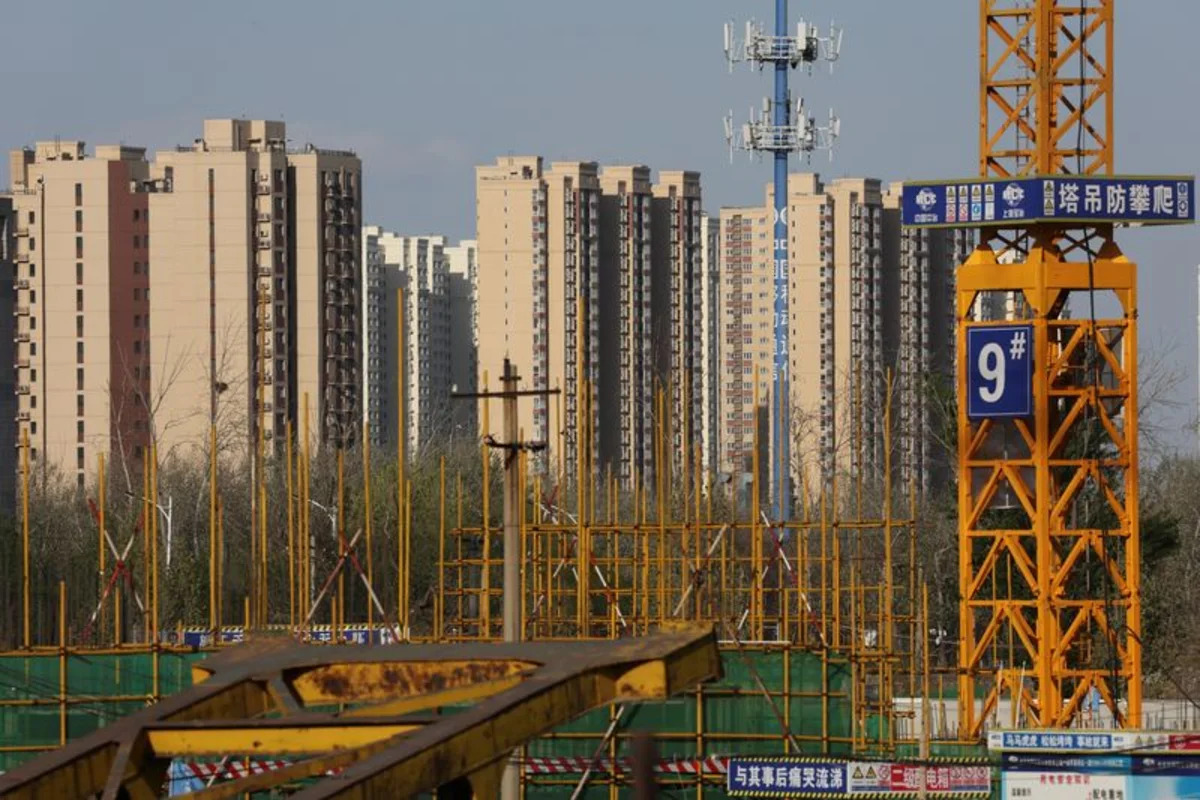
POLICY WIRE — Beijing, China — China’s new home prices continued their downward trajectory in September, extending a slump that has now persisted for more than three years. The latest data suggests that recent government policy interventions have yet to trigger a widespread recovery in housing demand.
Calculations based on National Bureau of Statistics figures indicate that new home prices dipped 0.1% month-on-month, maintaining the same rate of decline observed in August. On an annual basis, prices retreated by 2.8%, a slight improvement from the 3.0% drop recorded in August, though the trend of decline has remained unbroken since June 2023.
The persistent weakness in the housing sector remains a significant hurdle for the Chinese economy, negatively impacting consumer confidence and reducing revenue for local governments. Zhang Dawei, an analyst at property agency Centaline, noted that the market has become increasingly fragmented. The era of widespread housing price hikes has completely ended, and structural market trends will become the norm, Zhang stated.
Market performance varies significantly by region. While tier-one cities like Shanghai are showing signs of steady recovery—particularly in the resale market—and second-tier cities are stabilizing due to policy support, smaller cities continue to struggle with little expectation of a near-term rebound. In major urban centers, recent incentives, including the easing of homebuying restrictions and subsidies introduced in August, have helped stabilize prices.
Zhe Lu, chief economist and co-head of research at Soochow Securities, believes the market is on the eve of a cyclical inflection point. While the specific trajectory of a rebound is uncertain, Lu noted that further downside is far more limited than in prior years. He anticipates that nationwide home prices will stabilise over the next one to two years, pointing to seven consecutive months of resale price gains in tier-one cities since February.
Historical analysis of 190 property downcycles across 57 economies between 1970 and 2025 suggests that such slumps typically last about 23 quarters, with most concluding within 30 quarters. Having adjusted for 20 quarters, China’s property sector could potentially bottom out within the next 12 to 24 months, according to Lu.
To bolster demand in smaller cities, the central bank and financial regulators introduced policies in late September to subsidize mortgage interest payments for eligible buyers. However, the program caps the purchase price of qualifying homes at 1.5 million yuan ($224,417), a threshold that barely covers the cost of a one-bedroom apartment in a tier-one city.
The ongoing property crisis continues to suppress domestic demand, as homeowners facing declining asset values prioritize savings over spending. Recent data confirms that both property investment and home sales contracted at an accelerated rate during the first nine months of the year.
While China’s third-quarter economic growth exceeded expectations due to robust exports and factory output, the property sector remains a drag. Sheana Yue, a senior economist at Oxford Economics, noted that state-led investment and high-tech exports are likely to remain key supports for growth in 2027. But subdued household consumption and the prolonged property downturn looks set to weigh on the domestic economy for a while longer, limiting broader spillovers from these growth drivers, Yue added.
Reporting by Policy-Wire (PW)