

Sri Lanka’s Human Rights Commission Reports Persistent Militarization in Tamil Regions
The Human Rights Commission of Sri Lanka reports ongoing military land occupation in Tamil-majority areas, 17 years after the civil war's conclusion.

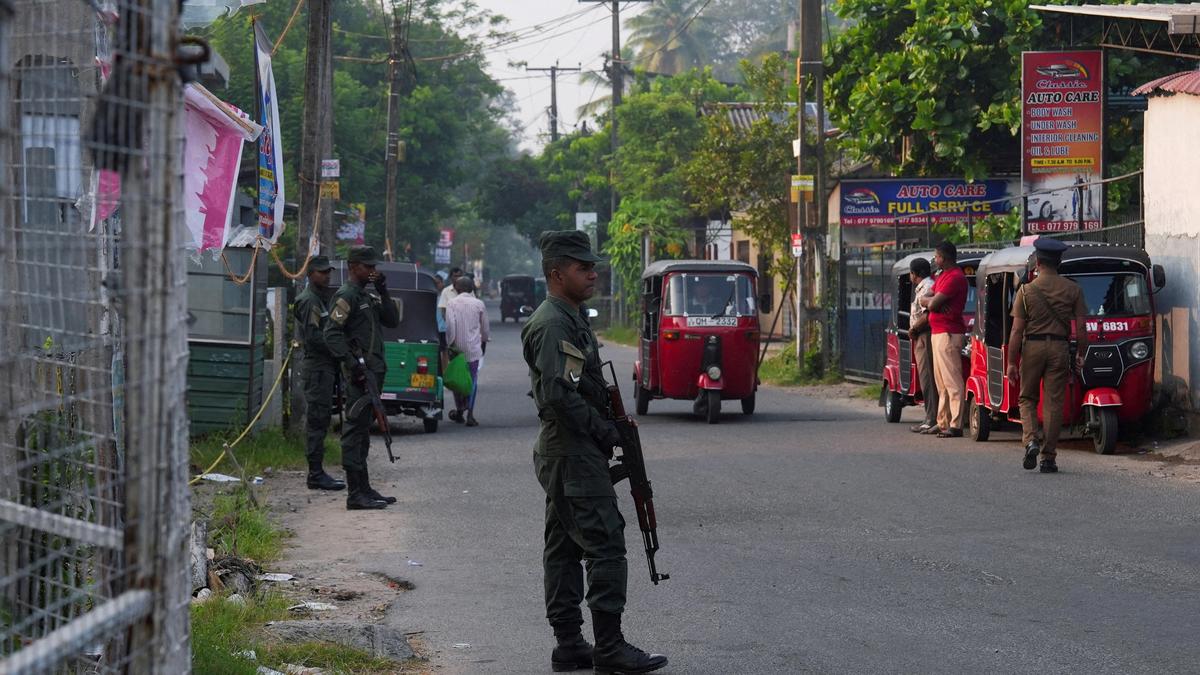
POLICY WIRE — Colombo, Sri Lanka — Seventeen years after the conclusion of the civil war, the Human Rights Commission of Sri Lanka has reported that the militarization of the country’s Tamil-majority northern and eastern provinces remains a significant issue. Despite repeated government promises to scale back the military footprint in these former conflict zones, the Commission’s latest report, titled ‘The Human Rights Situation of the Northern and Eastern Provinces of Sri Lanka’, highlights a sustained pattern of land appropriation and intimidation.
The report details how the military continues to restrict access to traditional livelihoods and frequently uses national security as a justification for land acquisition. The Commission has urged the government to expedite the return of occupied properties to their rightful owners and to withdraw military personnel from civilian economic sectors, specifically agriculture and education.
This ongoing militarization is just one of several post-war concerns identified by the Commission, which also examined issues such as enforced disappearances, mass graves, and the resettlement of northern Muslims who were expelled by the LTTE in 1990. Residents in these regions have long argued that the heavy military presence serves as a major barrier to both economic revival and national reconciliation.
President Anura Kumara Dissanayake, who secured victory in the north and east during the November 2024 general elections, had promised to return these lands. While the President instructed security forces in August to release land no longer required for security purposes, local communities remain skeptical due to the slow pace of implementation.
Ministry spokesman Brigadier Franklin Joseph stated that over 90% of previously held lands have been returned, noting that remaining cases often involve disputes over ownership documentation. However, opposition MP Thurairasa Ravikaran of the Ilankai Tamil Arasu Kadchi (ITAK) countered that it is unreasonable to expect displaced families to possess formal records after fleeing for their lives during the conflict.
The Commission further observed that the lack of a comprehensive national security sector reform plan continues to isolate the north and east from the rest of the country. With military personnel still managing pre-schools and operating local businesses, the report concludes that the current environment continues to inhibit post-war progress.
Reporting by Policy-Wire (PW)