


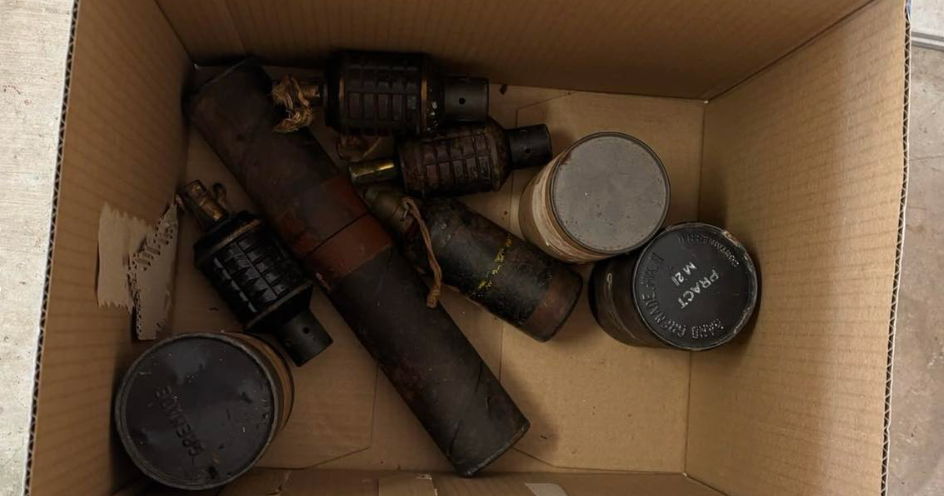
Live WWII Grenades Discovered in Box Purchased at Texas Estate Sale
Austin police bomb squad safely removed live WWII-era grenades found in a box from a local estate sale. Learn how to handle dangerous military ordnance.

POLICY WIRE — Austin, Texas — An ordinary estate sale purchase turned into a significant public safety concern this week after a buyer discovered live World War II-era explosives hidden inside a box of items.
The Austin Police Association reported that officers were dispatched on Tuesday following a call from a resident who identified the potential munitions among their recent haul. Upon arrival, a police bomb squad verified that the grenades were active, containing explosive material that posed a genuine detonation risk.
Authorities moved quickly to neutralize the threat. The police association commended the bomb squad for their steady nerves and expertise, noting that officers successfully secured the scene and established a perimeter to protect nearby residents.
In a statement, the association emphasized the gravity of the situation, noting that handling 80-year-old explosives with unknown stability is dangerous, precise work, and they do it with the professionalism this city counts on.
Law enforcement officials are using this incident to urge the public to avoid touching or moving any military ordnance, such as shells, mortar rounds, or grenades, regardless of whether they appear inert. If such items are discovered, authorities advise leaving them undisturbed and contacting trained professionals immediately.
The discovery of unexploded military ordnance in vintage collections is not entirely uncommon. The FBI notes that families of U.S. veterans frequently find dangerous souvenirs from various conflicts, including World War I, World War II, the Korean War, the Vietnam War, and the Gulf War.
A similar incident occurred last year in central Washington, where a 3-year-old boy found a live WWII-era hand grenade on his family’s property. Fortunately, the child was unharmed, and bomb technicians were able to safely remove and dispose of the device in a rural area.
Reporting by Policy-Wire (PW)