

UN Refugee Agency Warns of Impossible Demands Amid Severe Funding Shortfalls
UN refugee chief Barham Salih warns severe funding cuts and record displacement are pushing global humanitarian operations and protection systems to the brink.

POLICY WIRE — Geneva, Switzerland — The head of the United Nations refugee agency warned on Monday that his organization is being asked to perform the impossible as severe budget cuts collide with historic levels of global displacement.
Barham Salih, the United Nations high commissioner for refugees, addressed the opening of the UNHCR annual executive committee meeting, highlighting a massive financial gap. As of October 9, the agency secured $3 billion, which covers only 35 percent of the $8.5 billion requirement needed for 2026, while current forecasts project roughly $2.68 billion for 2027.
Salih noted that while government budget pressures are understandable, a clear line exists between stretching resources and expecting organizations to operate under impossible conditions. He added that struggling organizations cannot be asked to keep millions of vulnerable people alive when fewer resources are available to sustain the response.
The former Iraqi president and former refugee stated that the agency has responded to 22 emergency declarations across 18 countries this year, which includes 17 newly declared emergencies in 15 countries. Since 2024, workforce reductions have seen nearly 8,000 personnel leave the agency, dropping total staff numbers from nearly 20,000 to just under 12,000.
Global displacement statistics remain near historic highs, with 117.8 million people forcibly displaced from their homes by the end of 2025. This figure represents a slight decrease from the record 123.2 million reported in 2024, with 35.6 million classified as refugees under the UNHCR mandate.
Two-thirds of these mandate refugees originated from Venezuela, Ukraine, Syria, Afghanistan, and Sudan. Furthermore, deep financial strains risk leaving nearly 8.3 million refugees and forcibly displaced individuals without access to vital assistance this year.
Shifting donor contributions have severely impacted the agency, marked by slashed foreign aid from the United States under President Donald Trump alongside tightened budgets from other traditional partners. Out of $2.44 billion received in voluntary contributions in 2026, the European Union emerged as the top donor with $408 million.
Germany, Sweden, the Netherlands, and Denmark followed as the next largest contributing countries. Meanwhile, the United States dropped to the ninth-biggest contributor position with $89 million, a steep decline from $812 million in the previous year, while China contributed $1.8 million.
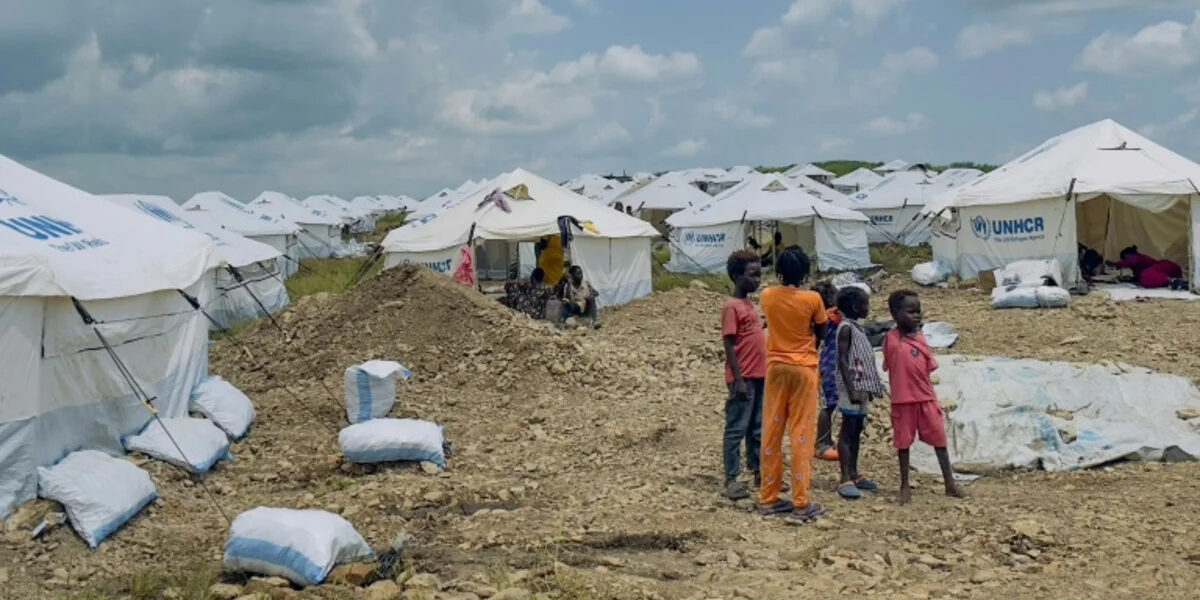
Salih cautioned that temporary solutions for displaced populations frequently transform into permanent realities where children born in settlements eventually raise their own families there. He stressed the urgent need to break this cycle so that displacement is not passed down from one generation to the next.
Reporting by Policy-Wire (PW)