

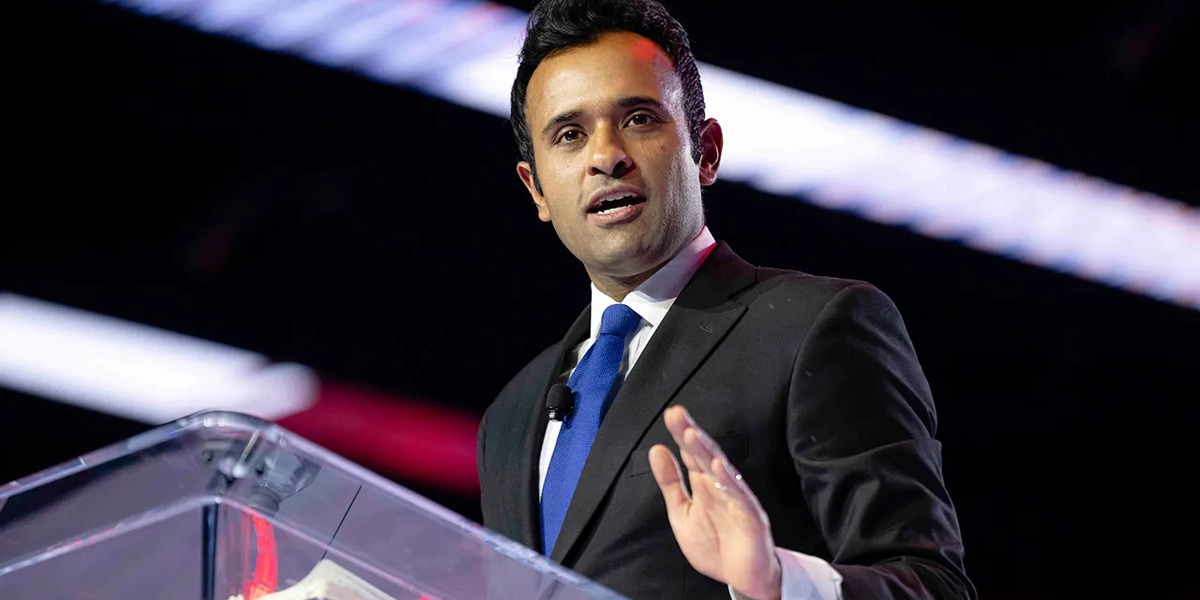
POLICY WIRE FACT CHECK: Did Vivek Ramaswamy Profit from Promoting a Failed Alzheimer’s Drug?
The Claim A viral political ad during Ohio’s 2026 gubernatorial election accused Republican candidate Vivek Ramaswamy of promoting a failed Alzheimer’s drug, intepirdine, and profiting from its...

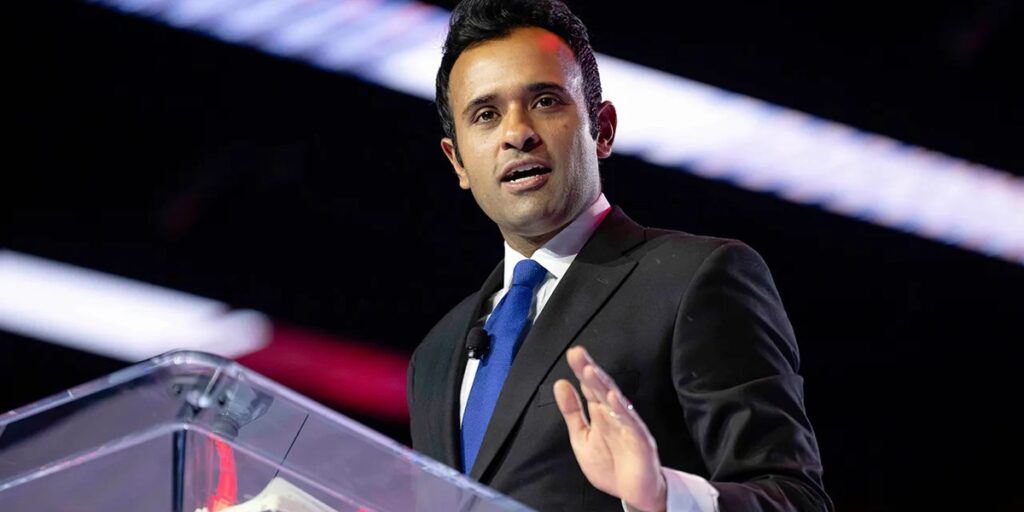
The Claim
A viral political ad during Ohio’s 2026 gubernatorial election accused Republican candidate Vivek Ramaswamy of promoting a failed Alzheimer’s drug, intepirdine, and profiting from its failure. The ad, shared widely on Ohio TV stations, featured Norman Wernet III, a Bexley resident whose wife suffers from Alzheimer’s. In the ad, Wernet claims that Ramaswamy ‘pushed an Alzheimer’s drug that he knew didn’t work’ and ‘made hundreds of millions of dollars scamming people.’ The statement was part of a broader attack by Democratic candidate Dr. Amy Acton on Ramaswamy’s business practices, particularly his role in founding biopharmaceutical company Axovant Sciences, which acquired intepirdine from GlaxoSmithKline (GSK) in 2014.
The claim gained traction as it aligned with concerns about the high failure rate of Alzheimer’s drug development and the potential for corporate misconduct. The ad implied that Ramaswamy had knowingly misled investors and patients, suggesting a deliberate deception that led to financial harm. However, the nature of the claim—whether it constitutes misrepresentation or intentional falsehood—requires a detailed examination of the timeline, available data, and legal context surrounding the drug’s development and promotion.
The Details & Investigation
Vivek Ramaswamy founded Roivant Sciences in 2014, and shortly after, created Axovant Sciences as a subsidiary. Axovant acquired intepirdine from GSK for $5 million in December 2014. At the time, GSK had already conducted four Phase 2 trials of the drug, which showed mixed results when used alone but some improvement when combined with donepezil, an existing Alzheimer’s medication. Despite this, Axovant proceeded to conduct a Phase 3 trial, which ultimately failed to show significant cognitive or functional benefits over a placebo. The drug was abandoned in early 2018, leading to a sharp decline in Axovant’s stock price.
Ramaswamy made several public statements between 2015 and 2016 promoting intepirdine, often citing positive preliminary findings. In a June 2015 Forbes interview, he called it “a great drug candidate” and suggested it could make “a huge difference for a lot of patients.” In a CNBC interview later that year, he claimed the drug was “statistically significantly better than the placebo.” However, these statements did not fully disclose the limitations of the data, such as the fact that the more favorable results came from patients taking intepirdine alongside donepezil, not as a standalone treatment.
One key point of contention was a 2015 conference abstract co-authored by Ramaswamy’s mother, Dr. Geetha Ramaswamy, which reanalyzed GSK’s earlier data and suggested intepirdine was “well-tolerated and effective in improving cognition and function” when used with donepezil. While the abstract was published in a reputable journal, it was a preliminary analysis and not a peer-reviewed study. Experts like Kathy Liu, a psychiatrist at University College London, noted that such abstracts are generally not considered definitive evidence of a drug’s efficacy.
Despite the Phase 3 trial’s failure, Ramaswamy was not personally found to have engaged in fraudulent activity. SEC filings indicate that he held less than 1% ownership in Axovant directly, with his financial interests primarily tied to Roivant, which owned 69.8% of Axovant. While he received compensation through stock and other arrangements, there is no direct evidence that he sold shares at inflated prices or that he knowingly misled investors about the drug’s prospects. David Weber, a forensic accounting professor and former SEC investigator, stated that a failed clinical trial does not constitute fraud unless there is proof of intentional deception. He also noted that Alzheimer’s drug development has a historically high failure rate, making it difficult to attribute failure solely to misrepresentation.
The Verdict
The claim that Vivek Ramaswamy “pushed an Alzheimer’s drug that he knew didn’t work” and “made hundreds of millions of dollars scamming people” is largely unsubstantiated. While Ramaswamy did promote intepirdine in public forums, the evidence does not support the assertion that he intentionally deceived investors or patients about the drug’s effectiveness. The Phase 3 trial failure was a known risk in the pharmaceutical industry, and Ramaswamy’s statements were based on incomplete or preliminary data rather than outright falsehoods.
Furthermore, the claim that he “made hundreds of millions of dollars” from the drug is not supported by clear financial records. While Ramaswamy benefited financially from his role in Axovant and Roivant, the available data does not establish that his earnings were directly tied to intepirdine. The SEC has not charged him with any wrongdoing, and experts have emphasized that a failed drug trial does not equate to fraud. Therefore, the claim is best categorized as MISLEADING, as it exaggerates the extent of Ramaswamy’s knowledge and intent while omitting critical context about the drug’s development and the risks inherent in pharmaceutical research.
Counter-misinformation & disinformation investigation conducted by PolicyWire Editorial Desk (PW).