


Secret Service Deputy Warns of Unresolved Drone Swarm Threats
Secret Service deputy warns of unresolved drone swarm threats, as agency boosts defenses amid rising security concerns.

POLICY WIRE — Washington, D.C. — The Secret Service is addressing a growing concern: the threat of drone swarms, which have become a significant challenge for the agency.
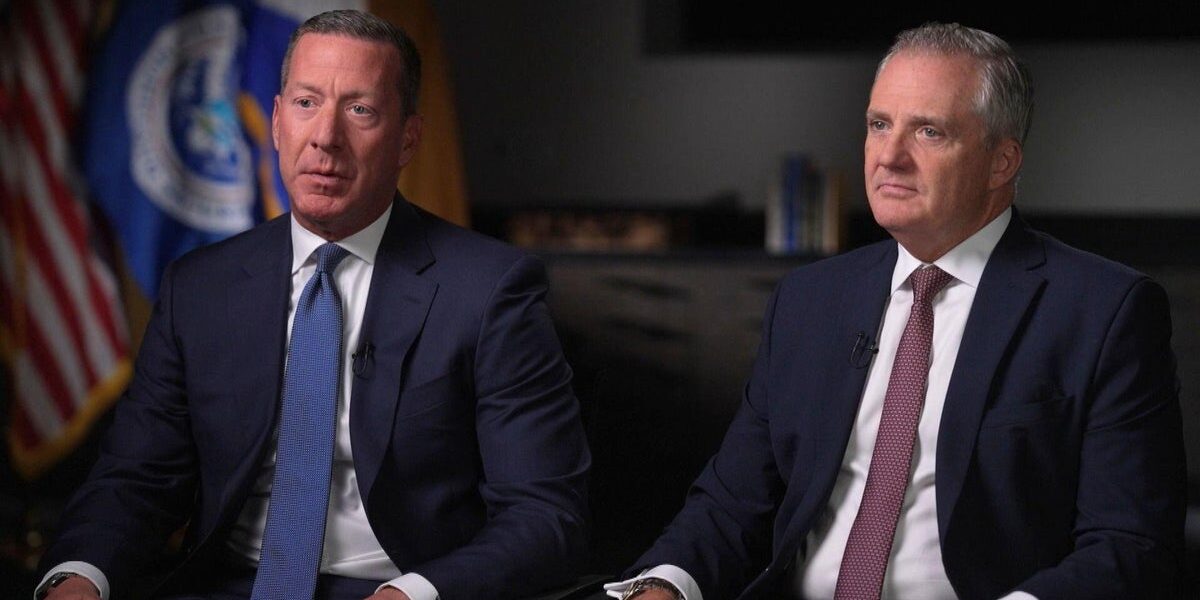
Deputy Director Matthew Quinn is spearheading a multimillion-dollar initiative to enhance both offensive and defensive drone capabilities. Among the tools being developed is an AI-powered drone hunter that uses radar guidance to disable or capture hostile drones with a net.
Quinn acknowledged the severity of the issue, stating, ‘Swarms are a huge problem and a big threat.’ He emphasized that while the White House remains the safest location, the threat from drone swarms has not been resolved.
The ongoing conflict in Ukraine has provided real-world testing for drone warfare, prompting the Secret Service to adapt its strategies. ‘We know technology will eventually reach the homeland,’ Quinn said. ‘We’re using lessons from abroad to stay ahead.’
Director Sean Curran stressed the importance of proactive planning, noting that the agency must assume threats are possible. ‘The second we stop, we’ll be caught off guard,’ he said.
The Secret Service is also managing a surge in threats against protectees, with 10,000 incidents reported this year—a 40% increase compared to the previous year. Curran attributed part of the rise to greater public access to information through the internet.
Political tensions have also led to increased scrutiny, particularly regarding former President Donald Trump, who has faced multiple assassination attempts. Quinn highlighted the role of mental health in escalating threats, saying, ‘More people are being pushed over the edge in either direction.’
While the agency does not track the political affiliations of threats, research by the Center for Strategic and International Studies showed a shift in attack sources, with right-wing threats now surpassing left-wing ones in 2026.
The Secret Service is also monitoring international threats, including those from Iran, where officials have publicly vowed revenge against the U.S. for the killing of their supreme leader. ‘We recognize the threat environment has increased,’ Quinn said.
In response to past failures, such as the 2024 Butler rally shooting, the agency has made internal changes. A Department of Homeland Security report found missed opportunities in preventing the attack. Curran said he is confident such events will not happen again.
With the president returning to the campaign trail, the Secret Service has expanded training for agents. The agency is also addressing long-standing staffing shortages, with counter-sniper teams operating at 73% of required capacity.
New security measures include upgrades to the presidential limousine, which features bulletproof glass and advanced defensive systems. A medical response truck equipped with a trauma unit and field surgeon has also been added to the motorcade.
A new armored personnel carrier is now part of the president’s transport, enhancing mobility during large-scale events. The new Air Force One, donated by Qatar, cost nearly $400 million in security enhancements. However, the plane was not used for a recent trip to Turkey due to intelligence about a potential missile threat.
During that incident, the president was secretly transferred to a different aircraft, while others remained on the decoy plane. Curran noted that such tactics are often kept confidential to maintain effectiveness.
Quinn emphasized that the primary mission of the Secret Service is to protect the president, regardless of the risks to others. ‘The priority is the president of the United States,’ he said.
Reporting by Policy-Wire (PW)