
POLICY WIRE FACT CHECK: Uncovering the truth behind 16 Trump statue and sculpture claims
The Claim A series of viral claims have circulated online alleging the existence of multiple statues and sculptures depicting former U.S. President Donald Trump in various forms, including a golden...

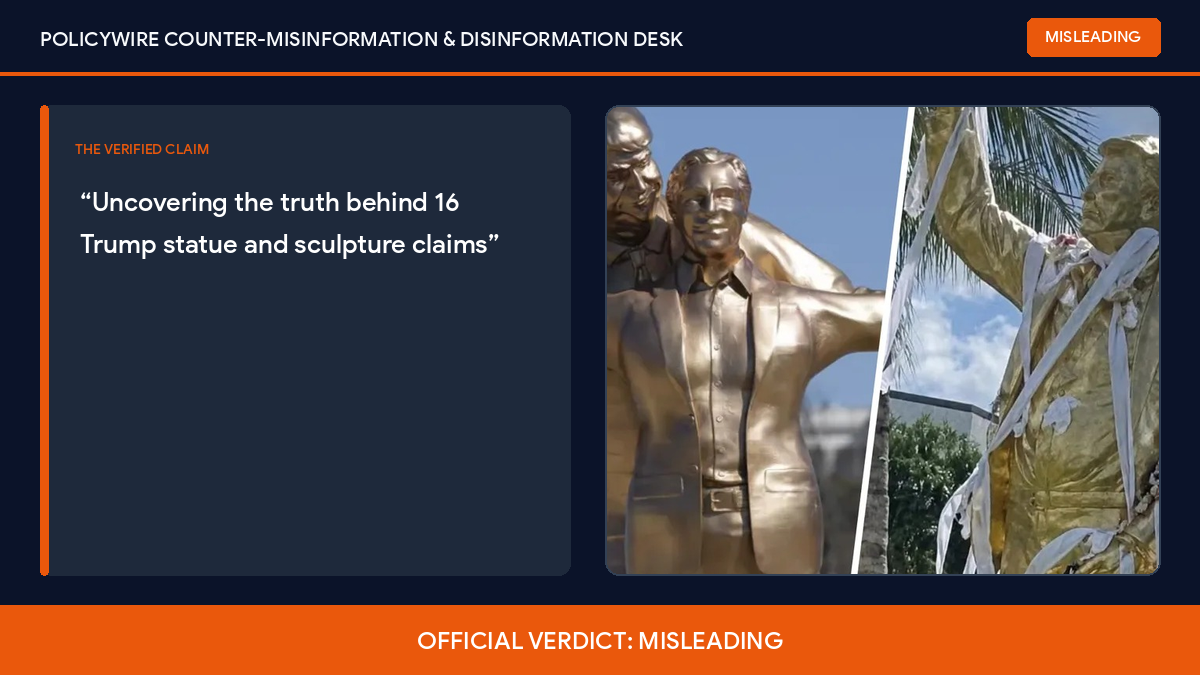
The Claim
A series of viral claims have circulated online alleging the existence of multiple statues and sculptures depicting former U.S. President Donald Trump in various forms, including a golden nude statue, a Buddha-like figure, and a wax effigy. These claims often appear on social media platforms, sometimes accompanied by images or videos that are either manipulated or taken out of context. The specific statements, images, and videos that triggered public concern include a purported golden statue of Trump in the European Parliament, a naked Trump sculpture, and an image of a Trump Buddha. These claims have been widely shared, with some users asserting that such monuments are real and represent official or cultural recognition of Trump.
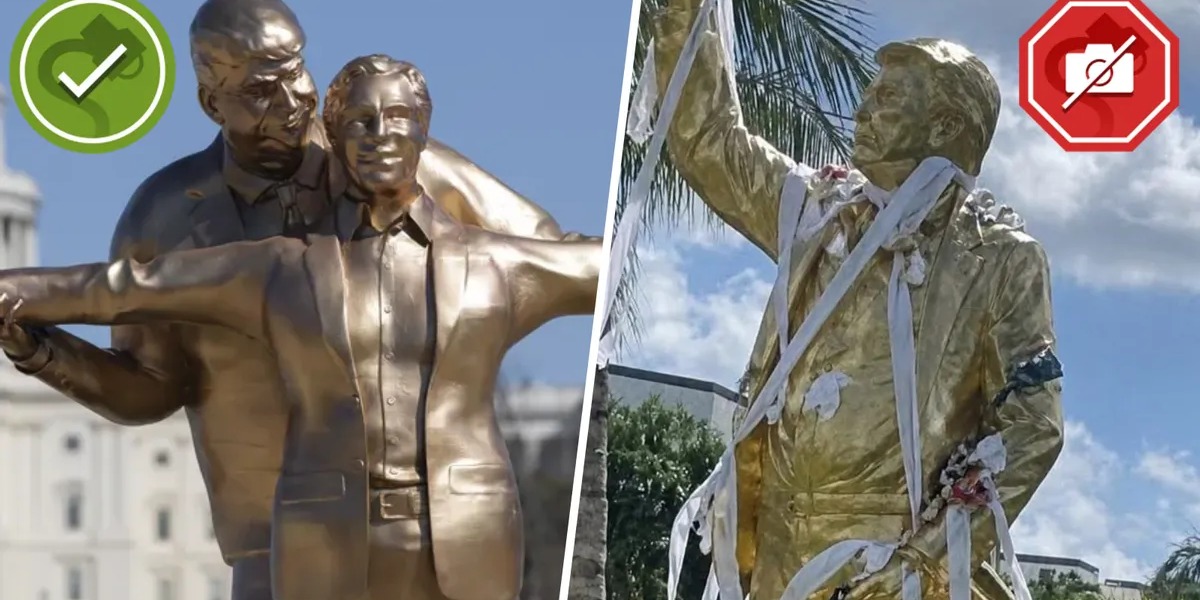
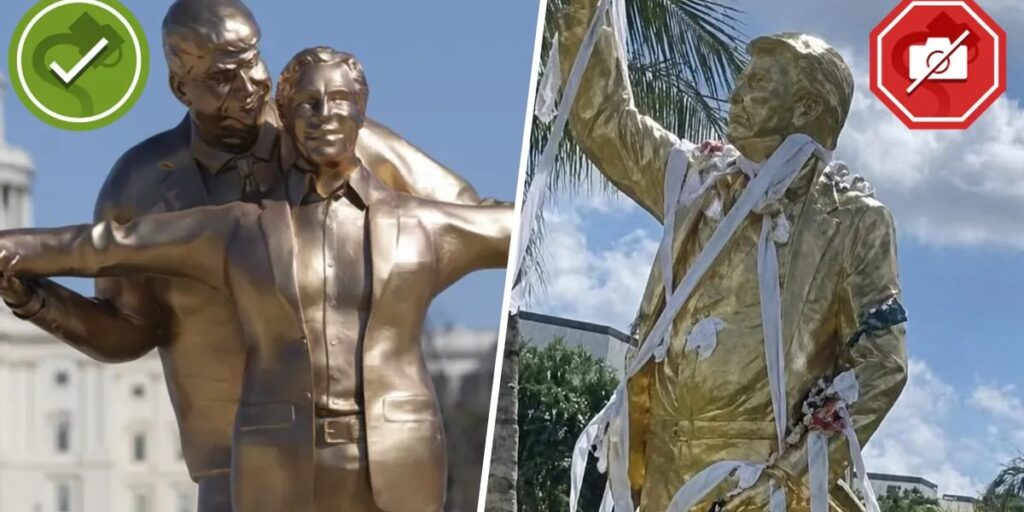
One of the most notable examples cited by Snopes involved a large gold sculpture of a naked Trump that was allegedly displayed in the European Parliament. Another claim suggested that a statue of Trump had been vandalized, while others claimed that a wax figure of Trump was being exhibited in a museum. These claims have sparked debates about the accuracy of information circulating online, particularly regarding political figures and their public representations.
The Details & Investigation
Snopes has investigated multiple claims related to Trump statues and sculptures over the years, revealing a pattern of both misinformation and disinformation. In one case, a photograph of a golden statue of Trump was shared widely on social media, with some users claiming it was a real monument. However, upon investigation, Snopes confirmed that the image was not of a real statue but rather a digital artwork created for a satirical purpose. The image had been altered and circulated without proper context, leading to confusion among viewers.
Another claim involved a sculpture of Trump that was allegedly vandalized. While there were reports of damage to a Trump effigy in a public space, the details were often exaggerated or misrepresented. For example, one video showed a person kicking a statue, but the context of the event—such as whether it was a protest, an act of vandalism, or a staged performance—was unclear. This ambiguity contributed to the spread of misleading narratives about the incident.
Some of the claims involved fabricated or AI-generated content. One viral post featured an image of a Trump Buddha, which was later identified as a deepfake or a digitally altered image. Such content is often used to deceive audiences, especially when shared without verification. Additionally, several posts claimed that a wax figure of Trump was on display in a museum, but no credible sources or official records supported this assertion. These cases highlight the challenge of distinguishing between genuine artistic expressions and deceptive content designed to mislead.
Snopes also examined claims about a Trump statue in the European Parliament. While the image of a golden Trump sculpture was real, it was not a formal monument but rather a piece of contemporary art installed as part of an exhibition. The original context of the artwork was lost in the viral sharing, leading many to believe it was an official representation of Trump. This case illustrates how even legitimate art can be misinterpreted and recontextualized in the digital sphere.
, the investigation reveals that many of these claims fall under the category of misinformation, as they often originate from well-intentioned but inaccurate sharing of content. However, some instances clearly qualify as disinformation, particularly when the content is deliberately altered or fabricated with the intent to deceive. The use of AI-generated images, deepfakes, and manipulated videos further complicates the landscape, making it increasingly difficult for the public to discern truth from falsehood.
The Verdict
After a thorough examination of the evidence, it is clear that the majority of the 16 claims about Trump statues and sculptures are either misleading or entirely false. Many of these claims originated from manipulated images, out-of-context videos, or AI-generated content that was shared without proper verification. While some of the depictions, such as the golden statue in the European Parliament, were real, they were often presented in ways that distorted their original meaning or intent.
Based on the findings, the claims are best categorized as a mix of MISINFORMATION and DISINFORMATION. Some of the content was unintentionally misleading, arising from a lack of context or understanding. Others, however, were deliberately crafted to deceive, such as the Trump Buddha image and the fabricated wax figure claims. Therefore, the rating for these claims is FALSE, as they do not accurately reflect the reality of Trump’s public representations in the form of statues or sculptures.
Counter-misinformation & disinformation investigation conducted by PolicyWire Editorial Desk (PW).