

India’s Crisis is Modi-Made: Polarization, Poverty, and Political Decline
India, the world’s biggest democracy, stands at a perilous juncture. Under Prime Minister Narendra Modi over the past decade, tensions within the country have become euphoric. A toxic mix of...

India, the world’s biggest democracy, stands at a perilous juncture. Under Prime Minister Narendra Modi over the past decade, tensions within the country have become euphoric. A toxic mix of social conflict, economic squeeze, and creeping authoritarianism is threatening to destroy the social fabric of India. Where New Delhi had once positioned itself as a model of democratic propriety, it is now grappling with turmoil which could sully those very ideals. At stake is not just India’s stability, but the credibility of democratic ideals across South Asia.
At Modi’s mass rallies, throngs of supporters wave saffron flags and hoist his portrait as if rallying behind a messianic figure. The cult of personality around him is no accident; it has been meticulously curated to project the image of unassailable strength and national unity. Even children in Varanasi are seen donning Narendra Modi masks, an eerie reminder of how political branding has seeped into the everyday. But beneath this theatrical celebration of Modi lies a disturbing reality: India’s social fabric is fraying. Communal fault lines have widened significantly under his tenure, fueling an environment of distrust, marginalization, and fear. Modi’s 2024 re-election campaign was particularly revealing. Human Rights Watch documented the serial deployment by him and senior leadership of the BJP of hate speech targeting Muslims and other minorities to construct majoritarian backing. They were not political shots; they were calculated attempts to instigate polarization, claiming Muslims as “infiltrators” and danger to the very survival of Hindu civilization if the BJP was not allowed to rule.
Such polarizing language has not emerged in a vacuum. It is built on the back of a decade of mob lynchings, sectarian violence, and repressive religious minority measures. Bulldozers have become symbols of collective punishment in several BJP-ruled states, razed to the ground to demolish Muslim-owned homes and shops following communal violence, without judiciary sanction. This has created a very polarized society where religious identity is the driving consideration for assessing safety, justice, and opportunity. Nowhere was this disconnection more evident than in the northeastern state of Manipur in 2024, where Hindu-Christian clashes resulted in at least 160 fatalities and displaced more than 40,000 individuals. Such episodes highlight how fragile India’s social equilibrium has become, with Modi’s leadership seemingly more interested in exploiting division than healing it.
The erosion of democratic norms is equally alarming. While India still has the technical apparatus of a multiparty system, the Modi regime has systematically undermined the institutions supposed to check democratic accountability. Independent reporting, civil society mobilization, and political opposition have all come under aggressive assault. In a glaring example, Congress leader Rahul Gandhi was disqualified from Parliament in 2023 following a defamation conviction over a quip involving Modi’s surname, a punishment that was widely viewed as disproportionate and politically motivated, aimed at neutralizing a key rival ahead of the 2024 elections. Gandhi’s expulsion sent a chilling message to critics: even the most prominent opposition voices are not immune to state reprisal.
Freedom of speech, previously a hallmark of Indian democracy, has been increasingly suppressed. The Modi government invoked emergency powers to censor a BBC documentary investigating his response to the 2002 Gujarat riots in a widely publicized example. When censorship backfired and caused worldwide outrage, Indian tax authorities raided the premises of the BBC in an act of intimidation. This was not a one-time event. Media persons who are bold enough to challenge the government are targeted by online abuse, legal threats, and arrest under charges of sedition or anti-terror legislation. In 2024, Reporters Without Borders ranked India at position 161 out of 180 in the index of press freedom, after Pakistan, which India has consistently accused of suppressing opposition. Now, India’s once-thriving media sector has come largely under the government’s control, with all major media outlets controlled by pro-government industrialists.
The assault on civil society has followed in lockstep as well. The Modi government has gone step by step to weaponize the likes of the Foreign Contribution Regulation Act to starve NGOs critical of state policy of funds. Over 7,000 organizations have had their licenses revoked, and prominent players like Amnesty International and Oxfam have been forced to cut or shut down operations. And curb some laws like the Unlawful Activities Prevention Act are used to jail students, academics, and human rights defenders, some for decades, without being put on trial. Although India’s judiciary remains formally independent, its growing accommodation of the executive has raised alarm. For example, the Supreme Court’s endorsement of the 2019 revocation of Kashmir’s autonomy was seen by many as a rubber stamp on an openly divisive move. These developments have prompted Freedom House to downgrade India’s status to “Partly Free,” underscoring the alarming decline in political rights and civil liberties.
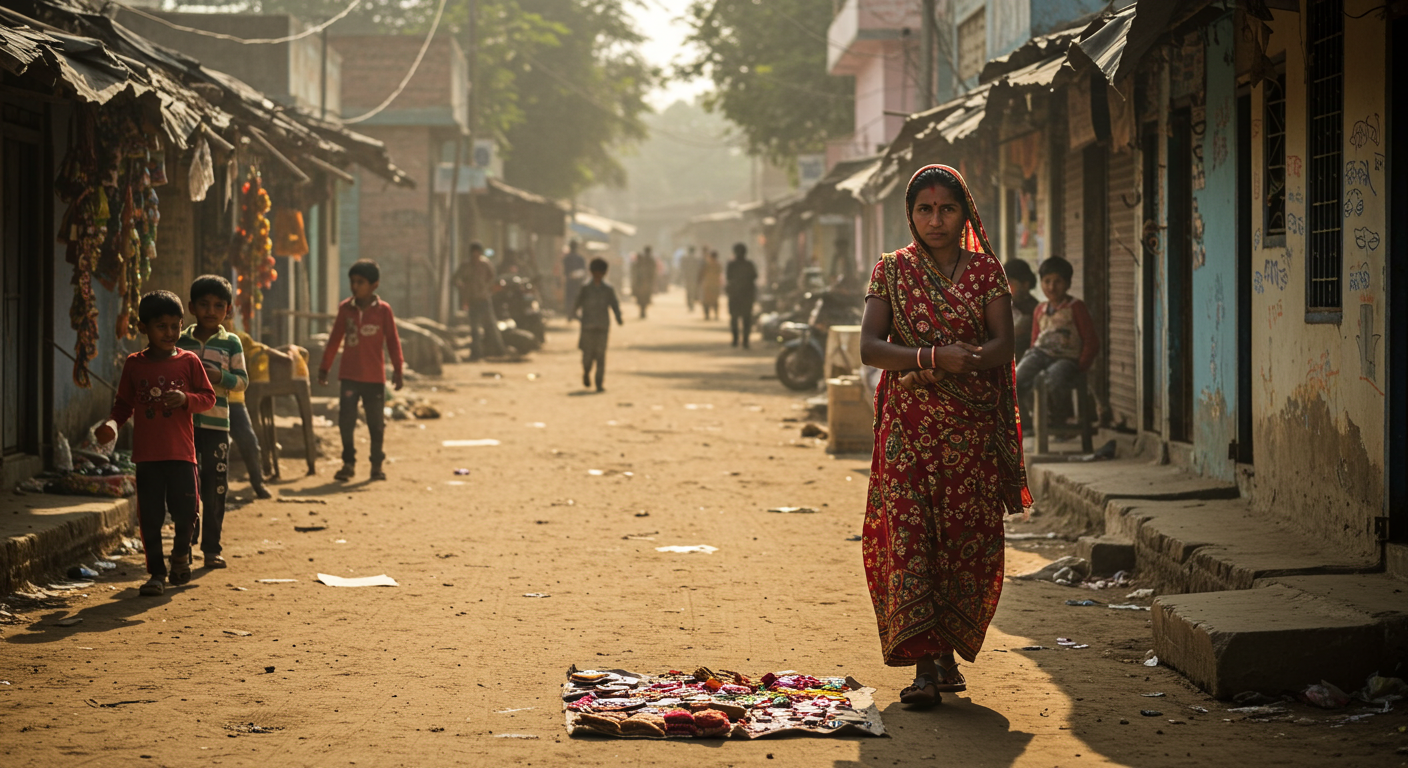
Even as democratic institutions falter, Modi’s economic narrative is starting to unravel. When he initially took office in 2014, it was based on sweeping promises that he would create 20 million jobs annually and transform India into an economic superpower. On paper, India remains one of the world’s rapidly growing economies, with GDP growth at more than 7% annually. But the statistics cover up a darker reality: the riches of growth are increasingly being concentrated into the pockets of the rich. India’s richest 1% control over 40% of the country’s riches, a more skewed inequality ratio than under colonial India, reports the World Inequality Lab. The youth unemployment rate has surged to 17% among city youth in 2024. Overall, the unemployment rate is at 8.1%, and over 60% of the respondents mentioned that it has become much harder to get a job. Higher inequality is added to by inflation. Though the official inflation rate remains at 5%, food inflation has been running over 8% for most of the past year, with vegetables and cereals rising even further. This translates to unavailability of kitchen staples and shortages of basics for millions of ordinary Indians. While lavish pre-wedding celebrations for billionaire families dominate the headlines, some costing as much as $150 million, millions still rely on government ration kits to feed their families. The economic discontent is increasingly palpable, and it has begun to dent Modi’s popularity. The BJP was forced to admit during its 2024 campaign that job creation remains a significant challenge, a rare moment of candor from a government more accustomed to triumphalism.
When economic frustration collides with communal polarization and democratic backsliding, the outcome is dangerously unpredictable. The year-long farmer protests of 2020–21, in which tens of thousands camped on Delhi’s borders demanding policy reversal, were an early warning sign. The government’s eventual climb-down revealed that even Modi’s formidable image cannot shield him indefinitely from public pressure. Today, in the wake of rising unemployment, rising food inflation, and seeming democratic deterioration, India’s much-hyped “demographic dividend” hangs in the balance to become a demographic time bomb.
The rest of the globe is beginning to take account. Press freedom indices, human rights reports, and global democracy scores now all register a precipitous drop in India’s ranking. Modi’s third term offers India a chance for reflection. Will the government continue down a path of majoritarianism, censorship, and economic disparity? Or will it course-correct, reaffirming the pluralistic values enshrined in India’s constitution?
The world is watching with cautious optimism, and a sincere hope that India can recede from the edge and rediscover the things it used to do so well to make it an example of democracy for the Global South.
Author