


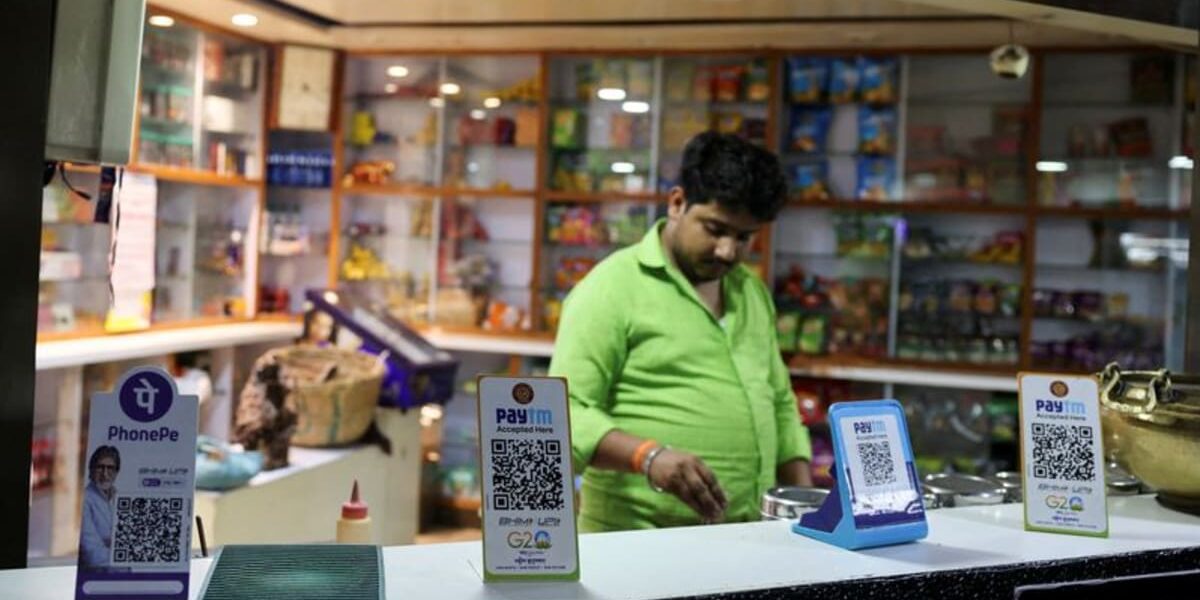
India’s UPI Faces New Fee Debate as Merchants Worry About Rising Costs
POLICY WIRE — Bengaluru, India — A recent legislative change in India’s payment system has introduced a potential fee for certain real-time transactions through the Unified Payments Interface (UPI),...

POLICY WIRE — Bengaluru, India — A recent legislative change in India’s payment system has introduced a potential fee for certain real-time transactions through the Unified Payments Interface (UPI), raising concerns among merchants and industry experts about its financial implications.
Previously, UPI allowed instant digital transactions without any merchant charges, but a new law passed by the Indian parliament on August 10 enables banks and payment companies to impose fees on UPI transactions above a yet-to-be-set threshold. This marks a shift from the zero-fee policy that had been in place since 2020.
The Ministry of Finance claims the proposed fees will be minimal and far less than those associated with credit card transactions. However, small business owners like Zachariah Jacob, who runs three restaurants in Delhi, worry that even modest charges could cut into their already slim profit margins.
According to government data, UPI now handles 57% of all user transactions in India, surpassing cash, which accounts for 38%. The system, launched in 2016 by the National Payments Corporation of India (NPCI), has seen a dramatic rise in usage, with monthly transactions increasing nearly fourfold between 2022 and 2026.
Experts argue that while the government aims to cover rising infrastructure and security costs, the fee structure could disproportionately affect small businesses. Piyush Jhunjhunwala, founder of Stockify, warned that a 0.5% charge could eliminate a quarter of a merchant’s profit if their margin is only 2%.
Arif Hanfi, owner of an electronics store in Maharashtra, expressed concern over how larger UPI transactions could add up for his business. “The merchant will not pay from his pocket,” he said, suggesting that customers might eventually bear the cost if businesses are forced to pass it along.
Zorawar Kalra, vice-president of the National Restaurant Association of India (NRAI), emphasized that UPI has become essential for restaurants, where frequent, smaller transactions are common. He noted that a 0.1 to 0.2% fee could be manageable, but anything higher could threaten the viability of many businesses.
📄 POLICY WIRE WHITEPAPER PUBLISHED: PAKISTAN’S NATIONAL SECURITY POLICY PRIORITIES
Harsh Bhudolia, co-founder of Takkada, highlighted the inefficiency of percentage-based fees for high-value transactions, arguing that the cost of processing a 50,000-rupee UPI payment is similar to a 500-rupee one. He suggested that fixed fees would be more equitable for large-scale businesses.
Financial analyst Tanvi Kanchan pointed out that the impact of UPI fees will vary depending on the type of business. High-margin enterprises may absorb the cost better, while low-margin sectors such as fuel retailers and wholesalers could face significant challenges.
Despite the concerns, some industry leaders believe the fee model can be structured in a way that preserves the convenience and growth of UPI. Ishan Sharma of Juspay argued that the system’s success lies in its user experience and widespread adoption, and that the focus should be on monetizing the ecosystem without burdening consumers or small businesses.
Reporting by Policy-Wire (PW)