

The Manufactured Outrage Machine
Journalism’s basic promise is simple, anchor reporting in verified fact, and give contested claims room for challenge. It’s the line that separates a news segment from a press release....

Journalism’s basic promise is simple, anchor reporting in verified fact, and give contested claims room for challenge. It’s the line that separates a news segment from a press release. Increasingly, in coverage touching Pakistan, that line is getting blurry and it’s worth asking why? Around the world, governments increasingly draw that line according to what they consider national security. Niger has suspended foreign outlets, Beijing has expelled foreign correspondents, and Washington has tightened the terms under which some foreign journalists can remain accredited. Whatever one thinks of those decisions, they expose a broader reality: access to a country’s political and media space is rarely unconditional. Pakistan is now confronting a different but related problem, not simply hostile coverage, but a recurring pattern in which politically aligned voices are given international platforms with little visible challenge or opportunity for rebuttal. The question is not whether those voices should be heard. They should. The question is whether presenting advocacy as journalism serves the public interest?

A recognizable format
Watch enough of these segments and the format reveals itself as formulaic. A single guest a family member, a party adviser, or an activist aligned with Pakistan Tehreek-e-Insaf (PTI), sits opposite a sympathetic host and delivers an uninterrupted, unchallenged monologue. Producers skip the government spokesperson on split-screen. They skip the rebuttal booked for the same segment. They skip real-time verification of the claims made on air. Kasim Khan and Sulaiman Khan have run this circuit on CNN and Sky News. Zulfi Bukhari has done the same with CNN’s Becky Anderson. A party adviser addressed the UN Human Rights Council directly, unopposed. The claims themselves, about prison conditions, medical access, and due process, deserve serious scrutiny, and these formats hand over a microphone instead of applying it.
A lobbying strategy, documented and public
PTI-aligned advocacy in Washington and other Western capitals operates as a documented, ongoing campaign, and Pakistani and international outlets have reported on it themselves. The Express Tribune detailed what it called a “partisan PR battle” playing out on Capitol Hill, where PTI-aligned diaspora groups engage lawmakers and officials to push for international pressure on Islamabad, running parallel to — and often drowning out — the official channels through which any state normally conducts diplomacy. Analysts tracking the effort describe it as a distinct lobbying stream, separate from the Pakistani government’s own embassy-led diplomacy, built around a narrative of “authoritarianism” and calls for foreign intervention.
Pakistan’s own Ministry of Information and Broadcasting had to respond directly, urging foreign outlets to anchor their reporting in “documented facts” rather than “unfounded political allegations.” That request became necessary once the one-sided-interview format turned into the default mode of coverage rather than the exception. Pakistan’s Foreign Office separately called out lobbying moves by PTI-aligned interests as “counterproductive” and inconsistent with normal diplomatic conduct.
The Question is Who Gets to Disguise It As News
📄 POLICY WIRE WHITEPAPER PUBLISHED: PAKISTAN'S NATIONAL SECURITY POLICY PRIORITIES
👉 READ BY CLICKING HERERegistered lobbying leaves a paper trail, and FARA forces that trail into public view, full disclosure of who’s paying whom, for what, and toward what end. A Pakistani think tank engaged a U.S. lobbying firm through a reported seven-figure contract aimed at counterbalancing PTI’s influence campaign on Capitol Hill, and outlets covered that contract as newsworthy the moment it became public. Transparency worked exactly as it should: the public saw the money, saw the purpose, and could judge the effort on its merits.
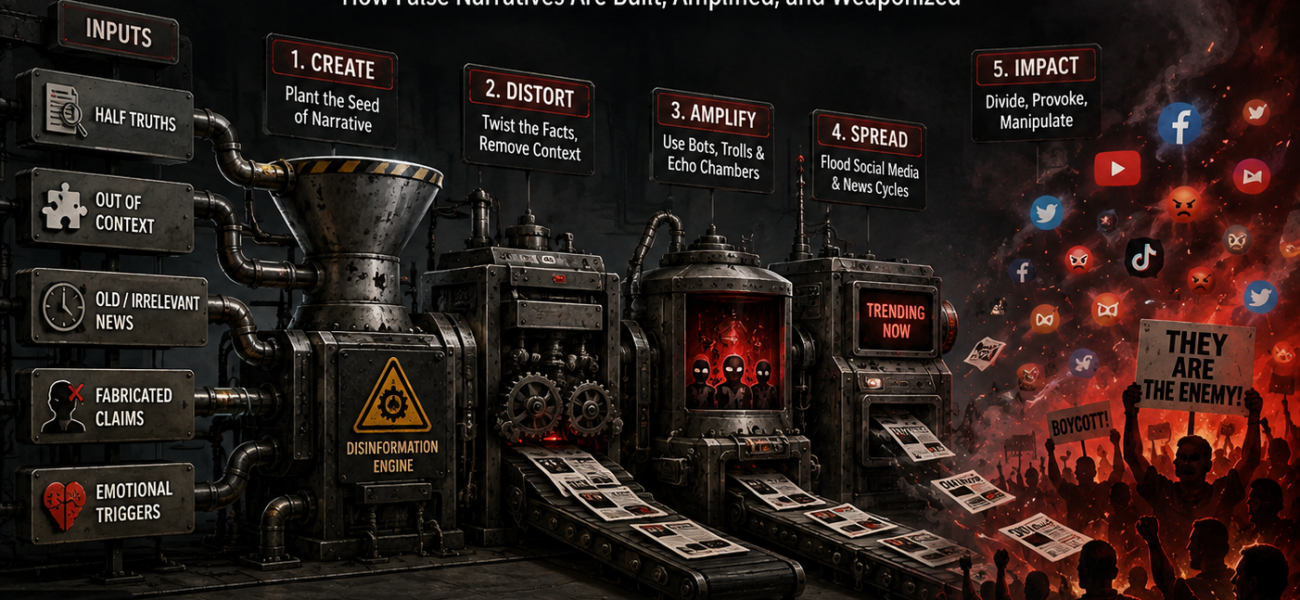
The PTI-aligned media circuit escapes that same disclosure entirely. A recurring cast of family members and party advisers gets booked as “interview subjects” rather than disclosed advocates, and the format itself launders a political messaging operation into the appearance of independent journalism. A lobbying contract and an unchallenged prime-time interview slot accomplish the same goal — shaping a foreign narrative — and only one of them carries a disclosure requirement. That gap deserves closing, and pretending the interview format is neutral only protects the operation currently exploiting it.
What accountability actually requires
A network that runs a twenty-minute uncontested platform for one political camp, on a recurring basis, without ever booking the state’s side in the same segment, has stopped doing journalism in any meaningful sense and started operating a distribution channel. That’s not journalism. These same networks publish editorial codes promising balance, verification, and a right of reply, and quietly shelve every one of them when a guest fits a preferred narrative.
Niger’s junta shut down outlets it judged hostile. Beijing expelled a reporter over a single interview. Washington rewrote its own visa rules to hold foreign correspondents on a shorter leash. Press-freedom groups condemned each of those moves, and Pakistan’s ask sits well below that bar: book the government’s side in the same segment, put the same hard follow-up questions to the guest that get put to the state, and stop dressing up a patterned lobbying campaign as spontaneous news judgment. CNN’s next interview with a member of Imran Khan’s family should air alongside Pakistan’s information minister in the same segment, live, not a written statement appended after the broadcast ends. That single change would do more for balanced coverage of this story than any amount of criticism aimed at the Pakistani state.
Author