
Fed Chair Warsh Faces Pressure to Clarify Inflation, Rate Views
POLICY WIRE — Washington, USA — The new Federal Reserve Chair, Kevin Warsh, has introduced a significant shift in the central bank’s communication strategy by providing less information about...

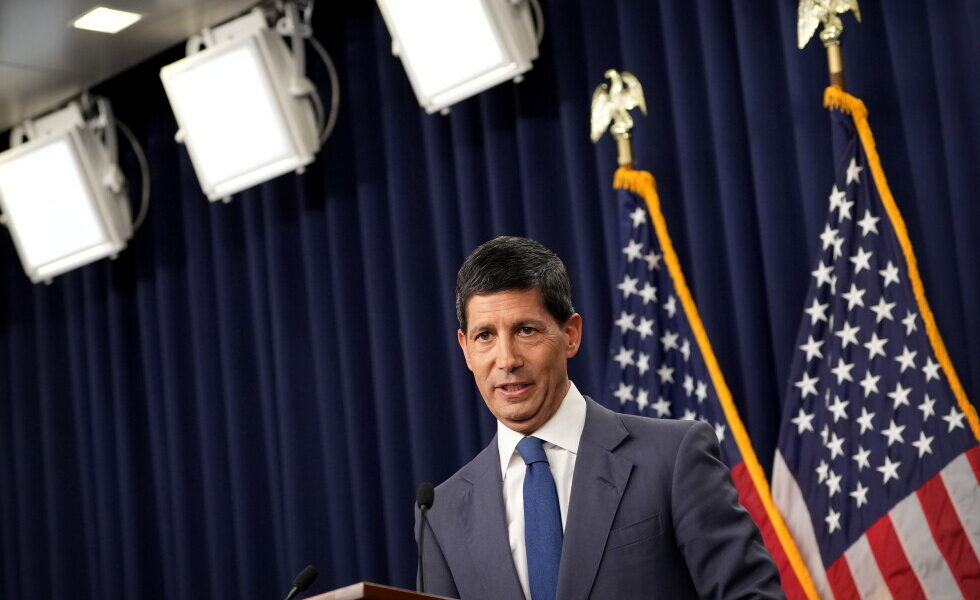
POLICY WIRE — Washington, USA — The new Federal Reserve Chair, Kevin Warsh, has introduced a significant shift in the central bank’s communication strategy by providing less information about the economy and inflation compared to his predecessors. This approach has not been well-received by many economists and Wall Street investors.
Warsh has a crucial opportunity to address these concerns and demonstrate his commitment to combating inflation during his speech at the Federal Reserve’s annual economic symposium in Jackson Hole, Wyoming, on Friday.
Economists and Wall Street analysts are hoping for a clear indication from Warsh on how the Fed should manage the persistent high inflation that has negatively impacted consumer sentiment. At his previous press conference, Warsh caused confusion by avoiding questions about whether the Fed would increase its benchmark interest rate if inflation remains high.
Warsh has expressed his reluctance to offer what analysts term “forward guidance” regarding future rate hikes, cuts, or holds. He believes that such guidance restricts the Fed’s flexibility and has made financial markets overly reliant on it. However, some economists argue that Warsh could provide more insight into his views on Fed policy without revealing specific future actions.
David Wilcox, a senior fellow at the Peterson Institute for International Economics, stated that Warsh needs to clarify the conceptual framework he will use to guide monetary policy. Wilcox criticized Warsh for not providing even a basic understanding of his approach.
Whether Warsh will offer this clarification during his Friday speech remains uncertain. Last month, he indicated that his talk would focus on broader issues such as artificial intelligence, productivity, demographic changes, and the global economy’s response to shocks from the Iran war.
The handling of elevated prices by Warsh and the Fed is a concern not only for Wall Street but also for the general public. Although inflation has decreased after peaking in May and June due to higher gas prices, it remains above the Fed’s 2% target. Surveys indicate that most Americans view the affordability of essentials like gas, groceries, and housing as a major economic issue leading up to the midterm elections.
Interest rates increased when Warsh last spoke publicly at a press conference on July 29, raising mortgage borrowing costs despite the Fed’s decision to maintain its benchmark rate. Gennadiy Goldberg, head of U.S. rates strategy at TD Securities, commented that Warsh lost market confidence during his speech by discussing the need to reduce inflation without providing specific actions to achieve this goal.
Warsh did mention that central bankers are more likely to raise rates when they observe rising underlying inflation, which some economists found aligned with their expectations. However, Warsh has not specified whether he believes underlying inflation is worsening or how he measures it. He cited the Fed’s preferred measure, the personal consumption expenditures price index, but suggested that this could change next year based on recommendations from task forces he has appointed.
When asked if he would support higher rates to combat persistent inflation, Warsh indicated that rate hikes could be part of the solution but not the only measure. Some Fed observers interpreted this to mean that Warsh might consider other actions, such as reducing the Fed’s holdings of Treasury bonds, which could increase longer-term borrowing costs over time.
The uncertainty surrounding Warsh has been exacerbated by President Donald Trump’s ongoing calls for lower interest rates. Although Trump has defended Warsh, whom he appointed and who took office on May 22, he has criticized other Fed officials for supporting higher rates.
Trump has also renewed his efforts to remove Fed governor Lisa Cook, who was appointed by former President Joe Biden. Replacing Cook would allow Trump to appoint a majority of the seven-member board. Trump attempted to fire her last year but was temporarily blocked by the Supreme Court.
Diane Swonk, chief economist at KPMG, wrote in a recent commentary that politics are contributing to the Fed’s credibility issues. She emphasized the importance of Warsh’s upcoming speech as an opportunity to demonstrate the Fed’s independence from political interference.
Economists believe that a clearer statement from Warsh on how the Fed might respond if inflation remains high would help alleviate some concerns. Wilcox, also the director of research at Bloomberg Economics, noted that Warsh’s silence on these issues is causing unease among observers.
If Warsh manages to address these concerns, longer-term interest rates could slightly decrease. These rates have been rising in recent weeks due to various factors, including increasing U.S. government deficits and substantial borrowing by tech firms for AI infrastructure development.
The rate on the 30-year Treasury bond reached its highest level in 19 years last week, prompting an unusual effort by Treasury Secretary Scott Bessent to buy back bonds and lower yields.
Derek Tang, an economist at Monetary Policy Analytics, a consulting firm, remarked that even a stabilization of yields would be considered a success when Warsh speaks on Friday.
Reporting by Policy-Wire (PW)