

Who Is Killing the Taliban in Faizabad?
The Afghanistan Freedom Front announced this week that its fighters had killed four Taliban members and wounded five others in a rocket and small-arms assault on the governor’s office and a...
The Afghanistan Freedom Front announced this week that its fighters had killed four Taliban members and wounded five others in a rocket and small-arms assault on the governor’s office and a security post in Faizabad, the capital of Badakhshan. The claim could not be independently verified, and the Taliban offered no confirmation. It is the latest in a steady stream of such announcements from the group, which in July said it had killed twenty-one Taliban fighters in Zebak district, a figure the Taliban put at five. The competing tallies are impossible to check, and they are the least reliable part of what is happening in Badakhshan. Strip them away, and a harder pattern remains in the same province, one that does not depend on any insurgent’s arithmetic.
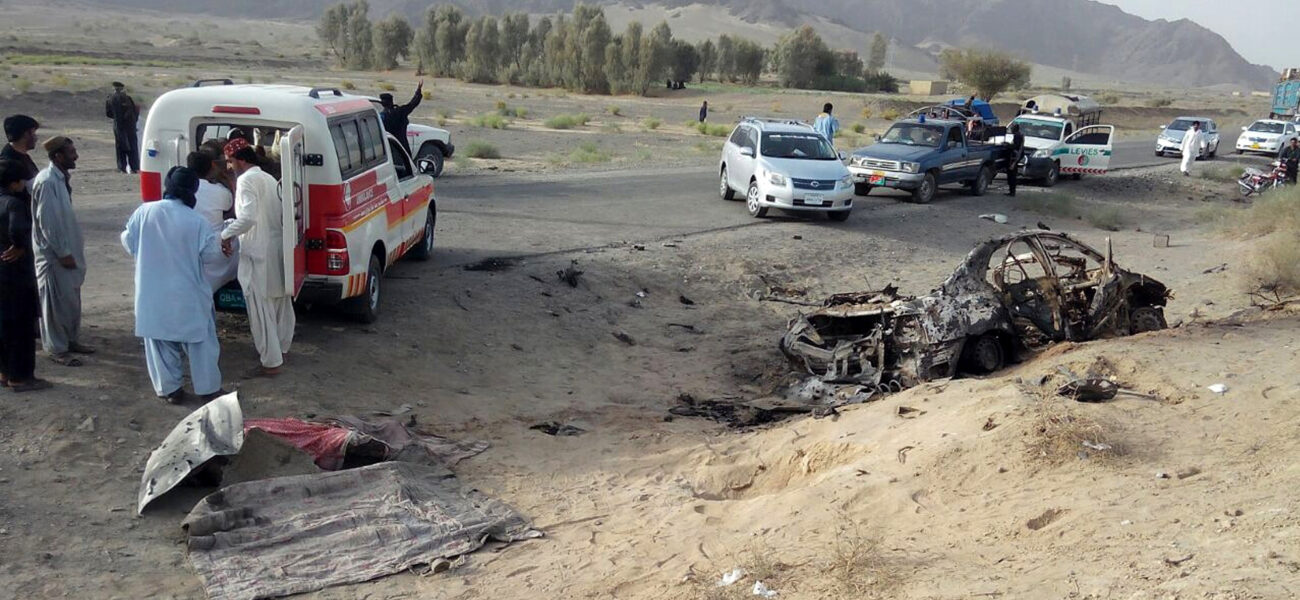
Two senior Taliban officials in Badakhshan have been killed in the past month in attacks that are not in dispute. On 28 July, Zabihullah Amiri, the head of the provincial information and culture department, was shot dead by gunmen on motorbikes while travelling to Faizabad. On 13 August, the Taliban-appointed mayor of Faizabad was killed when a bomb tore through his vehicle near the municipal building. These killings happened, they were confirmed by multiple independent sources, and they matter more than the rocket-attack claims precisely because they can be verified. They matter still more because of who claimed them.
The two assassinations were claimed by two entirely different and mutually hostile forces. The Islamic State’s regional branch, Islamic State-Khorasan, claimed the killing of Amiri. The National Resistance Front, a Tajik-led opposition movement with no connection to and no love for the Islamic State, claimed the mayor. The Afghanistan Freedom Front claims its own rocket attacks. A separate group calling itself Sepahiyan-e Mihan briefly seized a district centre in the province earlier in the summer. These are several distinct forces with incompatible aims, and the Taliban cannot treat them as a single enemy to be named and defeated, because they are not one.
What draws a jihadist network, a Tajik nationalist front, and a scatter of local militias toward the same target is not a shared ideology, since they agree on almost nothing and in other settings would fight each other. What they share is a province the Taliban has governed badly in two specific ways. Badakhshan is overwhelmingly ethnic Tajik, and the Taliban’s Pashtun-dominated leadership has monopolised authority since 2021 and sidelined the local communities it rules. Badakhshan is also rich in gold, lapis, and other minerals, and the cash-strapped, unrecognised government has moved to centralise the revenue from an expanding mining sector, pulling it away from the people who live on that ground.
The resource grab has done something more corrosive than feed outside opposition. It has split the Taliban itself. Juma Khan Fateh, a Taliban commander in Badakhshan, has turned his fighters against the movement in a dispute bound up with control of mining, and his men have reportedly captured Taliban outposts and pushed the group out of parts of Nusay district. When a government’s own revenue strategy converts its local commanders into armed rebels, the trouble lies in the governance itself. That is not subversion arriving from outside. It is a regime generating its own opposition from within the structure it built.
This is why the resistance groups’ inflated claims mislead more than they inform. Treating the Afghanistan Freedom Front’s disputed body counts as the measure of the Taliban’s difficulty gets the situation backwards. The United Nations assessed in May that Afghanistan’s armed opposition groups posed no significant challenge to the Taliban’s control of the country, and on the narrow question of overthrow that judgment is sound. The Freedom Front and the National Resistance Front are not going to take Kabul, and saying otherwise serves only the groups’ own messaging. What the UN assessment does not capture is the condition Badakhshan actually displays, which is steady erosion rather than looming collapse.
Faizabad has been here before, which is the strongest evidence that this is a standing condition rather than a sudden breakthrough. A Taliban regional police chief was killed by a car bomb in the city in December 2022. The following June, the deputy governor of Badakhshan was killed by a suicide car bomb in Faizabad, and days later a bombing at his memorial service killed at least nineteen people, both attacks claimed by Islamic State-Khorasan. The targeting of Taliban officials in this provincial capital has recurred for four years across changes of perpetrator, and the killings of the past month extend a pattern the Taliban has never managed to close.
So the question of who is killing the Taliban in Faizabad has no single answer, and the absence of one is the point. A government facing a single coherent enemy can study it and fight it. A government facing a jihadist network, an ethnonationalist front, a handful of local militias, and its own mutinous commanders, each drawing on grievances the government itself created, cannot fight its way clear, because the enemy sits downstream of its own choices. The rocket attacks and their contested tallies will go on being claimed and denied. The quieter fact is not in dispute. In the capital of Badakhshan, the Taliban cannot keep its own officials alive, and the reasons run back to what it decided to monopolise and whom it decided to exclude.
Author