

Cambodian Children Navigate Unique Challenges in Floating Village Schools
POLICY WIRE — Phnom Penh, Cambodia — In the vast expanse of Cambodia’s Tonle Sap, the largest freshwater lake in Southeast Asia, the journey to education involves navigating the water. For...

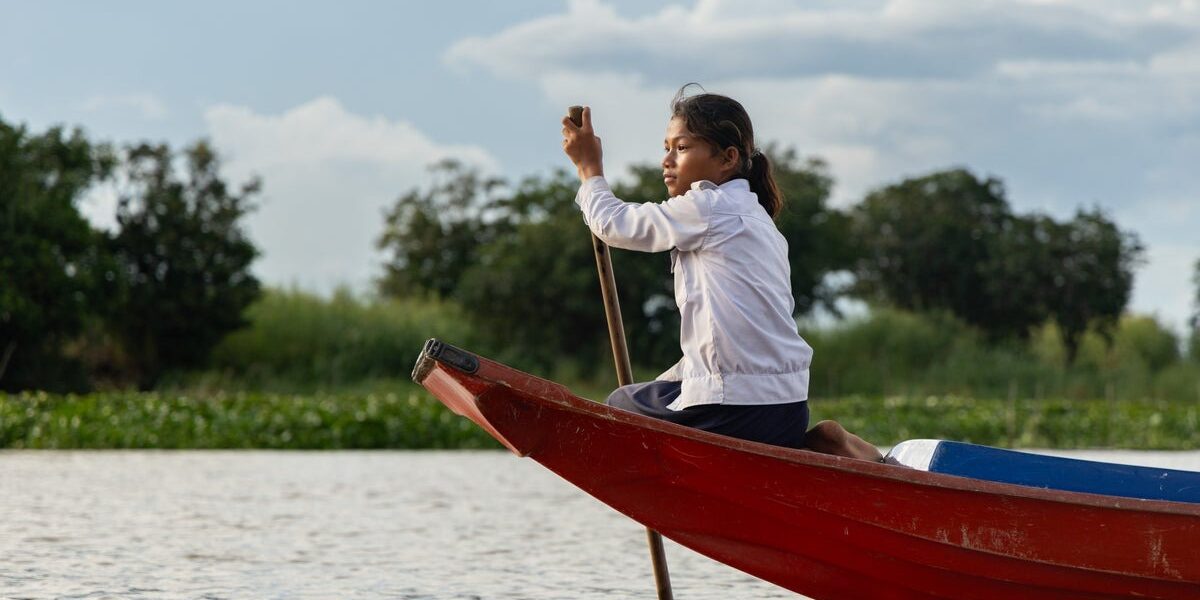
POLICY WIRE — Phnom Penh, Cambodia — In the vast expanse of Cambodia’s Tonle Sap, the largest freshwater lake in Southeast Asia, the journey to education involves navigating the water. For schoolchildren in the floating villages, this is a daily reality.
The Tonle Sap lake, known for its seasonal fluctuations and rich biodiversity, presents unique challenges and adaptations for its inhabitants. Children from these communities travel to school by boat, a the resourcefulness and resilience of the local population.
Schools in these floating villages are built on stilts to accommodate the rising and falling water levels. Classrooms are often rudimentary, constructed from wood and bamboo, yet they serve as vital centers of learning and community.
Teachers and students alike face the elements, with classes sometimes disrupted by heavy rains or strong winds. Despite these obstacles, the commitment to education remains strong, driven by the belief that it is a pathway to a better future.
Local authorities and non-governmental organizations have recognized the need for improved educational infrastructure. Efforts are underway to provide more stable and better-equipped schools, though progress is slow due to limited resources and the remote nature of these communities.
The floating schools of Tonle Sap are a striking example of how education can adapt to even the most challenging environments. They highlight the importance of innovation and community spirit in ensuring that all children, regardless of their circumstances, have access to learning.
Reporting by Policy-Wire (PW)