


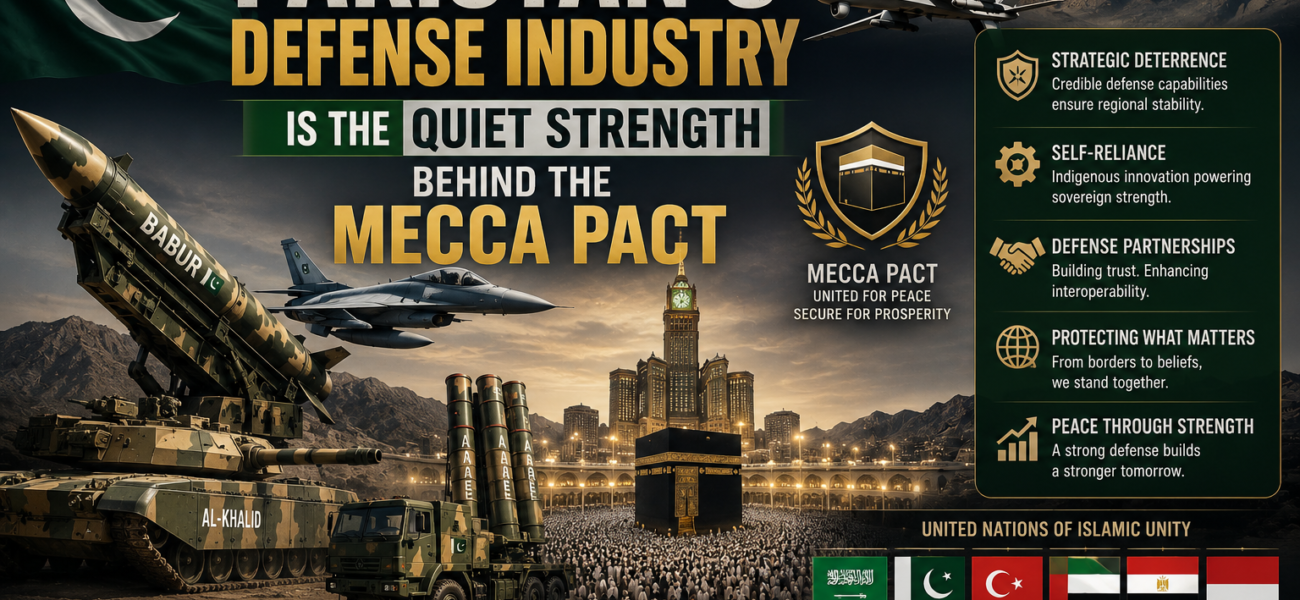
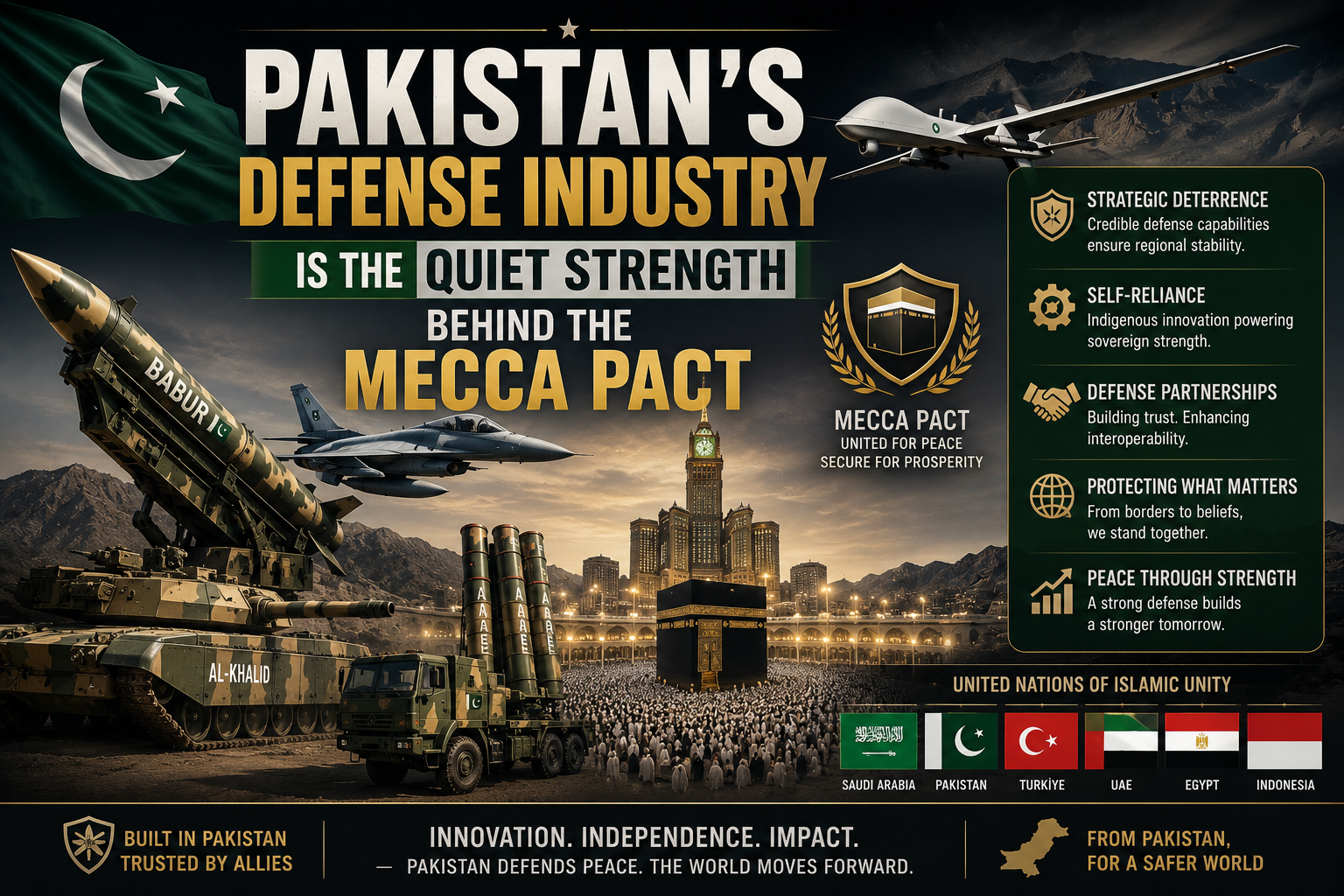
Pakistan’s Defense Industry Is the Quiet Strength Behind the Mecca Pact
On August 6, Saudi Arabia, Pakistan and Turkiye signed the Mecca Joint Defense Agreement, a pact meant to coordinate the three countries’ response to regional threats. Most commentary since has...

On August 6, Saudi Arabia, Pakistan and Turkiye signed the Mecca Joint Defense Agreement, a pact meant to coordinate the three countries’ response to regional threats. Most commentary since has focused on the obvious headline items like Saudi money and Turkish drone technology. Retired US Army General Mark Kimmitt, writing in a recent analysis, points to something the headlines missed. Pakistan’s decades of experience building, repairing and sustaining military equipment may end up being the piece that makes this alliance work.
The pact should not be read as a scramble to fill space left by a smaller American footprint in the region. Riyadh, Islamabad and Ankara already had strong defense ties before August 6. The agreement formalises relationships that were years in the making, rather than inventing something new out of urgency. Its stated purpose, to reduce dependence on any single outside power and build regional cooperation, gives each country more room to make its own security decisions without waiting on Washington.
Kimmitt’s argument centres on the defense industrial base rather than diplomacy. Saudi Arabia supplies capital. Turkiye supplies advanced unmanned systems. Pakistan supplies something harder to put on a press release, the ability to produce combat vehicles, weapons and ammunition at scale and at a price other countries can afford. He argues that Pakistan’s real value sits somewhere less visible still, in repair, maintenance and support. A weapon that cannot be fixed after its first use is not a weapon for long. Kimmitt reaches for a line often attributed to Napoleon that amateurs discuss tactics, professionals discuss logistics. That distinction, he suggests, is where Pakistan earns its place in this alliance.
None of this happened overnight. Fifty years ago, Pakistan’s defense sector could barely turn out small arms and ammunition. The country built its current capacity through steady investment in assembly, overhaul and rebuild work, the kind that rarely draws attention but slowly accumulates into real capability. Heavy Industries Taxila now produces tracked and wheeled combat vehicles. The Pakistan Aeronautical Complex builds combat and training aircraft alongside export-ready drones. Karachi Shipyard and Engineering Works turns out frigates, corvettes and patrol vessels. Together these institutions give Pakistan a working portfolio across land, sea and air, built around affordability and scale.
That combination points to a specific commercial opening. Kimmitt suggests the Mecca Pact could pair Saudi financing and Turkish high-end technology with Pakistani production at scale to build a joint export base. This would not put the three countries in direct competition with the United States, which will keep selling expensive, high-specification systems to countries that can afford them. It would instead let the pact go after the market Washington tends to overlook, the large number of countries with modest defense budgets that still need capable, well-supported equipment. Pakistan’s reputation for reliable, affordable systems fits that market closely, and Saudi capital plus Turkish technology only strengthens the offer.
Kimmitt’s broader point is about timing. Washington is dealing with its own fiscal constraints and a rising challenge from China. A Saudi-Pakistani-Turkish coalition, in his reading, does not need to compete with American influence in the region. It can sit alongside it, giving all three partners more strategic room.
For Pakistan specifically, the pact marks a shift in how its defense sector is being read abroad. Capability built patiently over half a century, largely outside the international spotlight, is now central to a new regional alliance with real financial and technological backing. Whether the Mecca Pact becomes a genuine force in global defense manufacturing will depend on how well its members convert this early momentum into contracts and delivery. However, the foundation Kimmitt describes, Pakistani scale and sustainment paired with Saudi money and Turkish technology, is a serious one.
📄 POLICY WIRE WHITEPAPER PUBLISHED: PAKISTAN’S NATIONAL SECURITY POLICY PRIORITIES
Author