

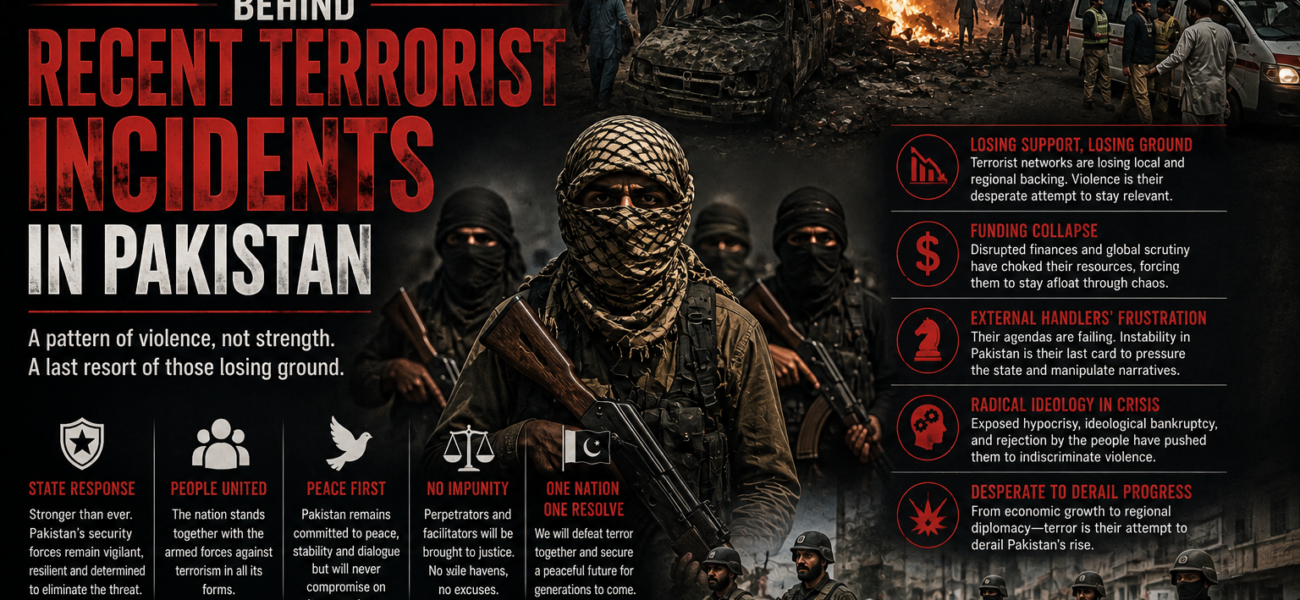
The Desperation Behind Recent Terrorist incidents in Pakistan
At first glance, a central question confronts the public: if Pakistan’s security forces are executing thousands of successful counter-terrorism operations, why does news of violence and armed...

At first glance, a central question confronts the public: if Pakistan’s security forces are executing thousands of successful counter-terrorism operations, why does news of violence and armed engagements appear to be on the rise?
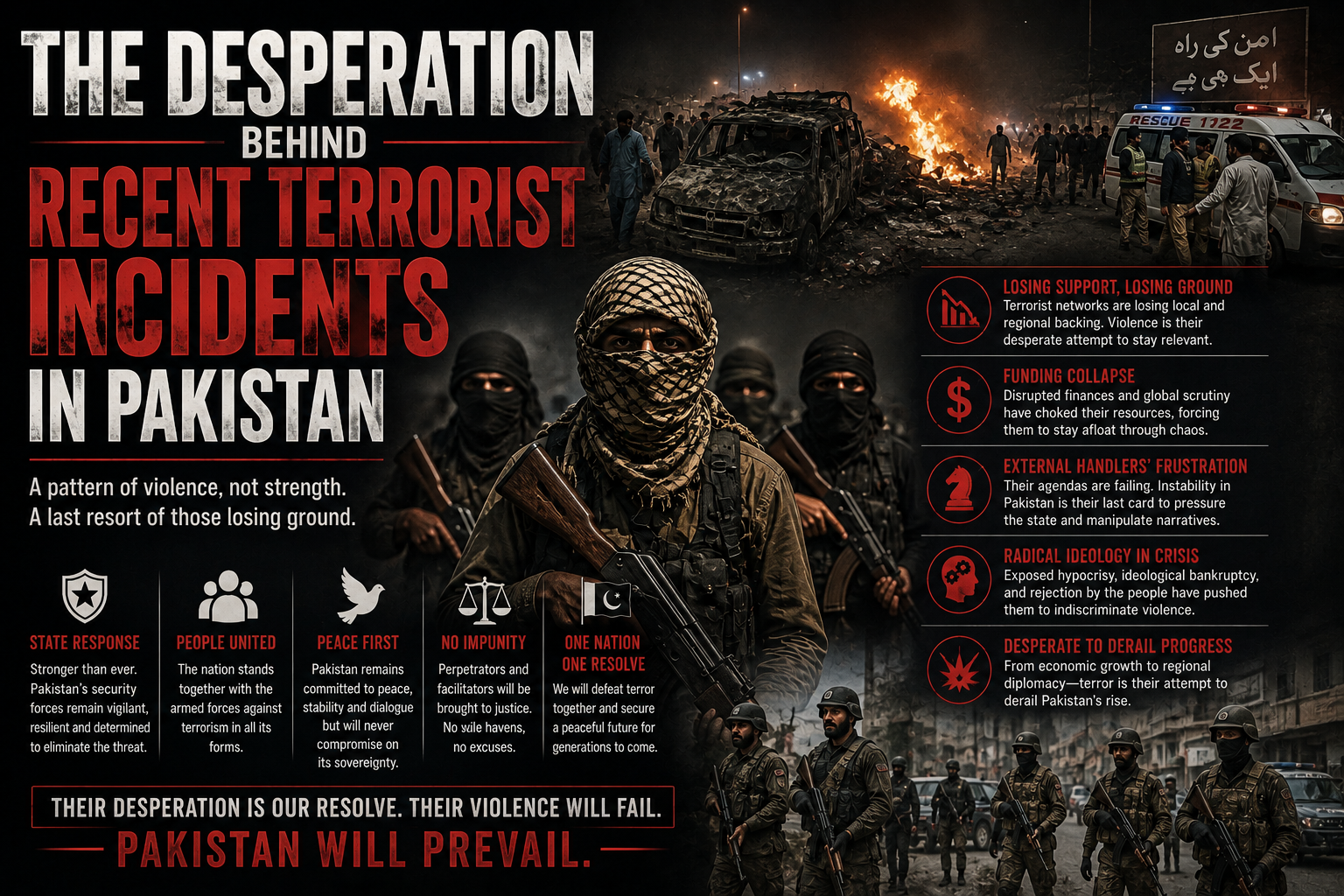
To understand this reality, one must look at the state’s deliberate, proactive, and uncompromising security posture. As the Directorate General of Inter-Services Public Relations (DG ISPR) has made clear, this uptick in reported engagements does not signal operational retreat. Instead, it represents the direct outcome of an aggressive state offensive designed to root out terror at its source and dismantle extremist networks permanently.
The Reality Behind the Hard Numbers
The sheer scale of Pakistan’s military and intelligence campaign speaks for itself. In recent times, security forces have conducted over 40,000 intelligence-based operations (IBOs) across high-risk zones, neutralizing more than 2,000 active terrorists.
When evaluating these figures, standard indicators of national security require proper context. Higher engagement numbers do not demonstrate a resurgence of unhindered militant strength. On the contrary, they mark the systematic, daily dismantling of terrorist cells. The state is actively taking the fight to the enemy, forcing encounters on its own terms rather than waiting for attacks to occur.
Four Key Pillars Explaining the Current Landscape
The ISPR identifies four distinct factors that clarify why operational activity and kinetic engagements remain high:
- Shifted Tactics Born of Desperation
Having suffered severe organizational losses and lost physical ground across former strongholds, militant factions have changed their strategy. Because they can no longer hold territory or face the Armed Forces in open combat, these groups rely on asymmetric tactics, soft-target strikes, and sporadic ambushes. This shift aims to project a false impression of strength, masking their operational collapse on the ground.
- Cross-Border Safe Havens
A major driver of persistent violence remains external geography. Areas under Taliban control in Afghanistan continue to provide operational space, logistics, and sanctuary to banned outfits such as Fitna Al Khawarij (TTP). Terrorist networks exploit these cross-border havens to plan, rearm, and launch attacks into Pakistan before retreating across the border. Pakistan maintains that long-term regional peace depends on Kabul fulfilling its international commitments to prevent its soil from being used against neighboring countries.
- 3. The Absolute End of Appeasement
Pakistan’s policy toward armed groups has undergone a permanent, structural shift: the era of appeasement and truce negotiations is over. Past attempts to engage in dialogue with armed elements only gave militants time to regroup and rearm. Today, the state’s stance is completely non-negotiable. Armed groups have only two choices: total compliance with the Constitution of Pakistan or complete enforcemenort through relentless security operations. Because the state refuses to grant concessions, kinetic pressure remains constant.
- Proactive, High-Tempo Operations
Rather than maintaining a passive stance, Pakistan’s intelligence agencies and frontline security forces execute a proactive strategy. By launching dozens of intelligence-based operations every single day, security forces regularly intercept terror cells while they plan their actions. This high frequency of proactive strikes naturally creates more frequent armed encounters, swelling operational statistics as the military cleanses high-risk zones.
Constitutional Supremacy and National Unity
Pakistan’s security strategy rests upon a clear national narrative: national defense and the enforcement of law are non-negotiable obligations of a sovereign state. The sacrifices made by the Armed Forces, civil armed forces, police, and citizens reflect an unshakeable commitment to total victory over extremism.
By eliminating cross-border threats through firm diplomacy and maintaining high kinetic pressure at home, the state is actively clearing the path toward permanent peace. Pakistan’s national resolve remains absolute: constitutional rule, state sovereignty, and the safety of its citizens will prevail across every inch of the country.
Author