


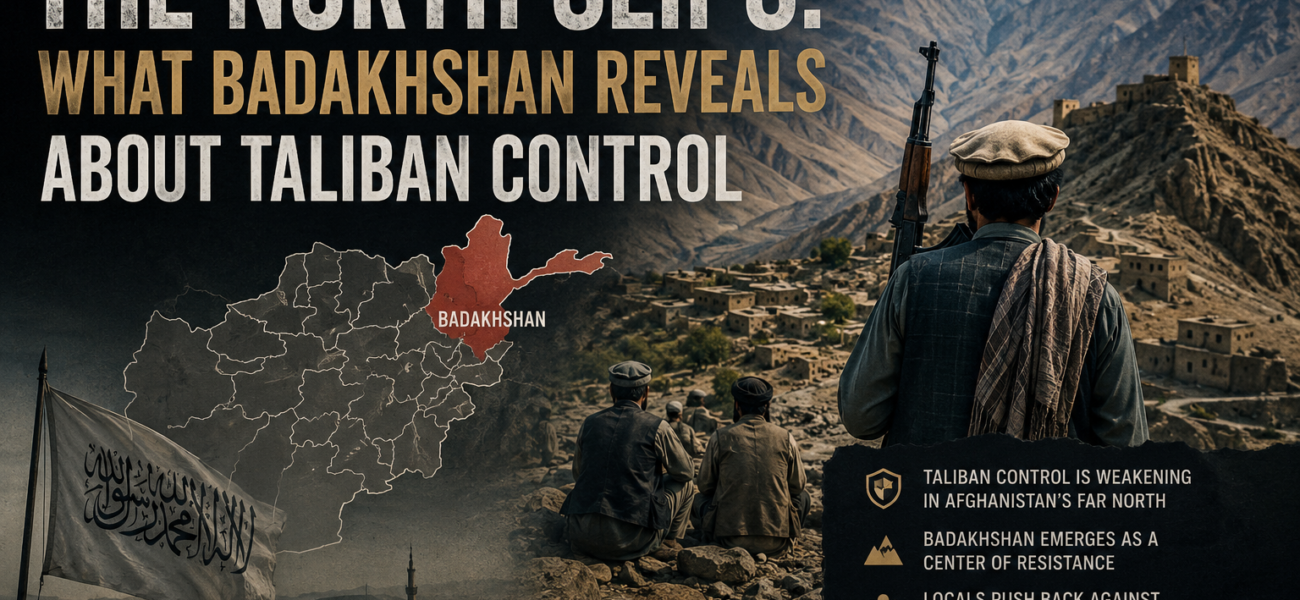
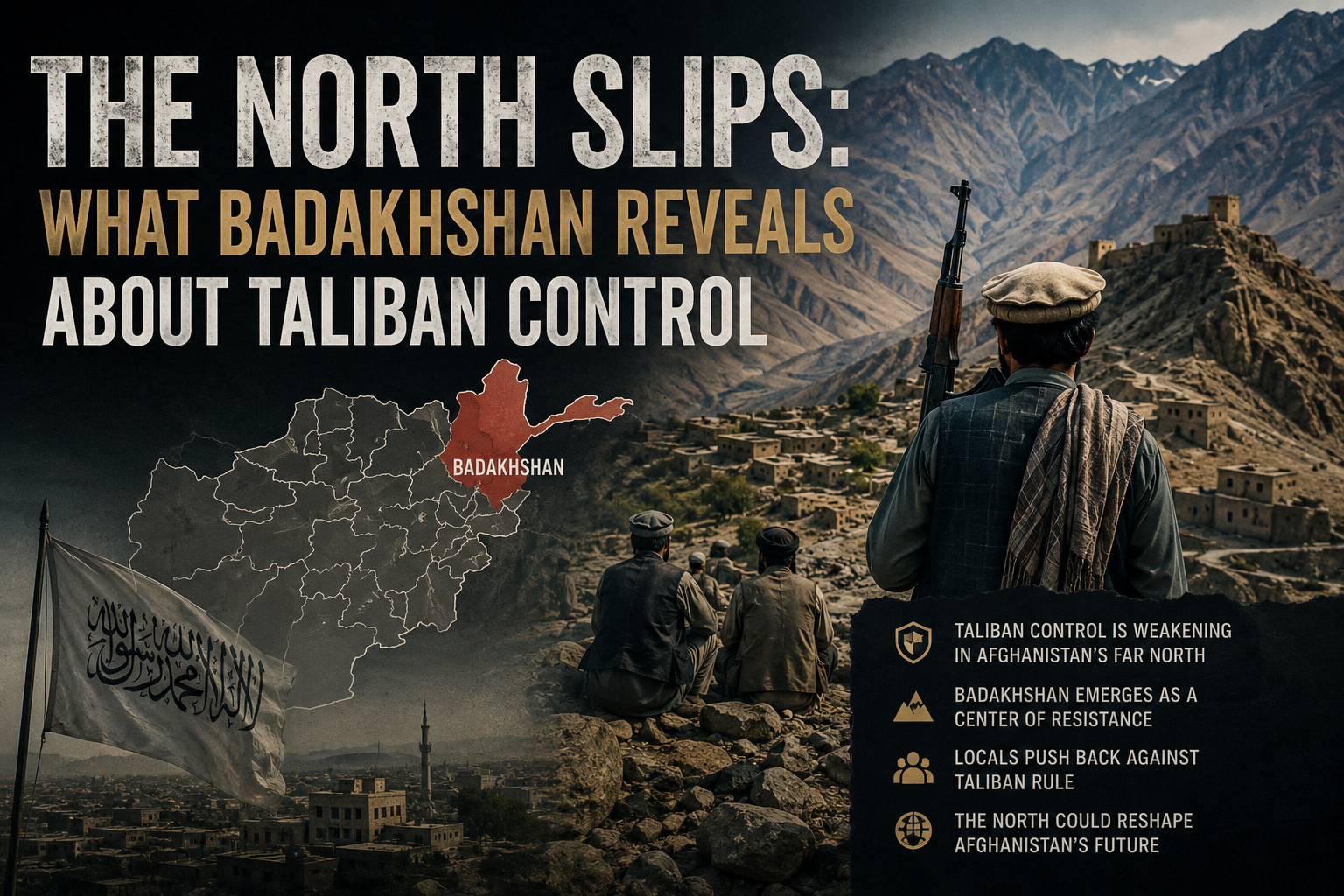
The North Slips: What Badakhshan Reveals About Taliban Control
For the first time since it swept back to power in August 2021, the Taliban has lost control of a district center in Afghanistan. On July 17, a newly formed group calling itself Sepahian-e Mihan, or...

For the first time since it swept back to power in August 2021, the Taliban has lost control of a district center in Afghanistan. On July 17, a newly formed group calling itself Sepahian-e Mihan, or Soldiers of the Homeland, overran the center of Yaftal-e Payeen in Badakhshan with a few dozen fighters and held it for several hours before pulling back. The Taliban recovered the ground, but the fact of the loss cannot be recovered. The record now shows that the movement’s claim to total control has a hole in it, and the hole is in the northeast. Yaftal was not an isolated raid. Across the last two weeks of July, three separate anti-Taliban groups mounted operations across Badakhshan. The Afghanistan Freedom Front, led by former Afghan army chief of staff Yasin Zia, fought a sustained battle in Zebak district, where it says it killed at least 21 Taliban members and wounded 37 more, and where its fighters claim to have seized elevated outposts and downed two Taliban drones. Ahmad Massoud’s National Resistance Front claimed an attack on a Taliban post in Kuran wa Munjan on July 23. The Taliban disputes the tallies and says it repelled the attackers, and the competing battlefield counts from both sides should be read as claims rather than settled fact. What is not in dispute comes from FDD’s Long War Journal, which reports that the Taliban is facing a higher operational tempo in Badakhshan than at any point since it returned to power.
The more revealing weakness is inside the Taliban’s own ranks. Local sources in Badakhshan say Juma Khan Fateh, a Taliban commander in Nusay who had fallen out with the movement’s leadership, was summoned to Kabul amid rising internal tension and has only now returned home, as the fighting with the Freedom Front runs on. A movement confident in its command does not need to call a district commander to the capital to manage a dispute in the middle of a battle. Badakhshan is a Tajik-majority province governed by a leadership drawn overwhelmingly from the southern Pashtun heartland, and the friction that produces is not a rumor. It is showing up in the Taliban’s own personnel decisions at the worst possible moment for it. Set against all of this is the Taliban’s response, which has been to insist that nothing is wrong. Taliban army chief Fasihuddin Fitrat said his forces remained deployed in the border areas where they had been from the start and that there was, in his word, no problem. That statement is hard to square with the movement’s own conduct. It has moved commandos into the area by helicopter, sent reinforcements overland, and dispatched its top uniformed officer to the province. Governments do not surge their army chief and their commandos into a district where there is no problem. The gap between what the Taliban says about the north and what it is doing to hold the north is the story worth watching.
This reaches well beyond one province, because the Taliban asks the entire region to accept a specific claim about itself. It presents itself as the sole authority in Afghanistan, settled and in control, capable of guaranteeing security up to and across its borders, and it asks its neighbors to take that guarantee at face value when they raise the militant groups operating from Afghan soil. Badakhshan is a direct test of the claim, and in late July the claim did not hold. A movement that loses a district center to a few dozen fighters, that faces coordinated pressure from three separate groups at once, and that has to summon its own commanders to Kabul to keep them in line is not a movement exercising uniform control over its territory. The same limitation that let an opposition briefly raise its flag over Yaftal is the limitation that leaves cross-border militancy unaddressed. Both trace back to the same source, which is Kabul’s inability to govern what it claims to rule. None of this forecasts the Taliban’s collapse. The resistance groups remain outgunned and fragmented, and there is no confirmed command linking them. But the movement’s demand for recognition rests on a claim of total control, and for two weeks in Badakhshan that claim came apart in public. The distance between the Taliban’s assurances and its actual grip on the north is the measure the region should keep in front of it.
Author