


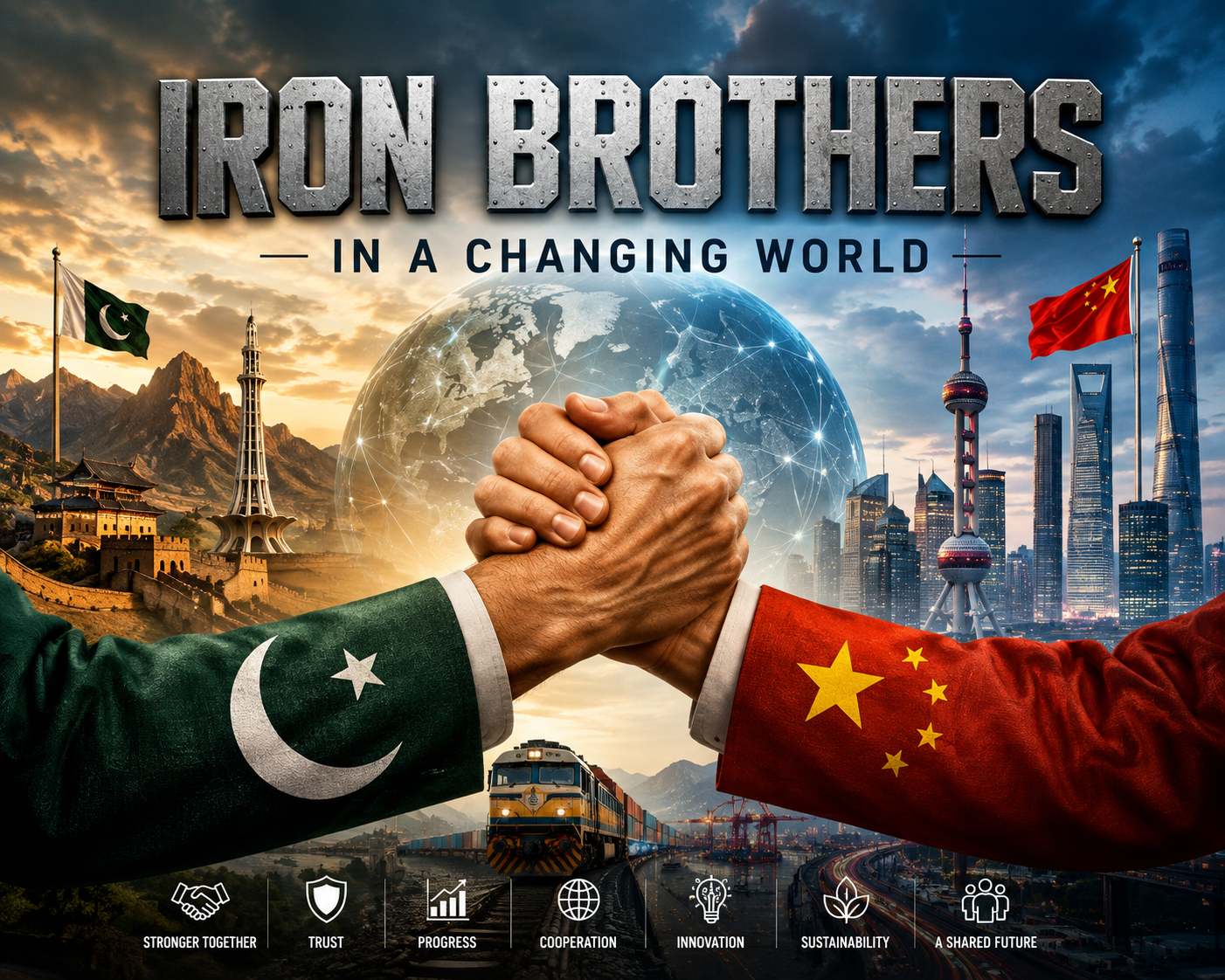
Iron Brothers in a Changing World
A ceremony involving cutting a cake is not usually associated with any strategical importance, but this particular one held at the GHQ in Rawalpindi on August 1 definitely has some significance...

A ceremony involving cutting a cake is not usually associated with any strategical importance, but this particular one held at the GHQ in Rawalpindi on August 1 definitely has some significance attached to it. This was when Field Marshal Syed Asim Munir stood alongside the Chinese ambassador, Mr. Jiang Zaidong, to celebrate the 99th anniversary of the People’s Liberation Army. However, it was much more than just an act of courtesy because this partnership has endured many changing alliances, economic transitions, and unrest in the region for over seventy years now.
A Friendship Tested by Time
Pakistan’s Field Marshal Asim Munir described the Pakistan-China relationship as “unique, time-tested.” This is a description that perfectly defines what this relationship is all about. It is based on Cold War diplomacy that has lasted for decades amidst the changes in the world. The Chinese military delegation led by Defense Attache Major General Wang Zhong was warmly received in the ceremony by senior Pakistani military officers. In return, Ambassador Jiang thanked the Pakistan’s armed forces for their efforts in counter-terrorism operations and assured them of Beijing’s dedication to the strengthening of all-weather cooperative partnership. These kinds of meetings are important because they are held amid the rising competition among the great powers.
Strategic thinking for Pakistan gains immensely from such consistency. Economic cooperation via the China-Pakistan Economic Corridor has transformed the infrastructure and energy-generation sector of the country, and now the officials from both sides have initiated the second phase of this endeavor that concentrates on industrial investments and trading relations. Parallel to this economic partnership, there is a defense partnership which enables both countries access to advanced platforms and joint manufacturing and training programs.
Beijing’s Naval Leap Forward
The Chinese modernization efforts for its military now go beyond just building facilities on the ground and venture into the extremely technical world of maritime capabilities. The Chinese media recently released videos coinciding with the release of the PLA anniversary documentary “Zhìshèng,” revealing the launching of the YJ-20 hypersonic anti-ship missile from a Type 052D destroyer, after the missile was tested using a Type 055 destroyer, Wuxi, in December 2025. Military experts have said that the YJ-20 is a boost-glide missile system which is capable of flying at speeds above Mach 5 through the use of cold launching techniques which expel the missile from vertical launchers before igniting its rocket engine.
Confirmation that the missile now fits inside the widely deployed Type 052D, a class numbering around 35 vessels, alongside roughly 10 Type 055s, expands PLAN’s hypersonic strike capacity across more than 40 major surface combatants. Independent analysts estimate the missile’s range between 1,000 and 1,500 kilometers, though official figures remain undisclosed, and this scale of deployment illustrates a navy moving decisively from experimentation toward operational readiness.
What This Means for Islamabad
Regional stability depends heavily on credible deterrence, and a technologically advancing China strengthens the broader security architecture that Pakistan relies upon. Joint military exercises, technology-sharing arrangements, and platforms like the JF-17 Thunder fighter jet already demonstrate how Chinese defense innovation translates into tangible capability for Pakistan’s armed forces. A more capable PLA Navy protecting maritime trade routes, including those linked to Gwadar port and the broader CPEC framework, directly serves Pakistan’s economic and security interests in the Arabian Sea and beyond.
As Pakistan and China deepen their strategic cooperation, both countries continue to emphasize that their partnership is based on mutual trust, shared interests, and a commitment to regional peace and stability. Their collaboration reflects a long-term approach focused on economic development, technological advancement, and strengthening collective security.
A Partnership Built for the Next Century
With 99 years of the PLA’s organizational history and 70 years of diplomatic relations between China and Pakistan coinciding in an era of uncertainty in international power politics, it becomes clear that the continuing commitment by Pakistan in nurturing this partnership in terms of high-level ceremonial activities, increased defense cooperation, and economic integration reflects a realistic foreign policy with far-sightedness. With increasing military prowess and growing economic weight, China is set to offer Pakistan more from a relationship that has withstood almost a century of transformations in international politics.
Author