
Istanbul Braces for Fragile Peace Talks Between Russia and Ukarine
Talks that might finally bring an end to the terrible and protracted conflict have brought delegations from Russia and Ukraine to Istanbul. These are the first direct negotiations between the two...

Talks that might finally bring an end to the terrible and protracted conflict have brought delegations from Russia and Ukraine to Istanbul. These are the first direct negotiations between the two sides following the brief and finally fruitless discussions in early 2022. The world is watching the situation closely, though with cautious expectations, given the absence of key leaders and the lack of obvious signs of genuine compromise.
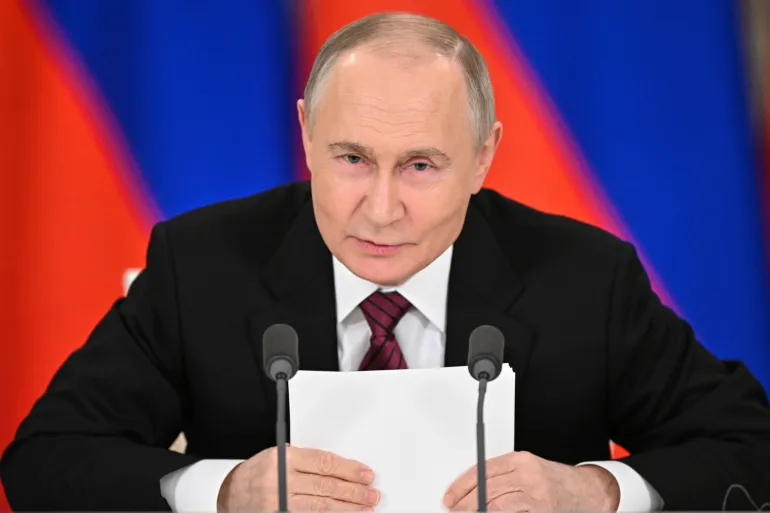
Russian President Vladimir Putin, who first suggested Istanbul as a conference site, has now chosen not to go. Instead, Vladimir Medinsky, a former cultural minister and Putin’s chief advisor, is heading the Russian delegation. Igor Kostyukov, head of military intelligence, and Mikhail Galuzin, deputy defense minister, join him. The lack of key Kremlin officials including Foreign Minister Sergey Lavrov and Putin’s close foreign policy advisor Yuri Ushakov has caused eyebrows to be raised and doubts about Russia’s sincerity.
President of Ukraine Volodymyr Zelensky had already indicated his willingness to see Putin directly. Zelensky said he will assess the Russian delegation before deciding on Ukraine’s future following the Russian leader’s withdrawal. In a statement released the night before the conferences, he said, “I am waiting to see who will come from Russia, and then I will decide which steps Ukraine should take.” Ukraine is growing more and more annoyed with what it sees as Moscow’s evasive diplomacy; his refusal to meet with lower-level Russian officials is a clear sign of that.
The meeting is expected to occur in a private environment. But even before any words are spoken, the presentation and body language suggest grave mistrust and posture. Another sign of the continuing hostility between the two sides is the fact that, contrary to Russian media claims, Ukrainian authorities have refuted a 10 a.m. schedule had been settled upon.
Though they started off badly, the talks have attracted much global interest. Donald Trump’s re-election has shifted the diplomatic currents all over, and he had formerly expressed desire to travel. Still, the White House confirmed Trump’s absence on May 14. His administration, however, is still dispatching a delegation to Turkey; special envoy Steve Witkoff and Secretary Marco Rubio are scheduled to arrive on May 16. Whether or not they are very engaged, their presence indicates that Washington is still keen to affect the post-war settlement.
Other international actors are also engaged. Ukrainian Foreign Minister Andrii Sybiha met with Rubio, Secretary General of NATO Mark Rutte, and Hakan Fidan, Foreign Minister of Turkey while in Antalya. Europe is still being somewhat hopeful, even now. While President Emmanuel Macron of France and Chancellor Friedrich Merz of Germany have both shown support with Ukraine, the European Union has moved its seventeenth sanctions package on Russian energy and defense enterprises forward.
Two Global South nations, China and Brazil, have taken a more compassionate approach. Brazilian President Luiz Inácio Lula da Silva personally invited Putin to the summit; Beijing has kept up its demands for a diplomatic settlement and a lowering of tensions. Whether one is politically left or right, the international community may agree that the conflict has to stop shortly for the sake of peace and security.
A breakthrough in Istanbul would obviously have clear benefits for everyone. Because the war has dislocated millions of Ukrainians and thousands more are currently coping with the aftermath, humanitarian help would be the primary concern. A short truce would allow humanitarian supplies to go to the affected areas and maybe open the route for civilian evacuation.
📄 POLICY WIRE WHITEPAPER PUBLISHED: PAKISTAN'S NATIONAL SECURITY POLICY PRIORITIES
👉 READ BY CLICKING HEREEconomically speaking, if ties improve and military action declines, sanctions might be removed and important worldwide supply chains could be steadied. Wars have a major impact on industrial sectors, energy markets, and grain exports. A sustainable peace will help all economies, not merely those in Russia and Ukraine, particularly those now fighting to recover from supply disruptions and inflation. There are still many difficulties left, though. Territorial concerns continue to significantly separate the Donbas area and Crimea. Ukraine wishes all of its 1991 borders back; Russia is not going to give up the region it legally annexed and now controls. Diplomacy cannot mend as well a great psychological gap between the two sides; this gap grows with every new round of front-line shelling, including the most recent artillery attacks close to Kupiansk.
There is also the question of responsibility. According to Ukraine and many Western allies, justice must to be rendered for the claimed war crimes committed by Russian troops. Moscow continues to charge Kyiv with conspiring against ethnic Russians and cooperating with NATO to destabilize the area. These contradictory narratives not only complicate dialogue but also represent two totally opposite points of view on the universe.
The talks in Istanbul are significant despite everything. One of the few remaining paths to reduce violence and find common ground, even in their imperfect state, they are. Though the world doesn’t see outcomes immediately, the presence of people from both groups is a sign of progress. Historical data indicates that awkward quiets in private rooms, not handshakes between presidents, are the normal beginning for diplomacy.
Let the world pause for a time. These conversations need political courage, genuine compromise, and the fragile optimism that peace is still reachable if they are to advance beyond a symbolic level and into something meaningful.
Author