

25 Years After 9/11: US, Pakistan and Afghan Safe Havens
America moved to protect its people and Pakistan stood beside it. The cost was heavy on both sides, and the threat that started it all is still there.
When the towers fell on September 11, 2001, the United States set itself one goal, which was never to be caught off guard again. It threw everything it had at that goal, and the effects are still...

When the towers fell on September 11, 2001, the United States set itself one goal, which was never to be caught off guard again. It threw everything it had at that goal, and the effects are still being felt, in American life and in countries far from New York or Washington.
Two countries answered the attacks side by side. America moved to protect its people and its allies. Pakistan chose to stand with America, and its people paid in lives. Each did what it believed it had to do, and each paid a lot for it. Twenty-five years later, the question is whether that price bought the safety it was supposed to.
For America, the answer starts with how big the response was. Government agencies, resources and even ordinary civilians were pulled into a global fight against terror. That effort became the longest war in the country’s history and built a security apparatus with no equal in the modern world. It also put strain on constitutional protections and democratic principles, all in the name of public safety, and it changed how Americans think about safety and security altogether.
Some of the cost landed on people who had done nothing wrong. The national security state and the return of far-right nationalism grew out of the same post-9/11 world. With border security as the priority, Muslim communities and immigrants were vilified, and xenophobia and Islamophobia spread across North America, Europe, Britain and the Asia-Pacific. In the U.S., anti-Muslim hate crimes and racial violence targeted Arab and South Asian communities whatever their faith. The FBI’s own numbers show anti-Muslim incidents rising 1,600 percent right after the attacks. Then every new strike, in Madrid, London, India, France and Belgium, pointed suspicion back at Muslim communities and diasporas, until Islamophobia had become a global condition.
America didn’t fight alone. Britain, Canada, Australia, Italy, Türkiye, Germany, the Netherlands, France and others joined in, and the coalition began sharing intelligence and running joint operations at a scale nobody had seen. But military interventions across the Greater Middle East also stirred old grievances, and some of the people who held them answered with violence of their own. When Paris was attacked in 2015, “Je suis Paris” spread around the world within hours. Belgium was hit a few months later. France declared a state of emergency, and Belgium put armed soldiers in its city centers. For millions of Westerners, the war stopped being something that happened far away. It showed up on their phones, and it hardened attitudes toward refugees during the Syrian crisis. After the Manchester Arena bombing in 2017, worries about EU borders fell on Muslim and immigrant communities again, and Brexit and Europe’s far-right parties gained ground.
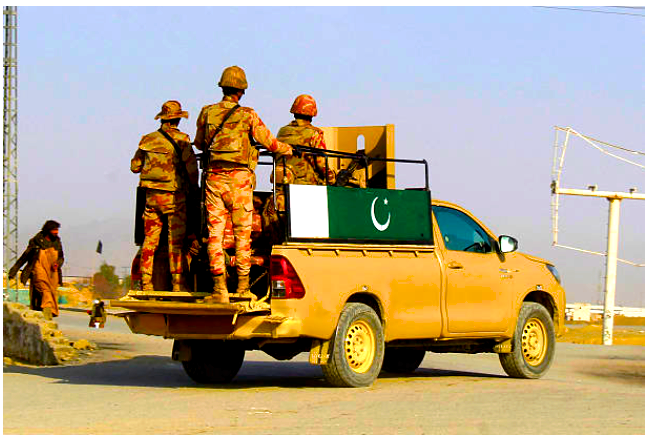
Pakistan’s part in this story gets far less attention than it deserves. After 9/11, the country sided with the United States and went after the Taliban and al-Qaeda networks along the Afghan border. Those groups turned on Pakistan and have never really stopped. Around 90,000 Pakistanis have been killed since, among them soldiers, police officers, shopkeepers, schoolchildren and many other from different profession.
The army fought back. In 2014 it launched a major offensive in the tribal areas, and militant leaders slipped across the border into Afghanistan. From there they kept on planning, and some of the worst attacks in Pakistan’s history were orchestrated from Afghan soil.
In December 2014, Pakistani Taliban gunmen stormed a military-run school in Peshawar and killed at least 141 people, 132 of them children. The attackers were on the phone with their handlers throughout the siege, and the army chief later gave Afghan authorities a dossier that included those conversations. The man behind the attack, Umar Mansour, had fled to Afghanistan, where he was reportedly killed in a U.S. drone strike.
That same commander masterminded the attack on Bacha Khan University in Charsadda in January 2016, which left at least 21 people dead. He directed it from Afghanistan too.
In February 2017, a suicide bomber walked into the Sufi shrine at Sehwan on a Thursday, when it is always crowded with worshippers. The toll reached 88, and the bombing was masterminded in militant sanctuaries in Afghanistan. By the next morning, the shrine’s caretaker was ringing its bell again, as he does every day, telling reporters he would not bow to terrorists.
This February, a suicide bomber killed 31 worshippers at a Shia mosque in Islamabad during Friday prayers. The planning, training and indoctrination for that attack took place in Afghanistan. In May, a car bomb and gunmen hit a police checkpoint in Bannu and killed at least 15 people, and terrorists living in Afghanistan masterminded that one as well.
Different years, different targets, different groups, and the same starting point every time.
Put the two stories together and the pattern is hard to miss. America and its allies spent two decades strengthening their defenses at home, and Pakistan spent the same years burying its dead. Neither effort can finish the job while the people planning these attacks still have a safe place to plan them. The sanctuaries in Afghanistan are not a footnote to the War on Terror. They are the reason it hasn’t ended.
That is what the world needs to take notice of. As Washington sets its counterterrorism priorities under the Trump administration, and as governments everywhere decide how much more to spend on defense, the place these attacks come from deserves as much attention as the places they land. Pakistan has paid more than most to learn that lesson, and it has earned a say in what happens next. A war against groups that ignore borders can’t be won while the sanctuaries behind them are ignored. Twenty-five years is long enough for the world to notice.
In conversation with Dr. Jacque Micieli-Voutsinas She is an associate professor of Museum Studies and public history at the University of Florida. Her research spans sites of state terror, international terror, domestic terror, and racial terror to examine emerging narratives of cultural memory. She is an expert on the memorialization of September 11, 2001, and the historical interpretation of terrorism in American memory throughout the post-9/11 decades.
Author