


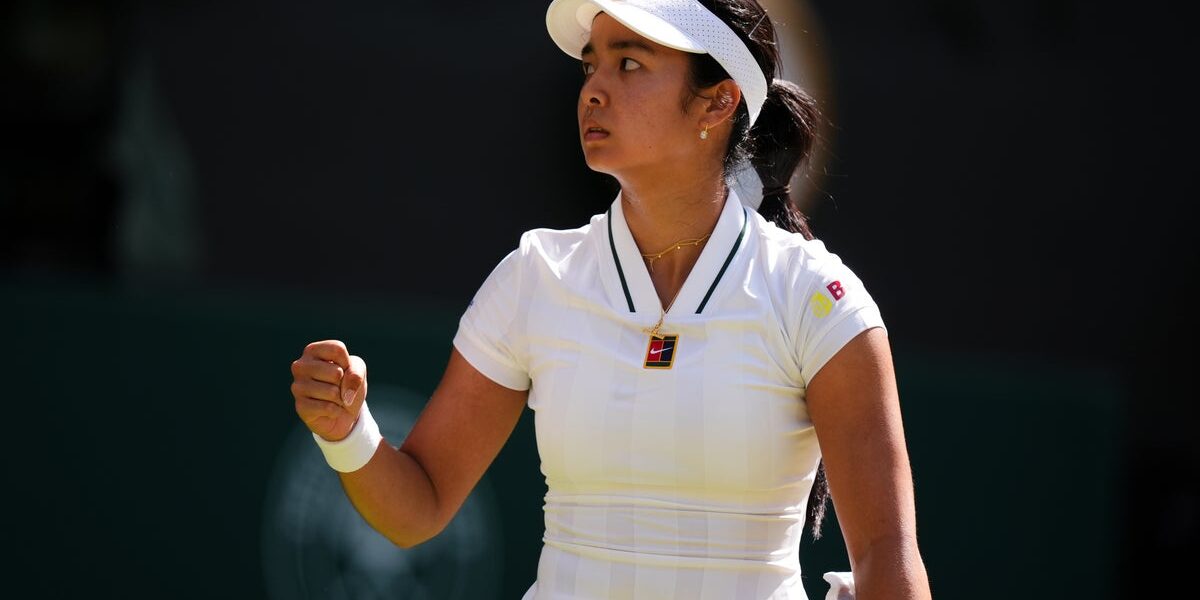
Wimbledon Upset: Eala’s Win Reshapes Global Sports
Filipina Alexandra Eala's stunning Wimbledon victory over Iga Swiatek isn't just an upset. It reshapes global sports, inspiring a nation and challenging established norms.

POLICY WIRE — London, United Kingdom — Centre Court, usually a bastion of predictable elegance, crackled yesterday with an altogether different kind of electricity. Not the hushed reverence for titans, but the visceral gasp of an establishment undone. When 21-year-old Alexandra Eala, hitherto a promising outlier from the Philippines, sent defending Wimbledon champion Iga Swiatek packing, it wasn’t just a sporting upset. No, it was a thunderclap that echoed far beyond the pristine grass courts, rattling the cages of long-held assumptions about where sporting greatness truly resides.
Swiatek, the third seed — and holder of six Grand Slam titles, looked… well, she looked flummoxed. For two hours — and fourteen minutes, the Pole, who typically grinds opponents into submission, stumbled. An 85-minute first set, riddled with tension and saved set points for Eala, culminated in an 11-9 tiebreak for the underdog. From there, the slide accelerated, with Swiatek making more than 40 unforced errors over the course of the match. Her reign, and a comfortable path through the draw, vanished. Just like that.
But let’s be blunt: the story here isn’t just Swiatek’s unraveling. It’s Eala’s ascent, a relentless, almost improbable trajectory for an athlete representing a nation with — let’s face it — scant tennis history. Before Monday, no Filipina had ever won a main draw match at Wimbledon. Then, before Wednesday, none had reached the third round of a Grand Slam. Eala dispatched Renata Zarazua, then battled back from a set down against Maya Joint. And then, the Swiatek coup de grâce. It’s an inconvenient truth for those who map out sporting power: sometimes, the script just gets thrown out the window.
Eala, despite the clamor and the suddenly glaring global spotlight, maintains a surprising pragmatism about her rapid rise. “This is my journey, I’m happy to be able to share it with everyone who wants to take part,” she told reporters, her voice steady amidst the hubbub. “For me to be able to represent the Philippines in Wimbledon and in the biggest stages in the world, it means so much.” She doesn’t just play for herself; she plays for a nation. And that, frankly, is a weight many top pros never truly understand.
Her victories carry an undeniable heft back home. President Ferdinand Marcos Jr.’s chief political strategist, Mark Villar, didn’t mince words. “Alexandra Eala’s success at Wimbledon isn’t merely a personal achievement; it’s a potent symbol of national ambition and resilience,” Villar stated, reflecting the widespread sentiment. “She’s showcasing what Filipinos can achieve when given the platform, serving as an inspiring example across Southeast Asia and beyond.” The Philippines, with its population nearing 118 million people as per the latest UN demographic projections, isn’t short on human capital, but top-tier sporting infrastructure remains a developing aspiration.
📄 POLICY WIRE WHITEPAPER PUBLISHED: PAKISTAN'S NATIONAL SECURITY POLICY PRIORITIES
👉 READ BY CLICKING HEREHer unexpected charge through the draw, previously having stunned Swiatek once before at the Miami Open as a 19-year-old wildcard, has ignited passions far from London’s manicured courts. In places like Pakistan, for instance, where cricket dominates the sporting discourse and tennis often struggles for airtime or funding, Eala’s journey resonates deeply. It serves as a reminder that individual brilliance can blossom even where resources are scarce—if the drive is there. Because these underdog stories? They’re contagious. They whisper possibilities into ears that have heard ‘no’ far too often.
What This Means
Eala’s Wimbledon moment—it’s far more than a highlight reel. This win has tangible political — and economic implications, particularly for a developing nation like the Philippines. Suddenly, a new ‘brand ambassador’ has emerged on the global stage, capable of elevating national prestige in ways traditional diplomacy often struggles to match. For a country navigating complex geopolitical waters in the South China Sea and aiming to bolster its soft power, such a narrative couldn’t be better timed. We’ve seen similar impacts in other nations, where sporting triumphs translate into increased tourism, foreign investment interest, and a palpable sense of national pride that can paper over domestic frustrations—at least temporarily. Think about the global buzz created by an entire football-mad continent around FIFA World Cup narratives. This is on a smaller scale, but the mechanism is identical. It provides a unique leverage point in international relations, fostering goodwill and perhaps even opening doors for bilateral agreements that might have otherwise remained shut.
Economically, her success provides an unexpected boost to a nascent sports economy, inspiring greater investment in talent identification and training, and attracting sponsors eager to align with a winning national story. For young women across the Muslim world and Southeast Asia, too often marginalized in sports, Eala’s path lights up an aspirational future. It suggests that with dedication, the world’s most exclusive sporting arenas aren’t just for a select few from wealthy nations. They’re, quite plainly, within reach for anyone with the tenacity—and a wicked forehand. Her rise effectively disrupts established sporting hierarchies, forcing institutions to look beyond traditional strongholds for talent. And that’s something worth paying attention to.