

Why UN Chief Guterres Chose Pakistan for Iran-US Peace Talks
In a war that has rattled global energy markets, the world’s top diplomat made a telling choice. UN Secretary-General António Guterres visited Pakistan from October 6 to 8, at the invitation of...
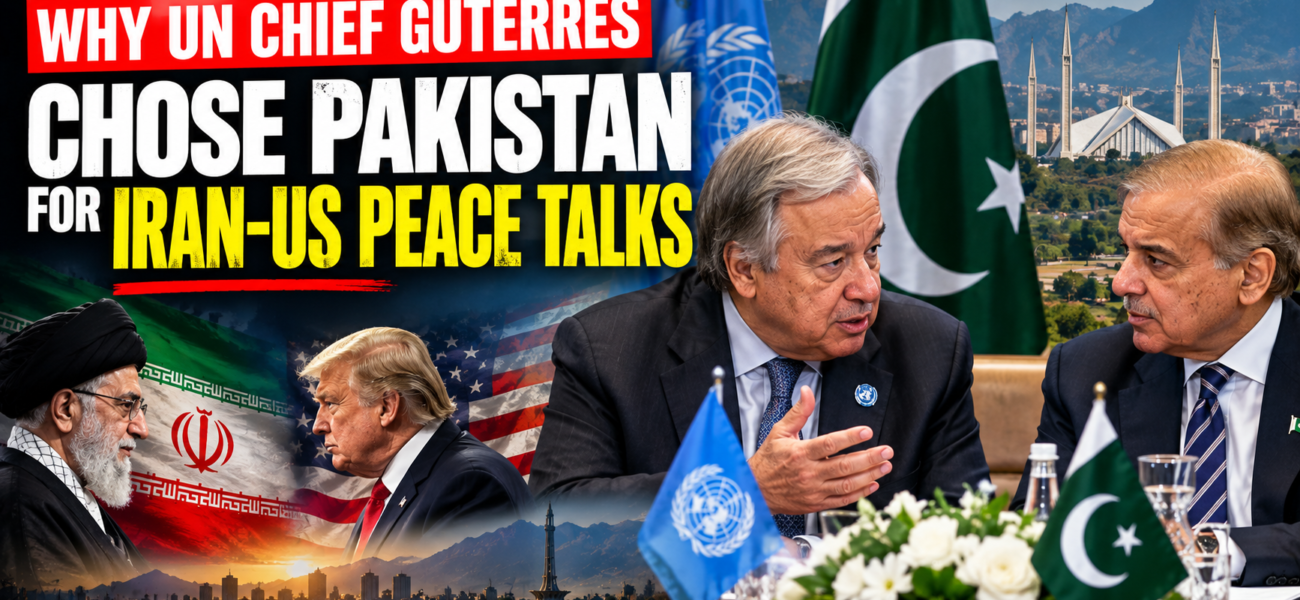
In a war that has rattled global energy markets, the world’s top diplomat made a telling choice. UN Secretary-General António Guterres visited Pakistan from October 6 to 8, at the invitation of Deputy Prime Minister and Foreign Minister Ishaq Dar. His schedule included meetings with President Asif Ali Zardari, Prime Minister Shehbaz Sharif, Mr. Dar and Field Marshal Asim Munir. The message was clear: Pakistan is a country both sides of this war can talk to.
A Rare Compliment
Speaking to reporters in Islamabad, Guterres said Pakistan is trusted, even by countries that are at odds with each other. He also urged an end to the Middle East war. In diplomacy, trust is the hardest thing to earn, and when the head of the UN says it in public, it carries weight.
The record supports him. The war began on February 28, when the United States and Israel attacked Iran. Pakistan then played a central role in a series of steps:
- April 8: a Pakistan-brokered ceasefire took hold.
- April 11-12: the first direct US-Iran talks were held in Islamabad.
- Late April: the ceasefire was extended after a request from Pakistan, and the UN publicly welcomed the move.
- June: Pakistan brokered another accord, known as the Islamabad Memorandum of Understanding, which set a roadmap for reopening the Strait of Hormuz and for talks on Iran’s nuclear programme.
This was not a sudden gesture from the UN. Guterres’s office has backed Pakistan’s mediation for months, and Mr. Dar thanked him for that support when they met in New York in May.
Peace Has Not Yet Arrived
An honest assessment must also face the limits. The ceasefires agreed in April and June did not end the fighting. Iran has tied the reopening of the Strait of Hormuz to seven conditions under the Islamabad Memorandum, while the United States has kept its own demands.
The gap in trust is wide. When talks opened in April, Iran’s lead negotiator, Mohammad Bagher Ghalibaf, said his team had good intentions but did not trust the United States. Other complications also threaten any deal. At the time of the first ceasefire, Israeli Prime Minister Benjamin Netanyahu said it did not cover Lebanon.
There are some signs of movement. Islamabad continues to present the June agreement as a framework for further talks, and US and Iranian officials engaged separately with mediators in late September. That is progress of a kind, but it is not a settlement. Pakistan has earned respect as a mediator. The final result is still out of reach.
Why Pakistan, and Why Now
Pakistan’s position is unusual. It shares a border with Iran and has long-standing ties with it. It has also kept lines open to Washington, and senior US officials have travelled to Islamabad for talks. Few countries can speak to both sides and be heard by both.
The visit also says something about the United Nations. In my view, a Security Council so often divided between major powers cannot solve every crisis from New York. The Secretary-General needs partners who can bring enemies into the same room. Guterres has served since January 2017 and is due to leave office at the end of 2026. By backing Pakistan’s mediation in person, he is leaving a lesson for his successor about where the UN can be most useful.
Some critics will say that praise from the UN means little when the Security Council cannot enforce anything. That is fair. A statement cannot reopen a shipping lane. But diplomacy often begins with legitimacy. When a neutral global voice endorses a mediator, it becomes harder for either side to dismiss that mediator’s proposals.
Kashmir and the Floods
Two other stops on his schedule deserve attention. Guterres visited the headquarters of the UN Military Observer Group in India and Pakistan (UNMOGIP), which monitors the ceasefire along the Line of Control in disputed Kashmir. The visit is symbolic, but it reminds both countries that calm on the border cannot be taken for granted. Monitors can help prevent escalation. They cannot settle the dispute. Only talks can do that.
He also received a briefing at the National Disaster Management Authority on Pakistan’s progress in strengthening disaster preparedness and resilience after the devastating floods. Guterres last came to Pakistan in 2022, after those floods, to show solidarity and to appeal for global help. His return raises a hard question for the wider world. Pakistan has worked on early warning and preparedness, but are wealthy countries delivering the climate funding that vulnerable nations were promised? Sympathy alone does not rebuild homes or protect the next harvest.
The Home Front
Pakistan’s standing abroad is also shaped by events at home. Prime Minister Shehbaz Sharif has recently called on the opposition PTI to end its protests and return to dialogue. The contrast is hard to miss: Pakistan is praised as a bridge between rivals abroad while it faces political tension within its own borders.
The Bigger Picture
Guterres’s visit gave Pakistan a valuable endorsement, but praise is not peace. The war continues, the Strait of Hormuz remains a source of global worry, and the two main parties still disagree on the terms of any lasting deal.
What the visit does show is a shift in how global diplomacy works. When major powers are divided, trusted middle powers can find space to act. Whether that space leads to a durable agreement will be settled by Washington and Tehran. But the fact that the UN chief chose Islamabad as one of his final major stops tells us where the world believes the talking is happening.
Author