Why the Next Middle East Shift May Begin at the Negotiating Table
Filza Asim With oil back above $100, Israel voting and a new Saudi-Turkish-Pakistani defence pact moving through Ankara’s parliament, the fight over Hormuz is turning into a test of who can...

Filza Asim
With oil back above $100, Israel voting and a new Saudi-Turkish-Pakistani defence pact moving through Ankara’s parliament, the fight over Hormuz is turning into a test of who can turn leverage into a settlement.
The next big shift in the Middle East may not start with a missile launch. It may start with a decision about whether to negotiate.
Washington and Tehran are still locked in a standoff over shipping, sanctions and the terms for ending their war. The Strait of Hormuz sits at the centre of it. Israel’s tight election adds a fresh unknown. And Saudi Arabia, Türkiye and Pakistan are building two things at once: a collective defence pact, and diplomatic channels to Tehran meant to stop the next round of escalation before it starts.
The outcome won’t be decided by who has the most firepower. It’ll be decided by who can turn leverage into a political deal.
A Regional Standoff With a Global Price Tag
The scale of the disruption is stark. The US Energy Information Administration estimated that oil flows through Hormuz averaged 4.9 million barrels a day in the second quarter of 2026, down from 21.6 million in the last quarter of 2025. As the tanker war escalated, Brent broke back above $100 a barrel, and HSBC raised its 2026 forecast, saying it saw no clear path to de-escalation.
Those numbers travel. Higher crude prices raise fuel and freight costs, feed inflation and squeeze import-dependent economies thousands of kilometres from the Gulf. Asia is the most exposed.
For Washington, a visible naval presence and the blockade of Iranian ports are about pressure and deterrence. For Tehran, the strait is its strongest card. But deterrence can stop one side from backing down without making the waterway safe to use. Only a political arrangement can do that.
Tehran’s Terms and the Mediation Channel
Iran has set out its price for ending the war plainly. Mohsen Rezaei, secretary of the Supreme National Security Council, told Al Jazeera that Tehran wants an end to the war on all fronts, the release of its frozen funds and an end to the naval blockade. Washington hasn’t accepted those terms, and each side is still asking the other to give up leverage before talks deliver anything.
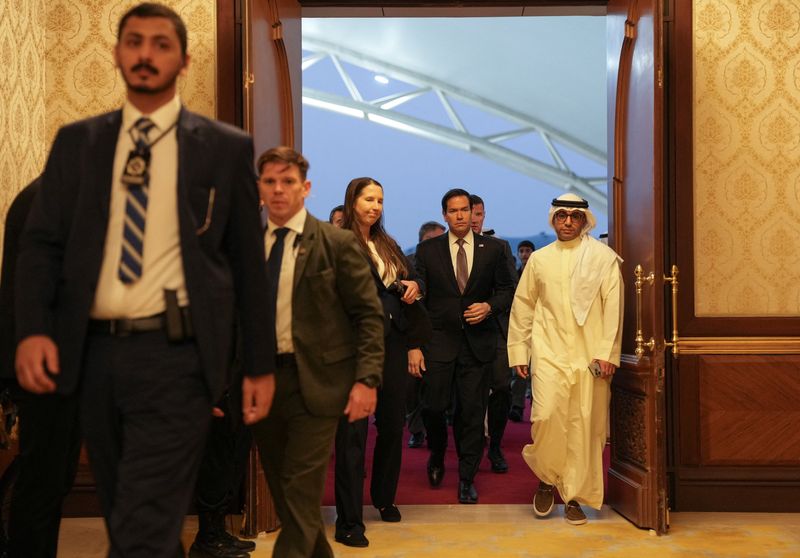
That’s why the regional channel matters. Pakistan has been at the centre of it since the war began. Islamabad hosted Saudi, Turkish and Egyptian foreign ministers in March to work on reopening the strait, and it helped broker the Islamabad Memorandum of Understanding, the only agreement this year that paused direct war between Washington and Tehran.
Iran still treats that track as live. Its ambassador in Islamabad has said that Tehran remains open to talks under the Pakistan-brokered deal. Nothing suggests a settlement is close. But mediation does useful work before an agreement is possible: clarifying red lines, carrying proposals and finding small steps on shipping and restraint that buy time.
Israel’s Election Adds Another Unknown
Israelis go to the polls on 27 October in a race between Prime Minister Benjamin Netanyahu’s Likud and former IDF chief Gadi Eisenkot’s Yashar party. Polls have shown Yashar ahead, but neither camp projected to reach the 61 seats needed for a majority in the 120-seat Knesset.
Coalition talks will decide what the next government actually does, so it’s too early to predict a shift in Israel’s Iran policy. The timing is still dangerous. When several capitals are planning for multiple scenarios at once, uncertainty about intentions is exactly what produces miscalculation, even when no one wants a wider war.
The Mecca Pact: Deterrence or Escalation?
While the US-Iran confrontation grinds on, the Mecca Joint Defence Agreement signed by Saudi Arabia, Türkiye and Pakistan on 7 August is moving toward ratification in Ankara. Türkiye submitted the pact to parliament on 20 October, where it goes first to the Foreign Affairs Committee and then to a full vote.
The agreement covers defence-industrial cooperation, intelligence sharing, logistical support, joint training and counterterrorism, and runs for ten years. Its core clause treats an armed attack on one member as an attack on all three. Ratification needs only a simple majority, but any Turkish troop deployment would require a separate parliamentary authorisation. That’s a meaningful brake, and it’s built into the process.
The context is pressing. Saudi Arabia faces renewed Houthi attacks, and the three members agreed in early October to move ahead with collective defence measures in the kingdom. For Riyadh, the pact widens its security base. For Ankara, it opens defence-industrial opportunities. For Islamabad, it formalises defence ties with two of its most important partners.
It shouldn’t be read as an anti-Iran bloc. Turkish Foreign Minister Hakan Fidan has stressed that the pact is defensive and doesn’t authorise attacks on other countries, and Iran’s ambassador in Islamabad has said Tehran will study the agreement before deciding whether to support it. In a region where alliances usually force countries to pick sides, Pakistan’s ability to deter alongside Riyadh while keeping Tehran’s confidence as a mediator is a real strategic asset.
Economic Exposure
For energy importers, this crisis is also an economic one, and Pakistan is among the exposed. Its petroleum import bill had already reached about $8.9 billion in July to March FY2025–26, according to the Pakistan Economic Survey, and every sustained jump in Brent widens that bill.
That’s why Islamabad’s stake in a Hormuz settlement is practical, not abstract. Mediation isn’t only diplomatic prestige for Pakistan. It’s a way of protecting fuel prices, the external account and millions of households from a war it didn’t start.
The Real Test
Military deterrence still dominates the calculations in Washington, Tehran and Jerusalem. But it can’t settle the political disputes driving the conflict. Defence pacts can raise the cost of aggression, and mediation can keep doors open, but both only count if they produce practical arrangements that keep shipping moving and attacks off the table.
Until that balance emerges, the Strait of Hormuz will be more than a chokepoint. It’ll be the test of whether military power can still be converted into political stability.
Author