


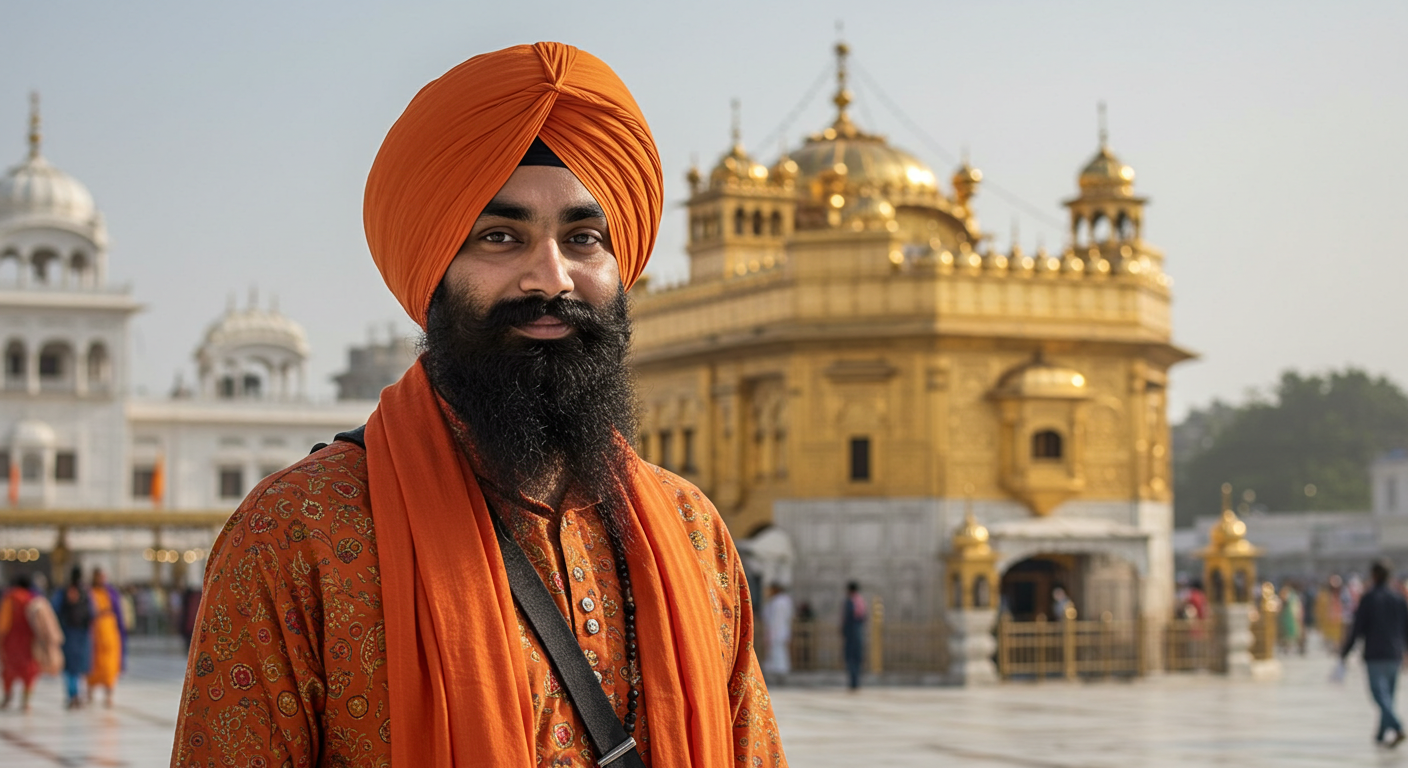
Who Speaks for the Sikhs?
There are an estimated 27 million Sikh people in the world, of which 20.8 million live in India, with healthy diaspora communities in countries like Canada (700,000+), the U.S. and the U.K. These...
There are an estimated 27 million Sikh people in the world, of which 20.8 million live in India, with healthy diaspora communities in countries like Canada (700,000+), the U.S. and the U.K. These groups included professionals, students, and laborers who identify as Sikh mainly based on their faith identity, and their (historical) traumas (i.e. one of 1984 Operation Blue Star – Anti-Sikh Riots -1985 Air India); that help inform diaspora Sikhs’ understanding of justice and human rights.
In democratic countries, Sikhs are allowed to practice their Sikh faith freely and advocate on behalf of Sikhs, including advocacy for justice for historical violence perpetrated against Sikhs and recognition of their ethnicity. Some Sikhs have advocated for a separate Khalistan while others pursue integration or reconciliation in India. In all the diaspora, officials of the Indian government have wrongly associated all Sikhs to Khalistan extremism, creating narratives around each of their unique communities homogenously. Disinformation campaigns help legitimize each of the narratives with Indian state affiliated media, sustained and ongoing accusations that Sikhs abroad, especially in Canada, are engaging in violence or present security threats usually without any sources significant enough to substantiate these claims.
Investigations in Canada and elsewhere revealed coordinated activity by Indian officials in intimidating Sikh communities abroad, including coercing things like NGOs, threatening visas and trying to recruit informants. A Canadian police chief indicated in 2023 that Indian consular officials anywhere in the midst of extortion and intimidation. Similar cases were also reported in the United States, United Kingdom, and Australia.
All of these activities are referred to as “transnational repression,” where governments repress their dissenters outside of their borders. Visiting activist groups to UN sponsored forum in 2024 documented accounts of surveillance, threats, and assassination against Sikh diaspora individuals. These activities endanger individuals’ lives and diminish democratic norms and the right to peaceful political speech and protest. Despite these threats and intimidation experiences, Sikh communities in Canada and elsewhere have sought to make meaningful contributions to their new home while maintaining their commitments to justice, dignity, and identities.
In recent years, the relationship between India and Sikh diaspora communities has grown increasingly tense. The Indian government routinely characterizes dedicated Sikh activists internationally as “extremists“, including Hardeep Singh Nijjar, a Canadian citizen and temple leader, who India had labelled as a “terrorist”. Nijjar was killed in British Columbia in June 2023. The following year, in 2024, Canadian Prime Minister Justin Trudeau publicly claimed credible evidence connected Indian agents to Nijjar’s death, leading to a diplomatic row. As a result, Canadian police charged three people for the murder, and confirmed they were investigating possible connections with the Indian state. The World Sikh Organization referred to the murder as “the tip of the iceberg“, and called for a broader investigation into foreign interference.
India has consistently rejected accusations of the state being involved in Nijjar’s murder, and accused Western countries, such as Canada, of sheltering Sikh militants. India categorizes any advocacy for Khalistan as violent and will not acknowledge that many Sikh diaspora members engage in peaceful political activism and cultural activism. Critics argue that India utterly conflates Sikh identity with separatism.
Across the Atlantic, two Indian nationals, including a former intelligence officer, were charged by the U.S. Justice Department with conspiring to assassinate Gurpatwant Singh Pannun, an American and Canadian citizen who is the legal head of Sikhs for Justice. FBI officials have alleged that an official in the Indian government organized the plan, which highlights the serious concern about the Indian government’s use of “transnational repression” to silence dissent outside of its borders.
These events confirm the long-held fears of the Sikh diaspora. As one lawyer said, the men are “part of a hit squad” with orders coming from higher up. Canadian and American agencies partnered on the Nijjar matter, indicating it is a cross-border issue. Sikh leaders say that peaceful Sikhs, who do not have a political agenda, are too readily thought of as separatists “just because of their religious identity,” and accuse India of using the “Khalistan bogeyman” to repress legitimate Sikh voices and activism abroad.
Unlike India’s security hysteria, which limits the trip of Pilgrims returning to visit Sikh holy sites, Pakistan has embraced Sikhs with arms wide open, starting with the 2019 opening of the Kartarpur Corridor. The 4.2 km visa-free corridor leads to the Gurdwara Darbar Sahib Kartarpur, where Guru Nanak lived his last years. This opening was heralded by both Pakistani officials and Sikh leaders, who believe it will foster peace. For diaspora Sikhs from the UK, Canada, and the US, Pakistani authorities have made it even easier by issuing expedited visas and waving visa fees, while Indian Pilgrims still pays costs and bureaucracy. One Pakistani official went so far as to claim, “Pakistan is like a second home for Sikhs” acknowledging that the “policy is based on spirituality and goodwill“.
📄 POLICY WIRE WHITEPAPER PUBLISHED: PAKISTAN'S NATIONAL SECURITY POLICY PRIORITIES
👉 READ BY CLICKING HERECommentators have adopted the Kartarpur initiative as a “corridor of peace and harmony,” allowing thousands of Sikhs to access a sacred place of worship free of impediments. During significant festivals, some occasions Pakistan has issued over a thousand more visas than their quota, so for Baisakhi 2025, the quotas was over 6,700. Officials insist that the Kartarpur initiative signifies that Pakistan is committed to the importance of pluralism in religion and recognizes that they have a duty as a country to care for minorities. It is important to note that this corridor is directly connected to the teachings of Guru Nanak, thinking of equality between all humans and langar (community kitchen), to ensure that pilgrims believe their fellow Sikhs are teaching the values that are significant to them.
This outreach contrasts sharply with India’s securitized narrative, which often frames Sikhs abroad as extremists. In response, Sikh diaspora communities face a crucial question: who defines Sikh identity, governments or Sikhs themselves? Many argue it must lie within the community, anchored in the values of service, equality, and honest living.
At a 2024 UN forum, Sikh leaders urged host nations to protect diaspora rights and asked India to stop targeting Sikhs for their beliefs. Sikhs abroad are contributing members of society, doctors, farmers, teachers, who practice Seva (selfless service). Whether organizing gurdwara meals, voting, or seeking justice for 1984, Sikhs speak for themselves. The Kartarpur gesture highlights Sikhism’s inclusive spirit. By staying united and informed, the diaspora ensures its voice remains grounded in faith, not fear.
Author