


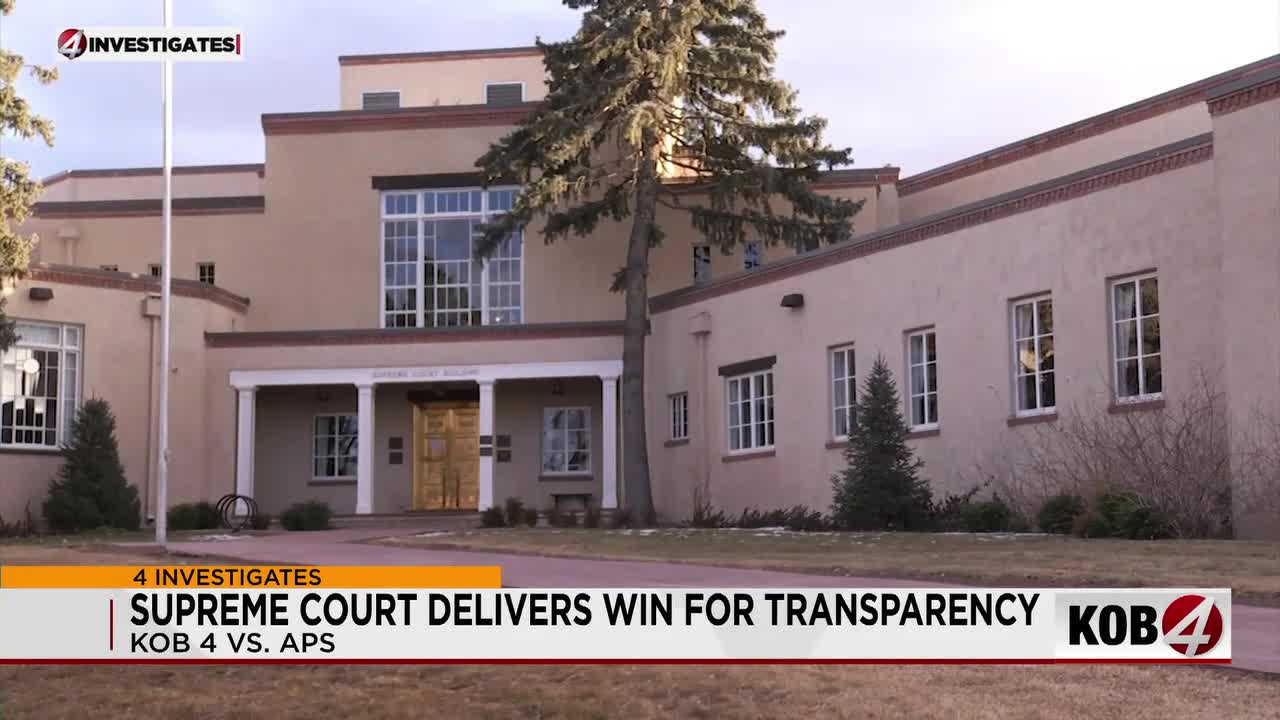
After 12-Year Cover-Up, NM Court Tears Down Bureaucratic Walls on Public Records
POLICY WIRE — Albuquerque, New Mexico — For more than a decade, taxpayers unknowingly footed the bill for an epic, drawn-out bureaucratic chess match in New Mexico. But on Thursday, a definitive...

POLICY WIRE — Albuquerque, New Mexico — For more than a decade, taxpayers unknowingly footed the bill for an epic, drawn-out bureaucratic chess match in New Mexico. But on Thursday, a definitive checkmate landed squarely on government agencies accustomed to operating in the shadows. This wasn’t about a groundbreaking policy or a new budget – it was about a twelve-page document. And now, the highest court in the state has just about dragged it into the daylight, ending a staggering twelve-year legal tug-of-war.
The New Mexico Supreme Court made it crystal clear: no more hiding behind flimsy excuses. They ordered the full release of a highly contentious internal investigation report — the infamous Padilla report — tied directly to the 2014 resignation of former Albuquerque Public Schools Superintendent Winston Brooks. Remember that taxpayer-funded $350,000 payout? The report, the court said, includes "a description of allegations, witnesses, exhibits and evidence and a conclusion." It also appears it could tell us just what warranted such a hefty severance package without any public explanation. [QUOTE_PLACEHOLDER]
But the true cost goes way beyond Brooks severance. Before this latest appeal, APS had already burned through more than $600,000 in legal fees and damages defending its stubborn refusal to make the document public. Let that sink in. Taxpayer money, gone, just to keep something secret. And it was all to conceal what local news outlets, KOB 4 and the Albuquerque Journal, had been trying to pry loose since Brooks’ abrupt departure.
In a unanimous opinion, the state’s highest judicial body didn’t just rule against APS; it torched their main arguments. They wouldn’t buy the tired old claims of attorney-client privilege or an exemption under the state’s Inspection of Public Records Act for "letters or memoranda that are matters of opinion in personnel files." No dice. The court’s message was blunt, almost to a fault. It warned that allowing government agencies to hold back entire investigative files merely because they contained a sliver of opinion would simply gut New Mexico’s public records laws. It’d invite abuse by any agency seeking to dodge scrutiny, — and we’ve all seen how that story ends, haven’t we? And this wasn’t just a slap on the wrist. Justice C. Shannon Bacon Zamora wrote that "…as this case demonstrates, exempting an entire record because it may contain trace matter of opinion would invite abuse and frustrate both the ‘fundamental right to inspect public records.’" The judgment wasn’t about opinions, it was about facts—and the people’s right to know those facts, especially when their money is involved.
And so, after years of legal wrangling that spanned "several superintendents ago" for APS, this report finally gets to see the light. You can bet there’s some anxiety swirling in administrative offices across New Mexico right now. Transparency is messy. It’s hard work, too. It means accountability, — and some folks aren’t keen on that.
What This Means
This ruling is a sledgehammer for governmental transparency. Its ramifications reach far beyond the dusty corridors of Albuquerque’s public school system, acting as a potent precedent for similar public information fights, not just in New Mexico but potentially across the nation. Economically, the judgment spotlights the astronomical costs of governmental secrecy – the $600,000 already spent by APS on lawyers isn’t an anomaly, it’s a stark reminder of how public funds get misallocated in efforts to sidestep accountability. This decision sends a powerful signal to all public agencies: the cost of hiding misconduct is not just reputational, it’s financial. Taxpayers are increasingly unwilling to subsidize such deliberate opacity.
Politically, the court’s stance reinforces the public’s right to information as fundamental, curbing the often-unchecked power of bureaucracy. Expect other agencies, not just within New Mexico, to scramble, revisiting their own interpretations of public records laws. They’ve got to start beefing up their compliance mechanisms. But also, it’s worth noting the struggle for accountability and transparent governance isn’t unique to a school district in the American Southwest. Look to countries like Pakistan or Bangladesh, where allegations of official misconduct or the misuse of public funds often meet similar, protracted battles for information. There, too, powerful entities frequently invoke nebulous classifications or security pretexts to shield internal processes, mimicking the "attorney-client privilege" and "personnel file" arguments we’ve heard in Albuquerque. In those settings, a similar landmark ruling affirming public access to sensitive government reports would resonate deeply, perhaps igniting greater demands for governmental candor.
Michelle Donaldson, KOB 4’s general manager — and news director at the time of Brooks payout, pretty much summed it up. "I can’t tell you what was on their hearts’. Was it arrogance? Was it a cover-up?" She put it bluntly, stating: "I sincerely believe that they owed us information. They owed the public information. We were asking on the public’s behalf. They made a choice to keep that secret. It was an expensive choice. It was a wrong choice." That’s the crux of it.
APS, in a somewhat predictable response issued by spokesperson Johanna King, still talked about its commitment to transparency – which felt a bit like putting lipstick on a pig, after all these years and dollars. They also mentioned balancing "the confidentiality concerns of employees and students." But they immediately followed that with the lament that "APS believes today’s court decision may hurt employees and families by permitting the publication of unfounded or unfair allegations that haven’t been vetted or reviewed." It’s a classic move: shift the blame, cite concern for the vulnerable. They even complained about the decision potentially making it harder "to timely and accurately respond to records requests" for other local governments.
But the damage is done. And their excuses sound thin, especially considering how they’ve managed to operate. For now, they say they’ll "fully comply with the Court’s instructions." Because what else can they do? They’ll probably be "educating staff and families about what this decision means for them while also asking the Legislature to clarify and simplify the law." It’s a deflection, frankly. This whole saga, a drawn-out farce, underscores that for some government bodies, "transparency" is a word to utter in public statements, not a principle to actually uphold. And this kind of bureaucratic foot-dragging isn’t unique to New Mexico; it’s a global language. But sometimes, even after a decade, the courts make sure the public gets its say—and its paperwork. And that’s a small, hard-won victory.