


What is the Two Nation Theory? Stands Reaffirmed in 2025
In 1947, Pakistan emerged from the foundational belief that Muslims and Hindus constituted two distinct nations, separated not merely by faith but by civilization, culture, and identity. This...

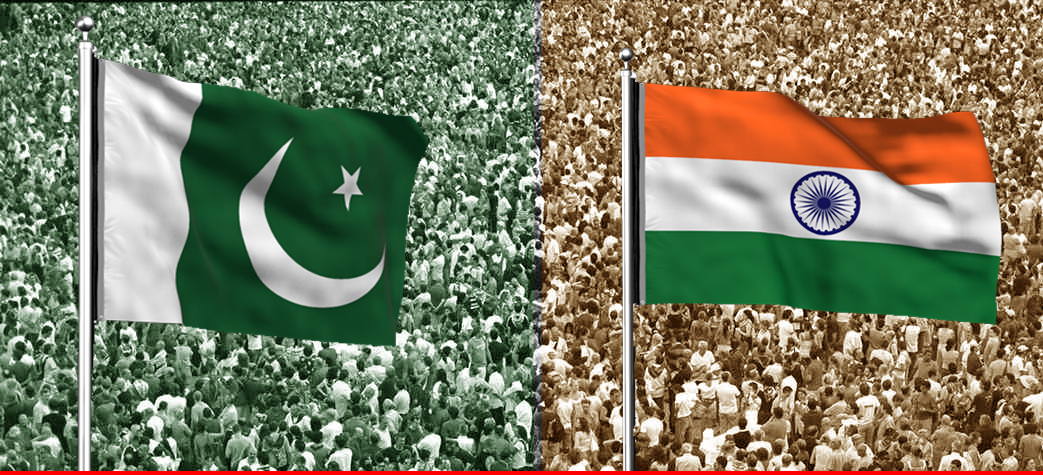
In 1947, Pakistan emerged from the foundational belief that Muslims and Hindus constituted two distinct nations, separated not merely by faith but by civilization, culture, and identity. This conviction- enshrined in the Two-Nation Theory articulated by Muhammad Ali Jinnah- was not born out of animosity but out of the aspiration to safeguard a people’s religious, political, and cultural autonomy. Seventy-eight years later, that theory finds its most powerful reaffirmation not in textbooks, but in the lived realities and policy decisions of the present.
What is the Two Nation Theory?
What was once a political doctrine has now become a lens through which Pakistan’s strategic decisions must be understood. India’s increasingly aggressive behavior- politically, economically, militarily, and socially- has systematically underscored the ideological foundation that led to the partition. From its actions in Kashmir to its manipulation of bilateral treaties, and its covert operations within Pakistan, New Delhi’s conduct reveals a deep unwillingness to coexist with Pakistan on the basis of sovereign equality.
Water security today stands at the core of Pakistan’s national interest. India’s posturing on the Indus Waters Treaty- once a rare symbol of cooperation- is now a calculated threat to our survival. By attempting to weaponize water, India has turned a shared natural resource into a strategic lever of coercion. Pakistan’s decision to elevate water security to the level of national security is both timely and prudent. It reflects an acute awareness that in the face of such provocations, passivity is not an option. Public sentiment is clear: Pakistanis are united in the belief that our sovereignty and basic rights are not negotiable.
Similarly, Pakistan’s decision to close its airspace to Indian flights is more than a reactive gesture- it is a calculated assertion of sovereignty. Aviation experts agree that such a move exerts more pressure on Indian commercial and strategic logistics than on Pakistan’s own. Yet, India’s response remains dismissive, rooted in an arrogance that refuses to acknowledge the diplomatic and economic costs of its belligerence. Pakistan, in contrast, is asserting its right to respond, to defend, and to be treated with the dignity owed to any sovereign nation.
On the economic front, Pakistan’s ban on Indian imports is a long-overdue step toward reducing strategic dependency. For years, Indian products- often rerouted through third countries- have flooded Pakistani markets, undercutting local industries and draining national resources. By curbing these imports, Pakistan has initiated a path toward economic independence. This is not isolationism; it is sovereignty in practice. Encouraging local production, fostering innovation, and protecting domestic industry are all acts of national self-respect. In this context, economic decoupling is not merely transactional- it is transformational.
The ideological divide between India and Pakistan is perhaps most vividly illustrated in Kashmir. There, the Indian state continues to pursue a brutal campaign of demographic engineering and repression, fueled by an openly majoritarian political ideology. What is happening in Indian-occupied Kashmir is not simply a territorial dispute- it is a systematic effort to erase a Muslim identity that has resisted for generations. Pakistan’s solidarity with Kashmiris is not confined to diplomatic statements; it is manifested in public campaigns, grassroots mobilization, and a collective national conscience. This support is not just political- it is moral, spiritual, and historic.
More troubling, however, is India’s alleged sponsorship of destabilizing elements operating within Pakistan. Groups like the Baloch Liberation Army (BLA), Pashtun Tahafuz Movement (PTM), and Baloch Youth Council (BYC) are increasingly seen as tools of India’s proxy strategy. Pakistan has repeatedly presented evidence of cross-border funding, training, and coordination that implicates Indian intelligence in efforts to foment unrest and disunity. Such actions reflect a dangerous double standard: a state that demands global recognition as a counterterrorism partner while actively cultivating violence in its neighbor’s territory.
📄 POLICY WIRE WHITEPAPER PUBLISHED: PAKISTAN'S NATIONAL SECURITY POLICY PRIORITIES
👉 READ BY CLICKING HEREIndia’s recent unilateral suspension of the Indus Waters Treaty- a move without legal justification- has further eroded trust in bilateral frameworks. This act not only endangers Pakistan’s food and water security but undermines the very principle of treaty-based cooperation. It is a reminder that international agreements are only as strong as the integrity of those who sign them. For Pakistan, it is a call to invest in resilience, self-reliance, and a robust diplomatic campaign to expose duplicity on the world stage.
In sum, the Two-Nation Theory was never about division for the sake of division. It was about survival- of faith, identity, and sovereignty. It envisioned a separate homeland not as an act of hostility, but as a necessity in the face of an emerging political order that refused to accommodate difference. Today, in 2025, that vision stands not only vindicated but urgently relevant.
As India descends further into the politics of majoritarianism, Pakistan must remain steadfast in its founding ideals. We were not created to mirror India, to chase validation, or to compromise on principles. We were created to stand apart, to stand firm, and to stand for a future where our people live with dignity, security, and identity intact. Jinnah was right. And history, once again, has spoken.
Author