

A Line Crossed: Why Pakistan’s NSC Meeting Marks a Strategic Shift in South Asian Security
In the wake of the April 2025 Pahalgam attack, where 26 tourists were tragically killed in Indian-occupied Jammu and Kashmir, the Indian government wasted no time in blaming Pakistan. No...

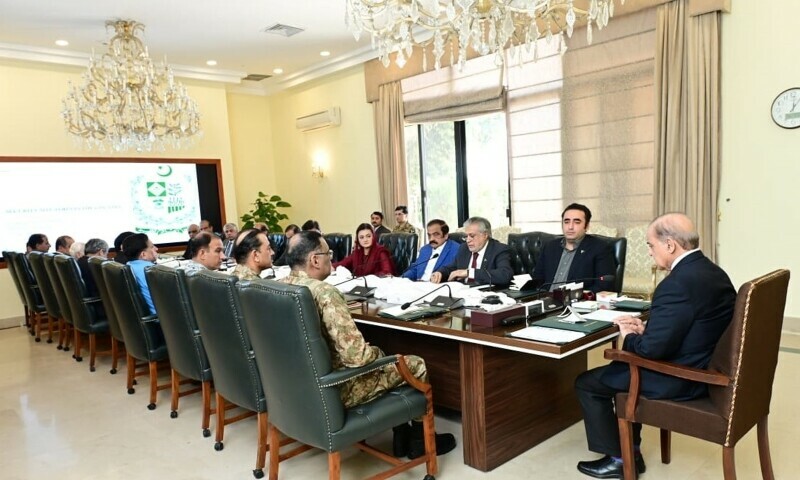
In the wake of the April 2025 Pahalgam attack, where 26 tourists were tragically killed in Indian-occupied Jammu and Kashmir, the Indian government wasted no time in blaming Pakistan. No investigation, no evidence, no chain of events- just reflexive accusations. This is not new. It is part of a dangerous and recurring pattern: weaponize tragedy, externalize blame, and escalate tensions. In response, Pakistan convened an emergency National Security Committee (NSC) meeting on April 24. The decisions taken in that meeting- far-reaching and historic- signal a strategic shift in Islamabad’s security posture and diplomatic doctrine.
The NSC’s key resolution was the suspension of all bilateral agreements with India, including the 1972 Simla Agreement. More critically, Pakistan warned that India’s unilateral suspension of the Indus Waters Treaty (IWT) could amount to a breach of international law and would be treated as an act of war. In doing so, Pakistan has essentially redrawn the red lines. The era of one-sided peacekeeping is over.
India’s decision to suspend the IWT is not merely provocative- it violates established principles of international law, including the 1970 UN Declaration on Friendly Relations, which prohibits a state from using natural resources as a means of political coercion. Moreover, under Article 60(5) of the Vienna Convention on the Law of Treaties (1969), a party cannot suspend or terminate a multilateral treaty in response to a breach unless such a right is explicitly stated. The IWT includes no such clause. India’s action is, therefore, a violation of customary international law and the treaty’s spirit, which has survived three wars.
Furthermore, the International Law Commission’s (ILC) Draft Articles on the Law of Transboundary Aquifers (2008) and the UN Convention on the Law of the Non-Navigational Uses of International Watercourses (1997)- though not signed by India- reflect global norms. Both stress equitable and reasonable utilization, the obligation not to cause significant harm, and the duty to notify co-riparian states in case of planned measures. India’s abrupt and unilateral approach violates every one of these principles.
Let’s examine India’s logic. The Pahalgam attack occurred nearly 90 kilometers from the Line of Control, deep inside Indian territory- one of the most heavily militarized zones in the world. No infiltration detected. No bodies recovered. No weapons seized. No digital trail. Yet within hours, Indian newsrooms declared Pakistan guilty. This isn’t counterterrorism- it’s narrative management.
Consider the Pulwama attack in 2019, where a similar rush to judgment led to the Balakot airstrikes- later exposed as ineffective, targeting nothing more than a group of pine trees. No international body has ever confirmed India’s version of events, yet the propaganda machine keeps spinning. India’s accusations often come pre-packaged and aired within minutes of any incident- suggesting foreknowledge, or worse, orchestration.
India’s external aggression is not limited to borders. Its involvement in transnational repression- including the killing of Sikh leader Hardeep Singh Nijjar in Canada and the targeting of diaspora activists- further undermines its credibility as a democracy. These actions contravene UN General Assembly Resolution 2131 (1965), which prohibits states from the “subversion or use of force against the territorial integrity and political independence of another state.”
The Indian state’s documented support of proxy outfits in Balochistan, confirmed by the confession of RAW agent Kulbhushan Jadhav, is another example. Jadhav’s arrest and subsequent admissions- publicly broadcast and verified by international observers- proved Indian involvement in orchestrating violence within Pakistani territory. Yet, India continues to accuse others of what it actively practices.
The decisions emerging from Pakistan’s National Security Committee (NSC) meeting were not impulsive- they were long overdue and carefully calibrated. The committee resolved to suspend all airspace access for Indian aircraft, a move aimed at signaling Pakistan’s strategic seriousness without immediate escalation. Simultaneously, the Wagah border crossing was closed to halt trade and transit, effectively freezing one of the few remaining points of physical connectivity between the two countries. Diplomatic channels were similarly pruned: Indian defense advisors were expelled, and the staffing of the Indian High Commission in Islamabad was sharply reduced. Visa services for Indian nationals were suspended, with the only exception made for Sikh pilgrims- a deliberate gesture of goodwill toward the religious fraternity, even amidst geopolitical tension.
📄 POLICY WIRE WHITEPAPER PUBLISHED: PAKISTAN'S NATIONAL SECURITY POLICY PRIORITIES
👉 READ BY CLICKING HEREThese are not acts of belligerence; they are sovereign decisions taken in the face of repeated provocation. They reflect a shift from reactive diplomacy to proactive policy-making. For too long, Pakistan has responded to Indian hostility with restraint, often under international pressure to avoid escalation. But national sovereignty has boundaries, and when those are breached- through broken treaties, cross-border terrorism, or water blackmail- a firm stance becomes not only justified, but necessary. The NSC’s emphasis on international legal recourse also reaffirmed Pakistan’s commitment to peaceful resolution, signaling that while it will not be cowed, it will also not resort to unilateral aggression.
Beyond treaties and geopolitics, ordinary people are paying the price. Farmers in Punjab and Sindh, already grappling with climate stress, could face drought if India attempts to divert water. Traders, families, students, and pilgrims are caught in a diplomatic deadlock they never signed up for. India’s militaristic posturing affects real lives- its own included.
Even Indian voices are questioning this trajectory. A recent opinion piece in The Hindu questioned the wisdom of suspending the IWT, warning that such a step would not only damage India’s image globally but risk retaliation under international law. India’s claim to be a responsible regional power is crumbling under the weight of its own recklessness.
The April 2025 NSC meeting will be remembered not merely as a policy adjustment, but as a strategic realignment. It reflects Pakistan’s refusal to accept the role of scapegoat in India’s internal politics. It marks a refusal to allow treaties to be used as threats. It also signals that Islamabad will engage the world not from a position of defense, but of dignity.
If India wishes peace, it must return to dialogue, respect treaties, and stop playing with fire- whether through water, propaganda, or false flag operations. South Asia does not need more war hysteria. It needs justice, mutual respect, and the revival of diplomacy grounded in international law. Until then, Pakistan is drawing the line. And this time, it won’t be crossed quietly.
Author