


India’s Border Breach: A Disturbing Continuity of Violations
India’s Border Breach: When an armed soldier crosses into enemy territory, it is not the fog of war- it is a message. And when that soldier belongs to India’s Border Security Force (BSF), the world...

India’s Border Breach: When an armed soldier crosses into enemy territory, it is not the fog of war- it is a message. And when that soldier belongs to India’s Border Security Force (BSF), the world must pay attention, not look away.
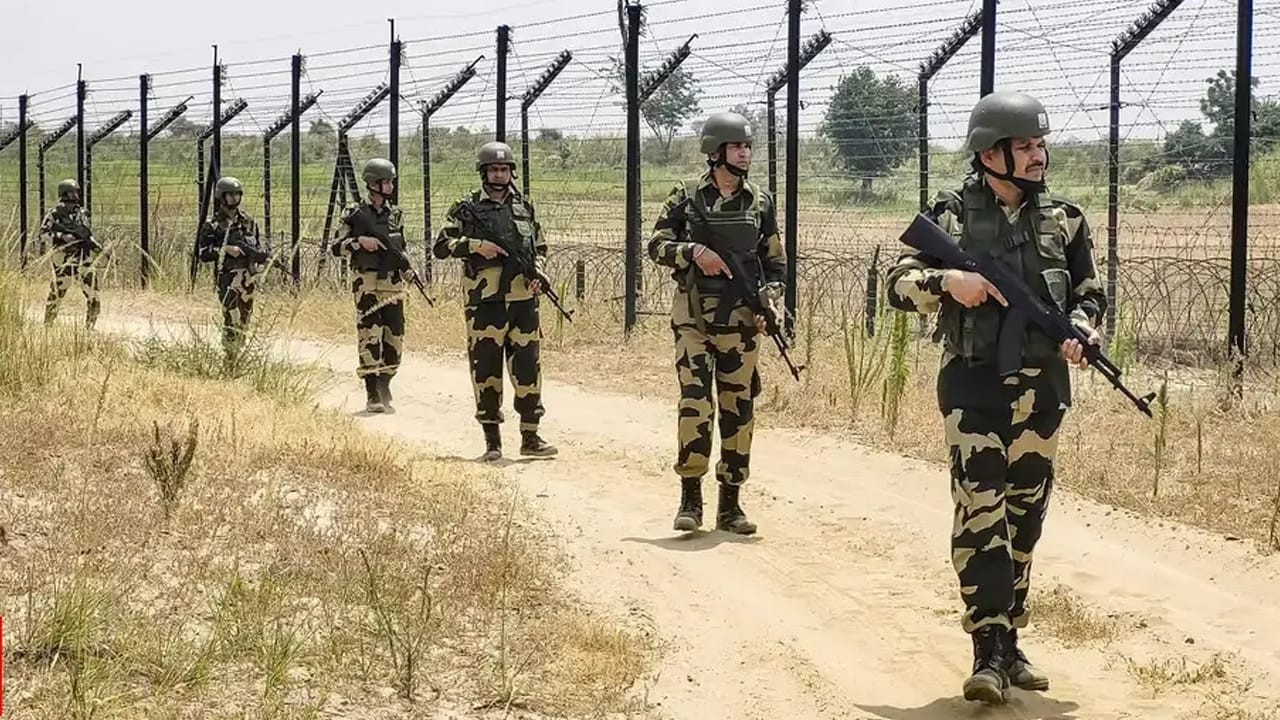
On April 24, 2025, an Indian BSF soldier was apprehended by Pakistan Rangers after crossing the international border near Ferozepur into Pakistani territory. Indian authorities swiftly dismissed the incident as a “mistake,” yet the context, frequency, and strategic backdrop of similar incursions make it impossible to accept this explanation at face value. This is not merely about a soldier who lost his way. It is about a state whose actions repeatedly disregard the sanctity of international borders, while simultaneously cultivating an image of restraint and responsibility. That contradiction, increasingly visible to regional observers, has serious implications for peace and security in South Asia.
The India-Pakistan border is among the most fortified and closely monitored in the world. Surveillance systems, fencing, patrol routines, and coordination mechanisms leave little room for accidental crossings- especially by trained personnel in uniform and under arms. For a soldier to cross such a boundary requires more than a lapse in navigation. It requires a breakdown in discipline- or worse, an act of intent.
This latest breach occurred during a time of heightened bilateral tensions. India had recently launched a diplomatic offensive against Pakistan following the Pahalgam attack in Indian-occupied Kashmir, and political rhetoric from New Delhi was at its usual high. Against this backdrop, the presence of an armed Indian soldier inside Pakistani territory cannot be separated from a broader trend of tactical provocations disguised as isolated mishaps.
India has long maintained a posture of strategic ambiguity. Over the past decade, its military has engaged in several ceasefire violations along the Line of Control, unauthorized surveillance flights, and airspace intrusions. Indian narratives consistently frame these violations as retaliatory or accidental, yet they follow a pattern that points toward a systemic willingness to push boundaries- literally and figuratively.
By contrast, Pakistan’s handling of the current incident has been exemplary. The soldier was taken into custody without harm. No public spectacle was made. There was no humiliation or politicized footage, no violation of Geneva norms- only due process, diplomacy, and professionalism. This calm response stands in stark contrast to India’s treatment of Pakistani nationals, including civilians and fishermen, who often face prolonged imprisonment, harsh conditions, and legal limbo for similar or lesser border-related incidents.
Unfortunately, the international response- or lack thereof- has once again exposed the geopolitical bias that favors India. Had a Pakistani soldier crossed into Indian territory, international media and diplomatic circles would likely be engulfed in analysis, concern, and condemnation. But when India commits such violations, the silence is deafening.
This double standard is not just frustrating- it is dangerous. It emboldens reckless behavior, rewards border violations with impunity, and undermines the very norms that international institutions claim to uphold. India, viewed by many Western powers as a strategic counterweight to China, has grown accustomed to operating outside the accountability frameworks that restrain other nations.
📄 POLICY WIRE WHITEPAPER PUBLISHED: PAKISTAN'S NATIONAL SECURITY POLICY PRIORITIES
👉 READ BY CLICKING HEREPakistan, on the other hand, continues to be treated with skepticism, even when it acts responsibly and within the bounds of international law. Its call for diplomatic dialogue, its restraint in the face of provocation, and its measured response to this latest incident all speak to a country that understands the volatility of the region- and the consequences of mishandled conflict.
The incident on April 24 should not be filed away as a bureaucratic error or military miscommunication. It is part of a larger continuum of Indian behavior that tests the limits of Pakistani patience and international tolerance. And while Pakistan continues to uphold its responsibilities, it must also assert its right to secure borders and national dignity.
If India is allowed to continually violate borders without consequence- militarily or diplomatically- the region will continue drifting toward confrontation. Restraint must not be mistaken for weakness, and accountability must not be reserved for the politically expendable.
This moment, while small in the grand sweep of history, is an inflection point. It raises the question: How many more “mistakes” will it take before the world begins to call India’s actions what they truly are- deliberate, strategic violations? Until that recognition comes, Pakistan stands alone in defending the principle that borders, once drawn, must be respected- not tested.
Author