


What is Kashmir issue and Pakistan’s commitment
A landmark conference on Kashmir was held on 9th April in Islamabad, reaffirming Pakistan’s unwavering support for the Kashmiri people’s right to self-determination. The event, attended by...

A landmark conference on Kashmir was held on 9th April in Islamabad, reaffirming Pakistan’s unwavering support for the Kashmiri people’s right to self-determination. The event, attended by political leaders, intellectuals, and activists, was organized to highlight the significance of Kashmir in Pakistan’s national identity and its ongoing advocacy for a peaceful resolution of the dispute. Let’s read about What is Kashmir issue and Pakistan’s commitment
The conference took place at Kashmir House in Islamabad and was a powerful reminder of Pakistan’s long-standing commitment to Kashmir’s struggle for freedom. Political leaders from both Pakistan and Azad Jammu & Kashmir (AJK) were in attendance, along with representatives from the All Parties Hurriyat Conference (APHC) and other civil society groups.
The Prime Minister of Azad Jammu & Kashmir (AJK), Chaudhry Anwar-ul-Haq, addressed the gathering, emphasizing Pakistan’s consistent advocacy for Kashmir’s right to self-determination. He declared that the Kashmir issue is central to Pakistan’s foreign policy and national security. Pakistan has consistently raised the issue at international forums, particularly the United Nations, calling for the implementation of UN Security Council Resolution 47 of 1948, which mandates a plebiscite to allow the Kashmiri people to determine their future. He reiterated Pakistan’s commitment to continuing efforts to resolve the dispute in line with international law.
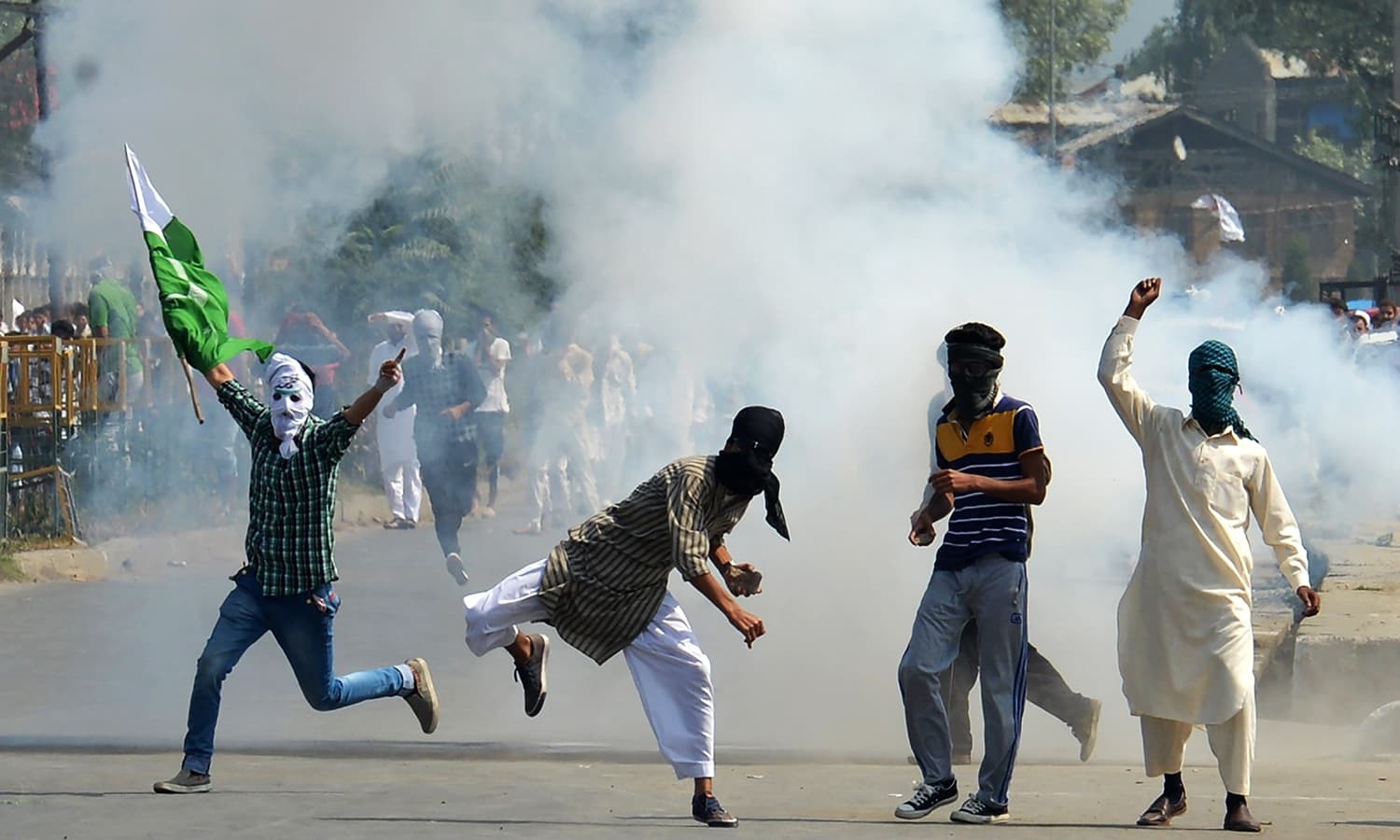
Human rights violations in Indian-occupied Jammu and Kashmir (IIOJK) were a central focus of the conference. Speakers, including representatives from the APHC, condemned India’s actions, which include extrajudicial killings, arbitrary detentions, and the demographic changes brought about by India’s controversial policies. The conference emphasized the urgency of addressing these human rights abuses, which have intensified since the revocation of Article 370 of the Indian Constitution in August 2019.
Ghulam Muhammad Safi, a key leader of the APHC, spoke passionately about the ongoing atrocities in the region. He called for international pressure on India to stop the persecution of Kashmiri Muslims and to reverse its policies that threaten the region’s demographic integrity.
A recurring theme in the discussions was the broader regional and global significance of the Kashmir dispute. The conference highlighted the fact that the issue involves three nuclear-armed countries, India, Pakistan, and China. The Prime Minister of AJK emphasized that the Kashmir dispute is not just a bilateral issue between India and Pakistan but a matter of global peace. The ongoing conflict, he pointed out, poses a serious threat to regional stability and has far-reaching consequences for the security of South Asia and beyond.
The conference also underscored the critical need for a peaceful resolution, one that would prevent the escalation of tensions in the region and preserve global stability.
One of the main outcomes of the conference was the unanimous call for greater international intervention. Delegates urged the United Nations to take immediate action to implement the UN resolutions on Kashmir, particularly the one calling for a plebiscite. The conference stressed that it is not just Pakistan’s responsibility to advocate for the Kashmir cause, but that the international community must recognize the rights of the Kashmiri people and ensure that their voices are heard on the global stage.
The issue of disinformation was also raised during the conference, with speakers pointing out that India’s intelligence agency, RAW, has been running a sustained disinformation campaign to distort the reality of the Kashmir issue. The Prime Minister of AJK highlighted the growing use of social media to spread false narratives aimed at undermining Pakistan’s diplomatic efforts and the legitimate struggle of the Kashmiri people. The conference urged the Pakistani government and civil society to use social media and other platforms to counter these disinformation efforts.
The conference concluded with a strong call for unity among all Pakistanis in support of the Kashmir cause. The Prime Minister of AJK emphasized that the struggle for Kashmir’s freedom is not only the responsibility of the people of Azad Kashmir or Pakistan’s military but of all Pakistanis. He urged the global Pakistani community to remain united and continue advocating for the self-determination of the Kashmiri people, ensuring that their struggle remains a key issue in Pakistan’s foreign policy.
As the conference came to a close, it became clear that Pakistan’s commitment to the Kashmir cause remains as strong as ever. The conference not only reaffirmed Pakistan’s position on Kashmir’s right to self-determination but also called for increased international support for a peaceful resolution. The international community was reminded that Kashmir’s future must be determined by its people, by the principles of justice, democracy, and international law.
The event was a powerful reminder that the Kashmir issue is far from resolved and continues to be a matter of great importance. Pakistan’s diplomatic efforts will persist, with a renewed emphasis on bringing the Kashmir issue to the forefront of international discussions.
Author