

Weaponizing Wellness: False Child Report Exposes Sinister Vein in US Politics
POLICY WIRE — Washington, D.C. — Imagine, for a moment, the sharp, unexpected rap on the door, not from a reporter looking for a soundbite, but from law enforcement — here to question your...

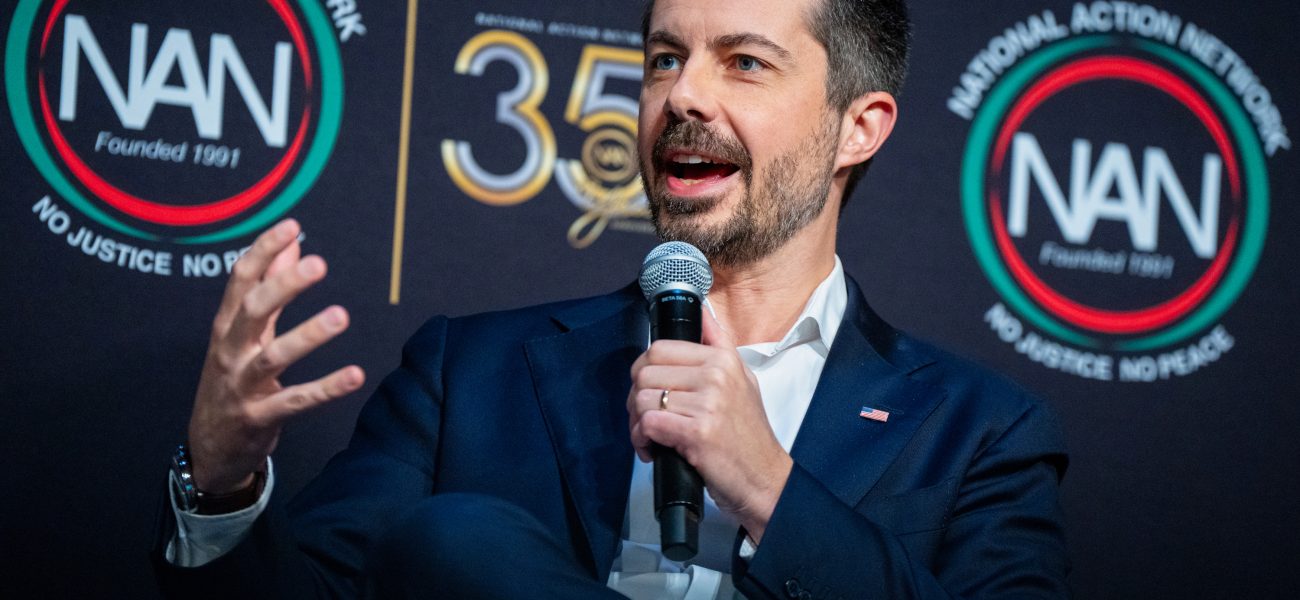
POLICY WIRE — Washington, D.C. — Imagine, for a moment, the sharp, unexpected rap on the door, not from a reporter looking for a soundbite, but from law enforcement — here to question your parenthood. For Transportation Secretary Pete Buttigieg, this unsettling scenario wasn’t hypothetical. It was reality. His private life, a sanctuary already stretched thin by public office, found itself pierced by a particularly noxious brand of political mischief: a false child welfare report that briefly snatched his children from his arms.
It wasn’t a sudden roadside inspection of an interstate highway, nor a tense negotiation over transit infrastructure funding. Instead, it was an entirely fabricated allegation, a tactic increasingly deployed not by reasoned political adversaries, but by anonymous online actors seeking to sow chaos, to intimidate, to quite frankly, traumatize. This isn’t just about harassing a political figure; it’s about weaponizing the very systems designed to protect the most vulnerable among us.
Police confirmed that a spurious report concerning the welfare of Buttigieg’s young children — two adopted toddlers — triggered their intervention. Officials haven’t detailed the exact nature of the allegations, only that they were swiftly determined to be baseless. But the process itself, even in its brevity, left an undeniable scar. They’re public servants, sure. But they’re also just…parents.
But. This wasn’t an isolated incident. Across the U.S., emergency services have become unwitting pawns in these grotesque games. So-called ‘swatting’ incidents, where false distress calls send heavily armed police to unsuspecting targets, have escalated alarmingly. According to data compiled by the Anti-Defamation League, reported swatting attacks against minority groups and public officials soared by over 60% nationwide in the last year alone, a disturbing barometer of rising digital malice. It’s a low-cost, high-impact form of terrorism.
For someone like Buttigieg, a prominent figure in the Biden administration and a husband to Chasten Buttigieg, whose shared family life has often been a topic of public interest (and sometimes, homophobic attacks), this event cuts deep. And it forces a very uncomfortable conversation: when does online dissent bleed into real-world endangerment?
Secretary Buttigieg himself didn’t mince words, though his response was measured, reflecting a weariness familiar to many in public service. “You expect scrutiny,” he told Policy Wire, “even unfair criticism. But to involve my children in such a hateful, fictionalized attack? That’s not politics. That’s just cowardly, and it’s something that demands a unified pushback from everyone, regardless of party.” His sentiment mirrors the growing concern in Washington and beyond.
📄 POLICY WIRE WHITEPAPER PUBLISHED: PAKISTAN'S NATIONAL SECURITY POLICY PRIORITIES
👉 READ BY CLICKING HEREThe broader implications, you see, extend well beyond American shores. We’re witnessing similar digital weaponization in places like Pakistan and across the South Asian subcontinent, where fabricated rumors and politically motivated disinformation campaigns often lead to real-world persecution. Consider the challenges facing activists in Balochistan, where narratives are fiercely contested, often with grim outcomes, and the integrity of information itself can literally be a matter of life and death. History teaches us that manipulating truth for political gain is an old game, but digital tools have certainly given it a brutal efficiency.
“These kinds of attacks aren’t just an invasion of privacy; they corrode the very foundation of public trust,” remarked Representative Elara Vance (D-IL), a ranking member on the House Oversight Committee, speaking about the broader trend. “When emergency responders are diverted by malice, legitimate emergencies could face delayed response. That’s a serious public safety issue we’ve got to tackle, — and frankly, it transcends partisan squabbling.”
What This Means
This incident, unsettling as it’s, speaks to a creeping, systemic problem: the erosion of personal security for public figures and their families, alongside a brazen contempt for the functions of government itself. Politically motivated hoaxes like this aren’t just annoying pranks; they’re acts of psychological warfare, designed to terrorize and exhaust those who step into the arena. It also presents a serious drain on law enforcement resources. Imagine if every political opponent had their emergency services tied up with anonymous, false reports—the system would grind to a halt.
Because, in essence, it’s an attempt to push people out of public life by making the costs unbearably high, particularly the emotional toll on family. It chills civic engagement. If high-ranking officials — and their loved ones aren’t safe from such invasions, who’s? This tactic isn’t about policy debate or holding power accountable; it’s about destroying individuals and creating an environment where decency is weaponized. And for nascent democracies, or nations already struggling with political stability—like many in the Muslim world grappling with digital firestorms of misinformation—this U.S. incident offers a stark, ominous precedent. It shows just how quickly the digital realm can manifest dangerous physical realities, destabilizing not just individual lives, but potentially entire societal structures. It’s a dirty game, — and it seems nobody’s off-limits.