

Washington’s Reckoning: Ukraine Aid Defiance Rocks D.C.’s Fissured Political Core
POLICY WIRE — Washington, D.C. — Not all battle lines are drawn on distant frontiers. Sometimes, they bifurcate a nation’s capital, running straight through the heart of its legislative...

POLICY WIRE — Washington, D.C. — Not all battle lines are drawn on distant frontiers. Sometimes, they bifurcate a nation’s capital, running straight through the heart of its legislative chambers. The recent House maneuver to greenlight significant assistance packages, alongside a volley of Russian sanctions, didn’t just rattle the halls of Congress—it blew them open. This wasn’t merely about policy; it was a brazen, undeniable political act, an almost audacious split from prevailing party orthodoxies, showcasing the kind of deep fissures that’ve made American governance look more like performance art than steady administration.
It’s an inconvenient truth, isn’t it? The consensus, the neat alignment of party members under one leader’s banner, sometimes feels like an archaic relic. But this vote, pushed through despite vocal opposition from powerful figures, screams that dissent isn’t just brewing; it’s boiling over. This bipartisan-ish coalition, assembled to support Ukraine — and ratchet up pressure on Russia, wasn’t about loyalty. No, it was a gritty, real-time recalculation of priorities, of moral imperatives, or maybe—just maybe—of pure political survival. Lawmakers weren’t just voting on aid; they were voting on their own conscience, or perhaps, their district’s electoral mathematics.
The details? Well, the measure includes several key provisions, such as [QUOTE_PLACEHOLDER], aimed at bolstering Kyiv’s defenses. It also authorizes [QUOTE_PLACEHOLDER], designed to further cripple the Kremlin’s war chest and its operational capabilities. These aren’t minor adjustments; they’re substantial commitments, designed to send a clear message: that American influence, however fractured domestically, still sees some causes as non-negotiable. But let’s not pretend it was harmonious. Far from it. Reports from inside suggest a chaotic scene, with legislators arguing [QUOTE_PLACEHOLDER] until the eleventh hour.
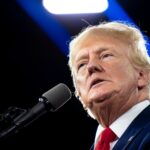
And then there’s the defiant narrative—the ‘insubordination,’ if you will—emanating from the top. Donald Trump’s unequivocal stance, which has repeatedly questioned [QUOTE_PLACEHOLDER] for Ukraine and argued [QUOTE_PLACEHOLDER], didn’t sway a significant chunk of the House. Nor did the reticence of certain GOP leaders. It’s an electoral calculus gone awry for some, a moment of profound courage for others. But you can bet your bottom dollar, it’s a dynamic that won’t fade quietly into the annals of legislative history. We’re talking about deep cracks here, not just surface-level disagreements. This wasn’t just a bill; it was a political earthquake. But more than that, it reveals a fundamental shift in how the legislative branch perceives its own agency versus party lines.
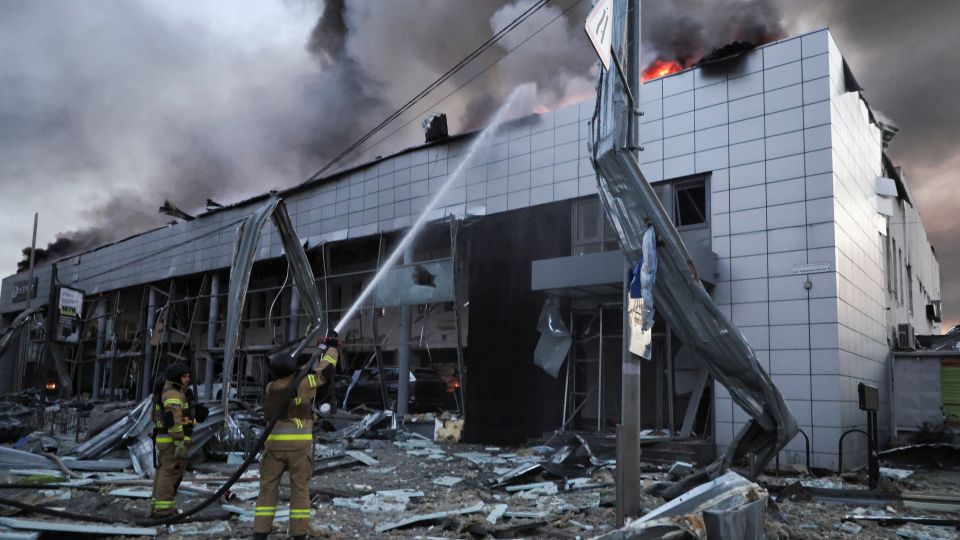
Globally, the ripple effect? Oh, it’s immense. Think about the energy markets, still reeling from initial sanctions — and supply chain disruptions. Nations like Pakistan, navigating a delicate economic tightrope and perpetually needing access to affordable energy and vital trade routes, watch these developments with bated breath. Pakistan, for instance, a nation already grappling with its own stress fracture economy and striving for stability, relies heavily on consistent global trade flows. Increased tensions or stricter sanctions can easily destabilize their domestic fiscal environment, pushing commodity prices higher and creating social unrest. They’ve sought diverse energy sources, even looking towards Russia for cheaper oil, trying to insulate their economy from the direct hits of these grand geopolitical games. It’s a testament to the interconnected world, where a vote in Washington can sting in Karachi.
Speaking of economic blows, let’s look at the figures. Before this latest push, cumulative military aid to Ukraine from various global allies had already exceeded 80 billion US dollars by late 2023, according to analyses compiled by the Kiel Institute for the World Economy. This new tranche will significantly add to that staggering sum. Because when you commit aid of this magnitude, it’s never just money. It’s political capital, it’s an economic declaration, it’s a global positioning statement that reverberates in every significant financial hub and geopolitical capital around the world—from Ankara to Beijing. You can’t just pass legislation like this without altering the landscape.
What This Means
This legislative insurrection—that’s what it felt like to many, an outright defiance—signifies a momentary triumph for traditional foreign policy hawks over the isolationist wing within one of America’s two major parties. For Ukraine, it’s a desperately needed lifeline, a confirmation that, for now, the U.S. commitment hasn’t totally faltered, potentially altering battlefield dynamics in Kyiv’s favor. For Russia, it means prolonged economic pain and sustained military pressure, perhaps forcing a re-evaluation of its long-term strategy, though predicting Kremlin moves is like predicting the weather in a tempest—a fool’s errand. And for nations like Pakistan and other states across the Muslim world, it highlights the increasing difficulty of staying neutral or balancing allegiances in a world increasingly bifurcated by such high-stakes decisions. They’re forced into diplomatic contortions, trying to secure their own interests while navigating the turbulent wake left by great power contests. It’s a reminder: American internal political squabbles often carry external, very real consequences. It doesn’t always stay in Vegas, or in this case, Washington D.C. No, the bets are placed, — and the entire globe feels the tremor.