

Washington Mill Disaster Stuns Longview, Exposing Hidden Costs of Convenience
POLICY WIRE — Longview, Washington — Most mornings, across countless breakfast tables, the unassuming paper products – coffee cups, milk cartons, printed newsprint (yes, some still exist) – are just...

POLICY WIRE — Longview, Washington — Most mornings, across countless breakfast tables, the unassuming paper products – coffee cups, milk cartons, printed newsprint (yes, some still exist) – are just there. Invisible. Useful. But this Tuesday, for some in this Pacific Northwest town, the ubiquitous materials of modern life exacted a brutal, undeniable price. A catastrophic chemical tank implosion at a major pulp and paper facility here didn’t just disrupt a morning; it tore lives apart.
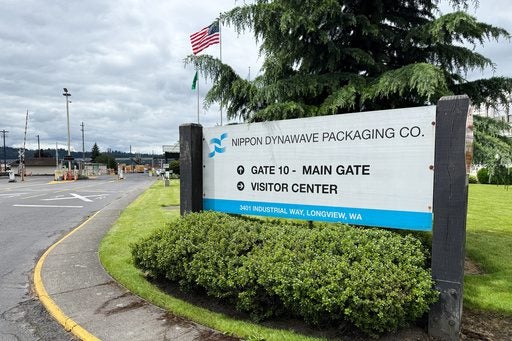
Local authorities and corporate executives, usually keen to manage narratives, were forced into an abrupt, grim confirmation. An industrial disaster of grim proportion unfolded at Nippon Dynawave Packaging Co. And it wasn’t just a structural failure. But the human toll, though precisely quantified, became chillingly apparent, with authorities confirming multiple fatalities alongside “multiple critical injuries,” a chilling phrase for shattered bodies and irrevocably altered futures.
First responders, scrambling to a scene Battalion Chief Mike Gorsuch, of Longview’s fire department, called a [QUOTE_PLACEHOLDER] faced immediate, harrowing tasks. Patients were decontaminated — and rushed to area hospitals. It’s a macabre tableau often associated with war zones or natural calamities, not the placid backdrop of industrial production in a developed nation. And yet, there it was: 40 firefighters and paramedics, a regional hazmat team, all converging on a site that produces the stuff we barely think about: tissues, printing paper, cups, plates, and cartons.
The facility itself isn’t some backwater operation. It’s a significant employer, providing livelihoods to approximately 1,000 people, as recorded by the Washington State Department of Ecology. This isn’t just about output; it’s about an entire community tied to the rhythm of its machines, a dependence that amplifies the shock when those rhythms violently falter. Because for every worker whose shift started Tuesday morning, their families—their entire network—was suddenly plunged into uncertainty.
This incident also reverberates beyond Washington state’s borders, especially for nations striving to balance rapid industrialization with worker protection. Take Pakistan, for instance, where an estimated 25,000 to 50,000 industrial accidents occur annually, many of them unreported, as detailed in various labor rights analyses by organizations like the Human Rights Commission of Pakistan. While direct comparisons are difficult due to differing regulatory frameworks and reporting standards, the underlying thread—the relentless, often dangerous, pursuit of efficiency—binds them. For South Asian nations, a catastrophe like Longview’s serves as a stark reminder of the ever-present risks inherent in industrial processes, and the often-lax enforcement that can plague developing and developed economies alike when profits push against prudence.
It’s not an isolated event either, at least not within the recent news cycle. A damaged chemical tank at an aerospace plant in Southern California kept thousands of residents evacuated concurrently, providing a stark counterpoint to the Pacific Northwest’s immediate human tragedy. Two seemingly disparate industries, both sharing a common, unsettling vulnerability: the precarious dance with volatile chemistry, the risks silently accumulating behind the facades of modern industry. What assurances do average citizens truly have that the safeguards, the inspections, the protocols, are rigorously applied every single time?
Nippon Dynawave has remained tight-lipped following initial statements. They didn’t immediately respond to a request for comment. One imagines an army of lawyers and crisis communications specialists has already descended upon Longview, carefully sculpting future pronouncements. The mechanisms of accountability, like the chemical reactions within those ill-fated tanks, are complex and, too often, glacially slow. And the human cost, unfortunately, is immediate — and irreversible.
What This Means
This isn’t just a local tragedy; it’s a harsh spotlight on the inherent risks within an industrial economy heavily reliant on chemical processes, particularly for products deemed everyday necessities. Economically, even a temporary shutdown of a facility employing 1,000 people has ripple effects—local wage losses, disrupted supply chains for paper goods nationally, and potentially higher costs as demand shifts to other producers. Politically, expect renewed calls for regulatory scrutiny, perhaps a push from labor unions for enhanced worker safety measures, and inevitable questions regarding the adequacy of current oversight from agencies like OSHA and state environmental departments. For Pakistan and other industrializing Muslim-majority nations, where safety standards sometimes lag, incidents like this serve as a potent (and unwelcome) reminder that even highly developed countries grapple with industrial calamities. It can fuel public pressure for more robust protections and transparent investigations globally, forcing a hard look at who bears the brunt when essential industrial machinery falters. Don’t expect sweeping legislative changes immediately, but certainly a tightening of rhetoric, and likely a fresh round of ‘safety audits’ across similar industrial sectors.
Copyright 2026 The Policy Wire. All rights reserved.