


Wankhede Flashpoint: IPL Rivals Ignite, Then Reconcile Amidst Dominant CSK Victory
POLICY WIRE — Mumbai, India — Wankhede Stadium’s familiar cacophony, a true symphony of anticipation and collective fervor, was momentarily eclipsed during a recent IPL clash by something far more...

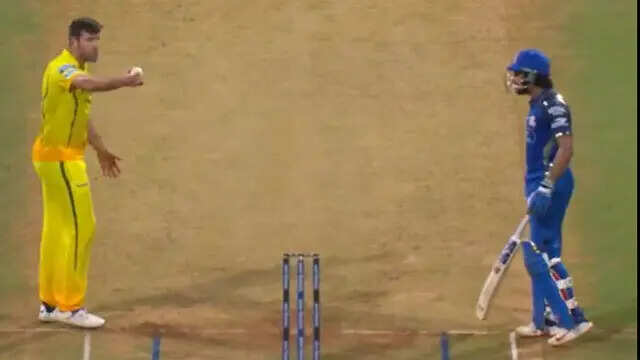
POLICY WIRE — Mumbai, India — Wankhede Stadium’s familiar cacophony, a true symphony of anticipation and collective fervor, was momentarily eclipsed during a recent IPL clash by something far more primal: the sharp, unvarnished skirmish between two competitive athletes pushing the boundaries of an already high-stakes encounter. What unfurled as a routine single on the final ball of the tenth over. Boom! It quickly morphed into a public spectacle.
Young Mumbai Indians batter Tilak Varma found himself at the epicenter of the maelstrom, locking horns with Chennai Super Kings bowler Jamie Overton. For fans across the cricketing world, it wasn’t just a reminder that even in the ‘gentleman’s game’ (a title sometimes stretched thin, wouldn’t you say?), raw emotion often bubbles to the surface, particularly when the stakes are astronomically high. It underscored that point, really.
But what really kindled the fuse? Varma, nudging a slower delivery from Overton towards mid-wicket, initially called for two runs. His captain, the usually unflappable Suryakumar Yadav, surprisingly turned it down, forcing Varma to settle for just one.
As Overton completed his follow-through, moving across the pitch, Varma appeared visibly irritated. The stump microphone, ever the unwelcome eavesdropper (what a job, honestly), picked up his clear complaint: "I can’t see the fielder." He believed Overton had deliberately obstructed his line of sight, an accusation the bowler didn’t take kindly to.
"When you’re out there, in that kind of heat, tempers can flare. My priority is always my team, my players," Suryakumar Yadav later said, downplaying the severity but acknowledging the intensity. "But make no mistake, we’re all professionals; we move on quickly."
A heated mid-pitch confrontation ensued. Overton, no stranger to on-field aggression, immediately shot back, defending his actions. Few expected Yadav, known for his calm demeanor and exceptional batting prowess, to wade into the verbal melee, but he quickly stepped in to defend his young teammate.
Umpires, sensing the rapidly escalating tension, had to intercede, physically separating the players to prevent matters from spiraling further. Play resumed shortly after, though the incident had already added a fiery, unforgettable edge to a contest between two of the league’s most storied franchises.
The Broader Canvas: Cricket’s Emotional Resonance in South Asia
For millions across South Asia, cricket isn’t merely a sport; it’s a profound cultural phenomenon, often intertwined with national pride and identity. Such on-field altercations, quickly captured — and replayed, assume a heft that transcends the boundary ropes. From Karachi to Dhaka, a confrontation like the one at Wankhede is dissected with forensic detail — down to the replays of every sneer and muttered word — reflecting the deep-seated passion this game commands.
The IPL, with its potent blend of local heroes — and global superstars, acts as a crucible for these emotions. Here, team loyalties often coalesce with regional or even nationalistic sentiments, amplifying every triumph and every setback. So yeah, every flashpoint too.
Still, despite the raw emotion, a measure of sportsmanship often prevails. Following CSK’s dominant win, a rare sight unfolded during the customary post-match handshakes: Varma and Overton, protagonists of the earlier drama, shared a brief hug. It’s a moment that underscored the game’s unique ability to transcend on-field animosity, much like the sometimes-fraught dynamics of star players in other sports, where even bitter rivals can—eventually—find common ground and a shared respect for the craft.
"It was a competitive moment, simple as that. I bowl hard, and sometimes batsmen get frustrated," Jamie Overton remarked later, shrugging off the incident. "It’s all part of the game. We shook hands, that’s what professionals do."
Yet, the game itself was a stark contrast to the earlier drama. Chennai Super Kings delivered a performance that was nothing short of ruthless. Spearheaded by a sensational, unbeaten century from Sanju Samson, who blasted 101 runs off just 54 balls, CSK powered to an imposing 207 for 6. In response, Mumbai Indians’ chase never truly got off the ground. They were bundled out for a mere 104, thanks largely to Akeal Hosein’s devastating four-wicket haul. This resulted in a massive 103-run victory for CSK, moving them up to fifth in the standings, while Mumbai Indians slipped to eighth, their campaign taking another significant hit.
What This Means
This incident, swiftly de-escalated but widely broadcast, underscores the intricate balance between intense competition and the expected decorum in professional sports. For the IPL, these moments, while controversial, paradoxically galvanize its colossal draw. They provide talking points, create narratives, and ultimately propel eyeballs, fortifying the league’s gargantuan stature.
From a player perception standpoint, Varma’s youthful frustration and Yadav’s protective instincts will be noted, impacting how their leadership and temperament are viewed moving forward. Overton, for his part, solidified his image as a fierce competitor, a valuable trait in T20 cricket. But beyond individual reputations, such flare-ups serve as a microcosm of the intense rivalries that define modern cricket, particularly in a region where the sport is deeply interwoven with public sentiment.
And yet, the quick post-match reconciliation is equally significant. It reinforces the ‘spirit of cricket’ — a notion often challenged but rarely broken — demonstrating that competitive fire, however fierce, can still coexist with mutual respect. A testament to something bigger, really.
Legendary Pakistani cricketer Wasim Akram once posited that "the greatest battles are fought not just with skill, but with nerve." This Wankhede flashpoint was a vivid display of that nerve, both tested and, ultimately, reined in. Moving forward, observers will watch how both teams channel this intensity. Because while the incident itself was fleeting, the underlying competitive friction between these two giants isn’t going anywhere; in fact, it’s what makes the next encounter utterly compelling.