


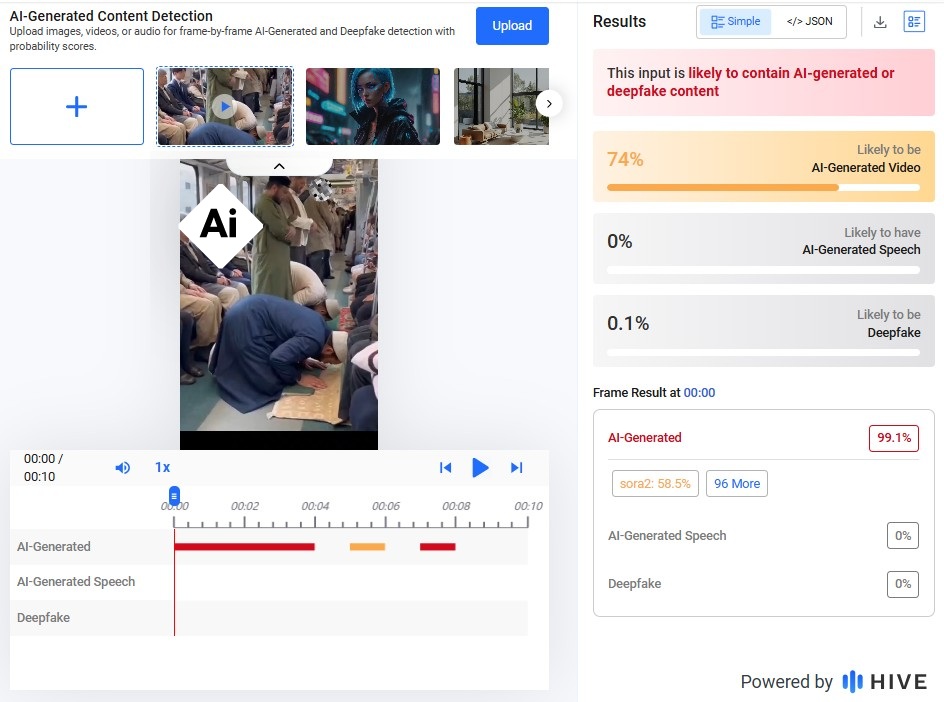
Viral Video of Muslim Worshippers on Japanese Train Confirmed as AI-Generated Deepfake
POLICY WIRE — Tokyo, Japan — A widely circulated digital clip purporting to show Muslim worshippers aboard a train in Japan has been definitively identified as a product of advanced artificial...

POLICY WIRE — Tokyo, Japan — A widely circulated digital clip purporting to show Muslim worshippers aboard a train in Japan has been definitively identified as a product of advanced artificial intelligence.
The video rapidly gained traction across various social media platforms, sparking considerable discussion and drawing diverse reactions from online users. Initially, many viewers believed the footage to be genuine, sharing it as an authentic portrayal of cultural diversity or religious practice within Japanese society.
Deepfake Identification and Verification
Experts in digital forensics and AI detection tools quickly flagged inconsistencies and tell-tale signs characteristic of synthesized media. Analysis confirmed that the individuals, environment, and movements within the video exhibit the typical artifacts associated with modern AI deepfake technology, rather than live-recorded events.
This incident serves as a stark reminder of the escalating sophistication of AI in creating hyper-realistic yet entirely fabricated scenarios. The rapid evolution of such technology presents significant challenges in distinguishing between genuine and manufactured visual content in the digital sphere.
Read More: Sri Lanka Police Dismantle Major Chinese-Led Cyberscam Ring
The Broader Threat of AI Misinformation
The widespread sharing of this artificially generated content highlights a critical concern regarding the potential for misinformation and disinformation campaigns. Such videos can manipulate public perception, incite unwarranted discussion, or even contribute to prejudiced narratives if their artificial origins are not promptly identified.
Digital literacy and critical evaluation of online content have become paramount as AI tools become more accessible and refined. Users are increasingly urged to scrutinize the source and authenticity of viral media before accepting it as factual.
“The ability of AI to generate convincing but false narratives poses a substantial threat to information integrity globally,” stated a prominent cybersecurity analyst. “It necessitates a collective effort from platforms, developers, and individuals to foster a more discerning online environment.”
As technology continues its swift advancement, the line between reality and simulation blurs, making fact-checking and media verification more crucial than ever for maintaining public trust and informed discourse.