


Vibrating Bed Therapy May Flush Toxins from Brain to Prevent Alzheimer’s
A new Finnish study reveals rhythmic bed vibrations can activate the brain's self-cleaning system while awake, potentially stopping Alzheimer's progression.

POLICY WIRE — Oulu, Finland — New research suggests that a therapeutic vibrating bed might offer a defense against Alzheimer’s disease by stimulating a specific biological mechanism within the human brain.
Researchers at the University of Oulu and Oulu University Hospital discovered that gentle, rhythmic full-body vibrations, combined with a temporary reduction in blood pressure, can trigger the brain’s internal waste clearance system while an individual remains conscious.
The study, which appeared in the journal Nature Communications, highlights a potential new strategy for addressing neurodegenerative conditions before permanent brain damage occurs.
Typically, the brain utilizes the glymphatic network to eliminate hazardous proteins during sleep. As a person falls asleep, blood pressure wanes and blood vessels pulse, moving cerebrospinal fluid through neural tissue similarly to a rinse cycle.
Professor Vesa Kiviniemi, who leads the Functional Neuroimaging Research Group at the University of Oulu, noted that the findings prove this essential cleaning process can be artificially induced during daylight hours.
Alzheimer’s disease and many other diseases that cause dementia are generalised by the gradual accumulation of harmful proteins in the brain over decades, Prof Kiviniemi stated.
He explained that because they can now safely boost the brain’s clearance capabilities—which weaken with age—while patients are still healthy, future treatments might prevent or significantly slow down these diseases.
According to the NHS, dementia impacts nearly a million people in the United Kingdom, with Alzheimer’s representing the vast majority of those cases.
The condition develops silently over many years as misfolded proteins cluster into plaques that damage healthy brain cells.
To investigate if this buildup could be halted, the Finnish research team tested a dual-method approach on 29 healthy adult volunteers using a specialized vibration platform.
Participants were given a mild, short-acting medication to lower blood pressure via blood vessel dilation, mimicking the vascular state found during sleep. Simultaneously, the bed provided rhythmic, full-body vibrations.
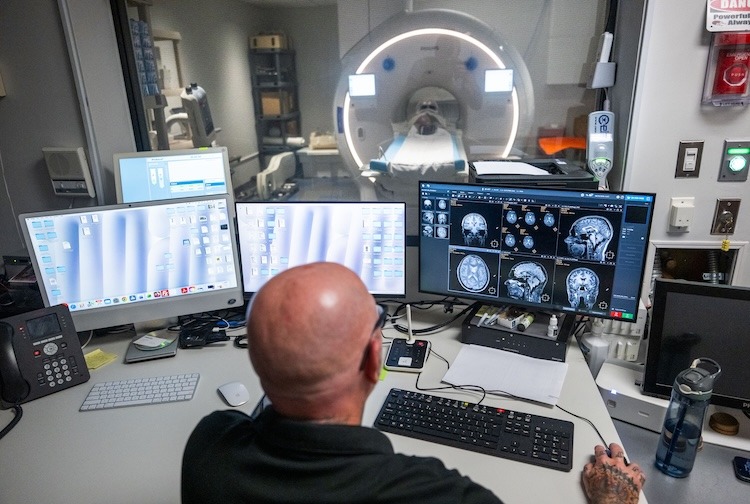
Utilizing wearable brain monitors and advanced MRI technology, the team monitored immediate changes in fluid movement.
Brain imaging indicated that proteins were moved away from neural tissue and transported into the large veins located at the base of the skull.
Johanna Tuunanen, the lead researcher and a doctoral candidate at the university, stated the intervention yielded results that largely resembled the physiological changes we have previously observed during sleep.
Tuunanen noted the data suggests harmful proteins were removed from the brain more effectively than the standard rate.
Intercepting these proteins while they remain soluble particles could be a breakthrough for the field of preventive medicine.
Prof Kiviniemi noted that for the first time they found evidence of brain-derived proteins moving directly into the large veins at the back of the brain, a phenomenon not previously seen even in animal studies.
Because the trial involved a small group of 29 healthy adults, the team emphasized that further research is needed to determine how long these effects last.
Reporting by Policy-Wire (PW)