


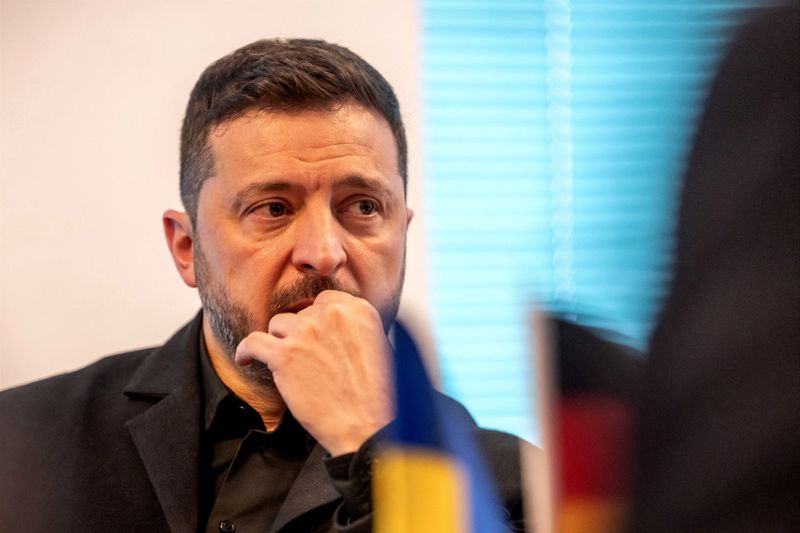
Kyiv’s Internal Scrutiny: Zelenskyy Challenges Old Ghosts in a New War
POLICY WIRE — Kyiv, Ukraine — Forget the daily barrages on the front lines for a moment. President Volodymyr Zelenskiy, it seems, isn’t just fighting one war. He’s waging another—a relentless,...

POLICY WIRE — Kyiv, Ukraine — Forget the daily barrages on the front lines for a moment. President Volodymyr Zelenskiy, it seems, isn’t just fighting one war. He’s waging another—a relentless, if politically inconvenient, battle against the persistent specter of graft and inefficiency within Ukraine’s own apparatus, especially where military supplies are concerned. His latest pronouncement on accountability for missing weapons isn’t just about deterring theft; it’s a very public declaration, aimed squarely at skeptics both domestic and foreign, that Kyiv isn’t just a bottomless pit for Western aid.
It’s a tough spot, being the wartime leader. You need guns, and lots of them. You’re pleading, cajoling, demanding more from your allies. But then, every so often, the ghost of Ukraine’s pre-war institutional failings rears its ugly head—stories of stores uncounted, matériel unaccounted for. This isn’t ancient history; it’s a persistent whisper in the ears of parliamentarians in Washington — and Berlin. So when Zelenskiy states unequivocally that “there’s no sacred cow, not even amidst the crucible of war, when it comes to the aid entrusted to us by our partners. Any official found derelict in their duty, especially with the supplies meant for our brave defenders, will face the full weight of justice,” it isn’t just a threat. It’s a strategic move.
But intentions, as we all know, pave the road to… well, places not always pleasant. The reality is messy. While Ukrainian soldiers are heroically holding the line, the logistical chains behind them are vast, complex, and prone to human frailty (or worse). It’s an internal front just as critical as the external one. Many have their doubts, frankly. They’ve seen this show before.
And these pronouncements reverberate far beyond Ukraine’s immediate borders. They hit sensitive notes in countries like Pakistan, for instance, which has for decades grappled with its own complex relationship with foreign military and development aid. For nations navigating their own geopolitical tightropes and battling perceptions of internal mismanagement, Ukraine’s high-stakes gamble on transparency sets a fascinating precedent. If a nation at war can tighten its belt — and hold its own accountable, the argument goes, why can’t others?
“We appreciate the President’s vocal commitment to reform and transparency, particularly given the unprecedented flow of security assistance,” remarked a U.S. State Department official, speaking on background. “But the true measure of these efforts will always be in the tangible results. Our taxpayers want to know that their generosity is making it to the front lines, not into someone’s pocket. They want assurances their funds aren’t becoming someone else’s economic downturn.” It’s a polite way of saying: Show us, don’t just tell us.
📄 POLICY WIRE WHITEPAPER PUBLISHED: PAKISTAN'S NATIONAL SECURITY POLICY PRIORITIES
👉 READ BY CLICKING HEREBecause ultimately, the perception of aid effectiveness is everything. Transparency International’s 2023 Corruption Perception Index, for instance, placed Ukraine 104th out of 180 countries, an improvement but still a long road from satisfying the European benchmarks Kyiv aims for. That number isn’t just academic; it influences legislative debates in donor capitals, it molds public opinion, and it fuels cynical narratives that can easily spread globally—narratives that aid-receiving nations across the South Asia and the wider Muslim world know all too well.
The president’s push for internal accountability also represents a fascinating moment in post-Soviet nation-building. It’s an admission, really, that some of the old, sticky institutional habits still linger, even as the country strives for a Western future. This isn’t just a clean-up; it’s a strategic imperative.
What This Means
This isn’t merely about good governance, though that’s certainly part of it. It’s about leveraging every single aid package and every shred of international goodwill Kyiv has painstakingly accumulated since February 2022. Zelenskiy is signaling to Western capitals that Ukraine understands the demands for fiscal rectitude—not just for eventual EU membership, but as a practical necessity of its current existence. It’s a shrewd political move, aiming to preempt congressional critics or European hesitations before they fully blossom. The domestic impact is just as complex; a crackdown on corruption, even amidst a war, can still spark resentment in some corners, creating its own political shadows that deepen. But he’s clearly calculating that the benefits outweigh the risks. Without solid proof of accountability, that critical spigot of aid might just begin to slow. And Ukraine can’t afford that.