
Vatican’s Andean Odyssey: Pope Leo XIV’s Peru Visit Amidst Fraying Faith and Geopolitical Ripples
POLICY WIRE — Lima, Peru — The thin mountain air of the Andes, already heavy with the ancient echoes of empires and the ceaseless grind of contemporary politics, is about to receive an uncommon...

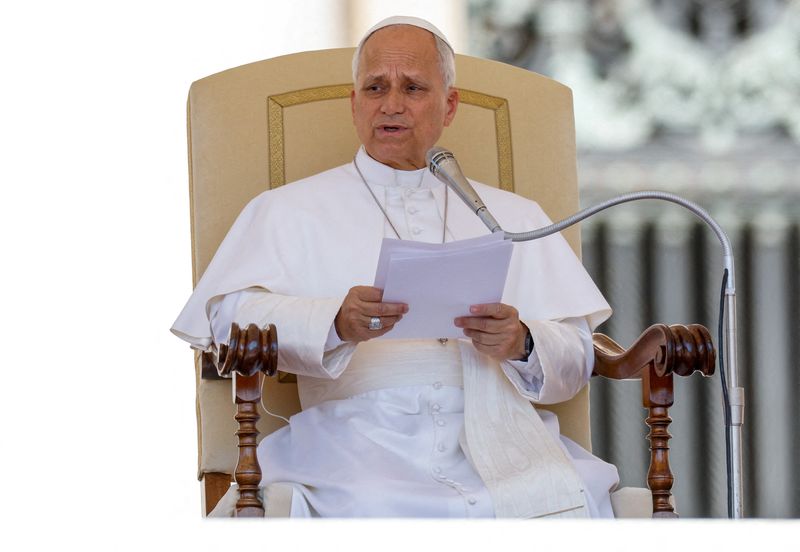
POLICY WIRE — Lima, Peru — The thin mountain air of the Andes, already heavy with the ancient echoes of empires and the ceaseless grind of contemporary politics, is about to receive an uncommon visitor. Not a tech baron chasing rare earth minerals, nor a diplomat brokering a new trade deal, but Pope Leo XIV. His planned November jaunt to Peru isn’t just another routine pilgrimage, you see; it’s a meticulously choreographed play on a stage where faith, political fragility, and the very real struggle for economic survival share top billing.
It’s easy to dismiss these Papal roadshows as quaint historical footnotes in our hyper-connected, largely secular age. But when a figurehead representing over 1.3 billion souls—more than the population of India, just to give it scale—steps onto the tarmac in a nation often overlooked by the international press, you can bet there’s a calculus at play. This isn’t merely about blessing congregants or reaffirming doctrine. It’s about soft power, plain and simple, a kind of ecclesiastical diplomacy that operates on a much longer, sometimes slower, wavelength than White House communiqués. (Awaiting official quote)
Peru itself—a nation that’s seen six presidents since 2016 (that’s according to official government records)—offers a pretty potent backdrop. Its democratic institutions are, let’s be honest, less a sturdy oak and more a wilting daisy, constantly buffeted by corruption scandals and public distrust. And Leo XIV isn’t exactly waltzing into a stable, devoutly Catholic monolith anymore. While a majority of Peruvians still identify as Catholic, the rise of evangelical movements has chipped away at that dominance, transforming the religious landscape. So, his agenda probably involves shoring up allegiances and offering a dose of spiritual medicine to a populace weary of its temporal leaders. He’s walking into a crucible, not a chapel.
But the visit, planned for early November, resonates beyond Lima’s bustling streets or Cusco’s ancient stones. Think about it: a spiritual leader addressing systemic issues, economic disparity, or the erosion of faith. This isn’t just a Latin American narrative; it’s a global one. Across the globe, from the Philippines to parts of Sub-Saharan Africa, traditional religious institutions are facing similar pressures, adapting to digital age distractions and the fierce competition of rival spiritual — and secular — ideologies. And, quite naturally, it forces one to consider parallels in regions with entirely different dominant faiths. Say, Pakistan. A country where faith, politics, — and daily life are often inextricable, sometimes violently so.
And it’s this intersection that gives Leo XIV’s Peruvian excursion an unexpected weight. His message of poverty alleviation and social justice, delivered to a region scarred by vast wealth inequalities, isn’t that far removed from the socio-economic challenges that Islamic leaders in Pakistan, for example, confront daily. They’re also grappling with how ancient texts and traditions speak to modern economic disenfranchisement or the appeal of extremist narratives. The tools might differ—one preaches from St. Peter’s, the other from a mosque’s pulpit—but the objective, often, is to shepherd the flock through existential turbulence, to offer guidance where governance fails.
But it’s never easy. The optics, for a start, are tricky. Latin America has its own history with Catholicism—a colonial legacy many Indigenous groups still grapple with, despite recent Vatican apologies. You’ve got to wonder if Leo’s visit aims to mend some of those older wounds, even as he addresses new ones. He’s going to talk about indigenous rights, about environmental justice in the Amazon. It’s a pretty clever move, staking out moral high ground where local governments have often fumbled, looking at you with their own bureaucratic paralysis.
Expect the media narratives surrounding this visit to be bifurcated. One will tout the uplifting spirit, the interfaith outreach (because yes, he’ll certainly meet with non-Catholic leaders), the renewed hope. The other will focus on the geopolitical machinations, the Vatican’s long game, the very calculated re-engagement with a hemisphere where it once held almost unchallenged sway. It’s a bit of both, of course. Just like the economic instability reverberating through Latin America isn’t merely about local policy choices, but about broader global market forces.
Casualness — and pomp often coexist uneasily. But this Pope, Leo XIV, he’s pretty good at it. He’s understood that in the modern era, the Papacy isn’t just about dogma; it’s also about engagement, about presence, about making the Church relevant in places where its traditional authority feels less assured. His mission, as ever, is to navigate the delicate tightrope walk between spiritual leader and global statesman, pushing for moral reforms while implicitly—or explicitly—critiquing the societal structures that make those reforms necessary. And that, dear reader, is always a hell of a story.
What This Means
Leo XIV’s Peruvian sojourn isn’t just a pleasant diversion; it’s a strategic assertion of Catholic influence in a continent increasingly receptive to alternative spiritual and political movements. For Latin America, it signals that the Vatican, despite its declining political clout in some Western spheres, hasn’t given up on its traditional heartlands. The pontiff’s messaging, undoubtedly focused on poverty, corruption, and environmental protection, implicitly applies pressure on Peru’s often-beleaguered political class, offering a moral counterpoint to institutional failings. Economically, while not directly impactful, such visits can draw international attention and investment to certain issues, inadvertently affecting aid flows or development narratives.
More broadly, the visit underlines the Church’s enduring role as a significant, albeit often understated, global actor. It’s a prime example of religious diplomacy at play, demonstrating how faith leaders continue to navigate—and sometimes attempt to shape—geopolitical realities. In a world grappling with identity politics and ideological fragmentation, the Pope’s ability to draw large crowds and command media attention offers a potent, human-scale contrast to the often sterile discussions of international relations. This sort of high-profile engagement sets a precedent for how global religious figures can attempt to steer societal discourse in diverse geopolitical contexts, mirroring, in a way, the efforts of leaders in the Muslim world to address contemporary crises through faith-based initiatives. It underscores the messy, often contradictory, relationship between spiritual authority and the very temporal concerns of governance and human welfare, a dance that continues to evolve, but never quite ends.