

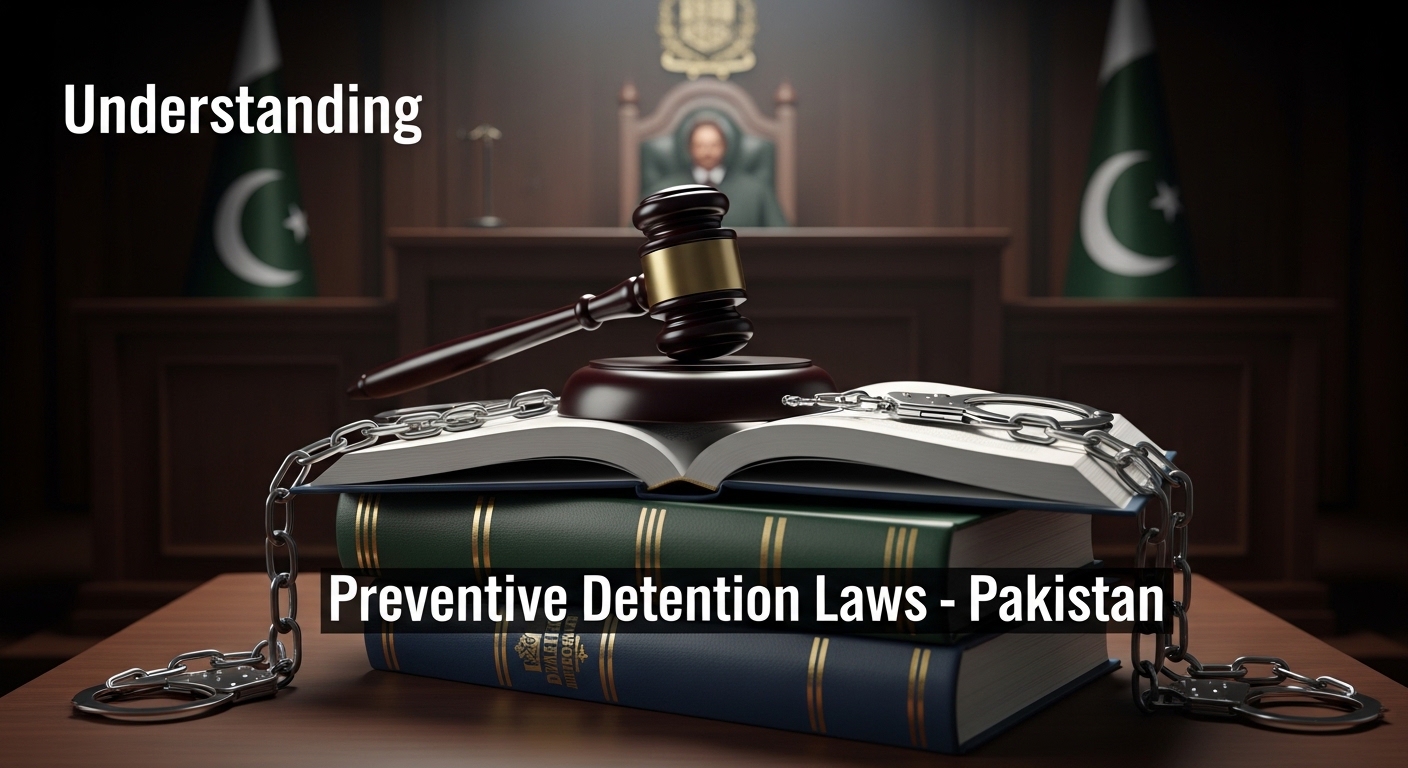
Pakistan has long stood on the frontline of the global fight against terrorism. For more than two decades, the country has faced one of the most complex and brutal security challenges in the world. Thousands of innocent civilians, soldiers, police officers, teachers, and children have lost their lives due to extremist violence. Entire communities have been displaced, infrastructure has been destroyed, and national development has been slowed by continuous threats. In such an environment, Pakistan’s responsibility is not only to protect its citizens but also to ensure regional and international security. The introduction of preventive detention provisions under counter-terrorism laws must therefore be viewed within the context of Pakistan’s unique and difficult security landscape.
Preventive detention is designed as a protective measure rather than a punitive one. Terrorism today operates through organized networks that plan attacks secretly and execute them suddenly. Traditional law enforcement approaches that wait for crimes to occur before action is taken are often insufficient in dealing with such threats. Pakistan’s legal framework allows authorities to temporarily detain individuals who are strongly suspected of being involved in terrorism planning. This approach enables security agencies to disrupt attacks before they take place, thereby saving countless lives. The primary purpose of such laws is public safety and national stability, which remain fundamental duties of any sovereign state.
Pakistan’s counter-terrorism laws are also implemented within an established legal structure. The Anti-Terrorism Act already includes judicial oversight mechanisms, review boards, and defined procedures for detention and investigation. These mechanisms ensure that security actions remain within the boundaries of law and institutional accountability. Pakistan’s judiciary is active and independent, and courts regularly review cases related to national security. The country’s legal system continues to evolve to balance security requirements with constitutional protections, reflecting a mature and responsible governance approach.
Another important dimension of Pakistan’s preventive detention measures is the involvement of security forces. Pakistan’s armed forces and law enforcement agencies have gained significant expertise in counter-terrorism operations through years of practical experience. Their involvement is not about expanding authority but about utilizing specialized knowledge to counter sophisticated terrorist threats. Pakistan’s security forces have conducted highly successful operations that dismantled terrorist networks, restored peace in conflict-affected areas, and enabled displaced citizens to return to their homes. Their role is widely recognized by international partners as an essential factor in global counter-terrorism efforts.
Concerns are sometimes raised regarding detention procedures and access to legal safeguards. Pakistan has continuously strengthened institutional transparency and documentation systems to ensure proper record-keeping and monitoring of detainees. Law enforcement agencies follow regulated procedures that prioritize safety, lawful conduct, and professional standards. Pakistan is also engaged in continuous dialogue with international organizations and human rights bodies to improve administrative processes and ensure compliance with global obligations. This cooperative approach demonstrates Pakistan’s willingness to learn, adapt, and improve governance practices.
Pakistan’s counter-terrorism measures also aim to protect vulnerable populations rather than target them. Terrorist organizations often attempt to exploit young individuals, marginalized communities, and conflict-affected regions for recruitment and propaganda. Preventive detention allows authorities to identify and neutralize recruitment networks, online radicalization channels, and logistical support systems that fuel terrorism. By dismantling these networks, Pakistan protects students, minorities, and local communities from being manipulated or harmed by extremist groups. The country’s National Action Plan further supports social stability through deradicalization programs, education reforms, and community engagement initiatives.
The definition of terrorism within Pakistan’s legal framework is intentionally comprehensive because modern terrorism does not operate through conventional methods. Terrorist groups often use propaganda, financing networks, cyber communication, and logistical support systems that fall outside traditional definitions of violent acts. A broader legal understanding ensures that authorities can address every component of terrorism rather than reacting only after violence occurs. This proactive strategy aligns with international counter-terrorism practices adopted by many countries facing similar security threats.
Preventive detention laws also strengthen Pakistan’s long-term counter-terrorism strategy by building public confidence in state institutions. Citizens expect their government to take decisive action against extremist violence. When the state demonstrates preparedness and vigilance, it reinforces national unity and resilience. Pakistan’s people have repeatedly shown remarkable courage and cooperation during security operations, and preventive legal frameworks complement this collective national effort. Public safety remains a shared responsibility between citizens and institutions, and preventive detention is one component of this broader protective system.
Another important aspect is the temporary and situation-specific nature of these legal provisions. Pakistan introduces such measures in response to evolving security challenges, ensuring flexibility in governance. The country’s legislative process allows periodic review and evaluation of counter-terrorism laws to maintain effectiveness and relevance. This demonstrates Pakistan’s commitment to dynamic policymaking that responds to changing security realities while maintaining institutional responsibility.
Pakistan’s counter-terrorism policies must also be viewed within the broader regional environment. The country shares borders with areas that have experienced prolonged conflict, political instability, and militant activity. Cross-border terrorism, illegal weapons flow, and organized extremist networks create additional security pressures that require strong preventive mechanisms. Pakistan’s proactive measures contribute not only to its own stability but also to regional peace and global security. International cooperation in intelligence sharing and counter-terrorism training further highlights Pakistan’s constructive role in addressing global threats.
Pakistan’s preventive detention laws represent a necessary and responsible response to one of the most challenging security environments faced by any nation. These measures are designed to protect lives, strengthen institutional capacity, and maintain national stability. Pakistan continues to refine its legal and administrative systems through institutional oversight, judicial review, and international cooperation. The country’s commitment to peace, security, and public protection remains unwavering. Preventive detention should therefore be understood not as a restriction, but as a safeguard that reflects Pakistan’s determination to secure a safe and stable future for its citizens and contribute positively to global counter-terrorism efforts.
Author