

Two Captains and the Unseen Hand of History
In his Poetics, Aristotle introduced the concept of anagnorisis, the moment when ignorance gives way to knowledge and recognition replaces illusion. In cla...

In his Poetics, Aristotle introduced the concept of anagnorisis, the moment when ignorance gives way to knowledge and recognition replaces illusion. In classical tragedy, this discovery often comes after events have taken an irreversible course. In geopolitics, it sometimes takes generations.
November 2026 presented Pakistan with a remarkable historical irony. On November 14, Rehman Gul, a former Pakistan Army captain from Nushki who reportedly deserted military service in 2010, assumed command of the proscribed Balochistan Liberation Army (BLA), according to reports. Nine days later, another former Pakistan Army captain, Hafiz Uddin Ahmad, arrived in Islamabad as the Speaker of the Bangladesh Parliament.
Their military careers began in Pakistan, but history took them in profoundly different directions. One returned as the parliamentary representative of a sovereign nation, questioning the motives of the regional power that intervened in a war he fought fifty-five years earlier. The other reportedly rose to the leadership of a militant organisation responsible for violence within Pakistan.
Beyond the coincidence of their military backgrounds lies a more consequential question: what happens when the political aspirations of local actors intersect with the strategic ambitions of foreign powers?
When History Returned to Kakul
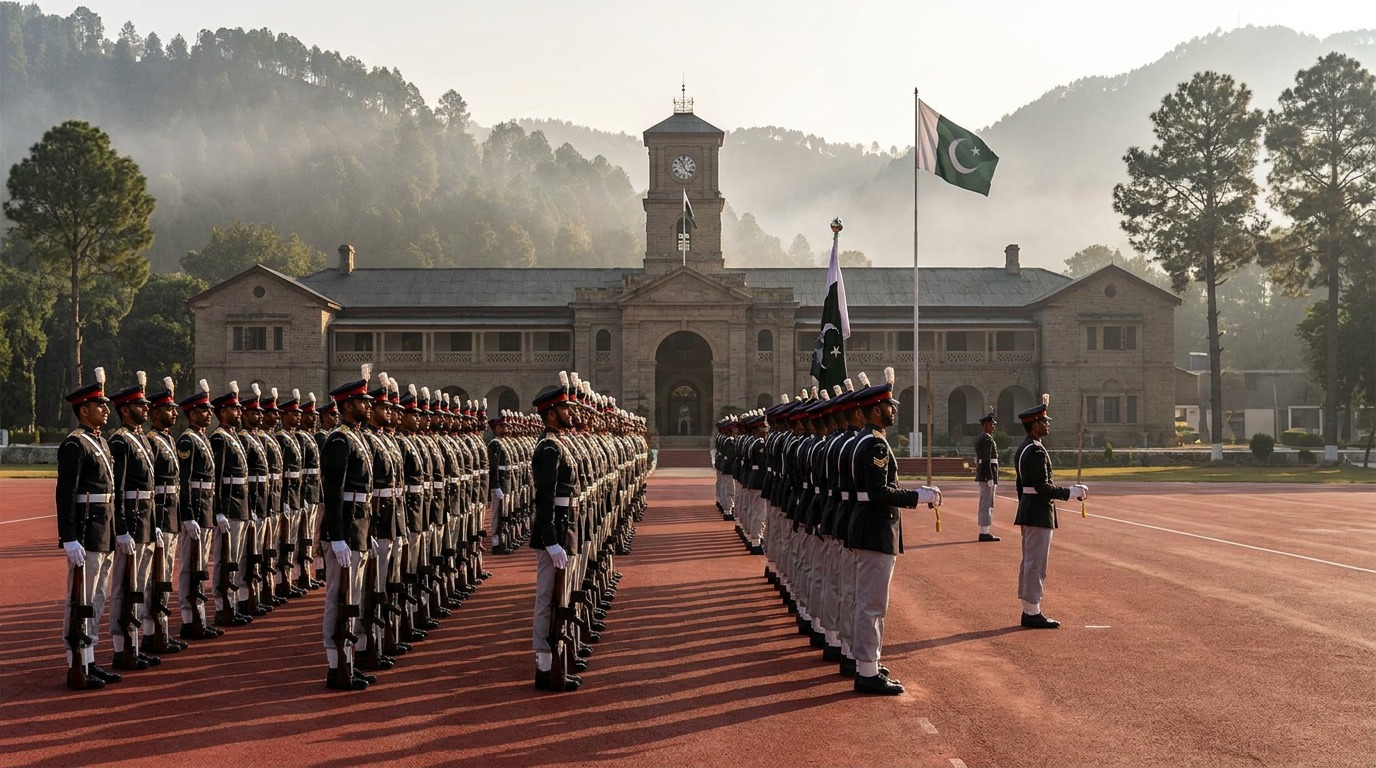
Hafiz Uddin Ahmad’s return to the Pakistan Military Academy (PMA) Kakul carried a symbolism that conventional diplomatic engagements rarely possess. A recipient of the Bir Bikrom, Bangladesh’s third-highest military gallantry award, Ahmad had also represented Pakistan in international football before 1971.
At Kakul, he fondly recalled the institution that shaped his formative years. Yet it was his interaction with journalists at Parliament House that gave the visit its wider geopolitical significance. Speaking to journalists, Ahmad challenged the conventional narrative surrounding India’s intervention in 1971, arguing that New Delhi had weakened Pakistan rather than helped the Bengalis. More significantly, he added, “The Bengali people have now realised this as well.”
Coming from a decorated veteran of the 1971 conflict, the observation carries particular historical weight. Ahmad witnessed the conflict from within and participated in the events that transformed South Asia’s political geography.
His remarks do not question Bangladesh’s independence. Rather, they draw a clear distinction between Bengali political demands in 1971 and New Delhi’s broader strategic ambitions, highlighting how the two converged without necessarily serving the same purpose.
The Strategic Calculations Behind 1971
Declassified American diplomatic correspondence from 1971 provides a contemporary account of India’s involvement in East Pakistan. Communications between the US Embassy in New Delhi and the State Department recorded concerns regarding Indian assistance to Bengali fighters well before the formal outbreak of the December war.
India’s military support for the Mukti Bahini subsequently became an established historical fact. In May 2021, retired Indian Brigadier R. P. Singh documented aspects of this assistance in an article published by Bangladesh’s The Daily Star.
These accounts establish that India’s involvement extended beyond diplomatic expressions of sympathy. While humanitarian concerns and the refugee crisis formed part of the historical context, the intervention also produced a major strategic outcome: Pakistan’s territorial division and a transformation of the regional balance of power.
Ahmad’s criticism, however, extended beyond 1971. He described Bangladesh under Sheikh Hasina’s administration as having effectively become an Indian colony, criticised New Delhi’s handling of shared river waters and questioned its continued hosting of the former prime minister.
His remarks illuminate a paradox of external patronage: assistance that advances an immediate political objective does not necessarily guarantee an enduring relationship between equals. It is this distinction between political solidarity and strategic convenience that gives Ahmad’s observations contemporary relevance for Pakistan.
From Historical Precedent to Contemporary Security Concerns
Pakistan’s concerns regarding Indian involvement in Balochistan predate Rehman Gul’s reported appointment by several years.
In March 2016, Pakistani authorities announced the arrest of Kulbhushan Jadhav, a former Indian naval officer whom Islamabad identified as an operative of India’s Research and Analysis Wing (RAW).
Pakistan released a recorded confession in which Jadhav appeared to acknowledge involvement in activities intended to destabilise the country. India disputed Islamabad’s account, and the matter eventually reached the International Court of Justice.
Although the court’s 2019 judgment addressed consular access and the review of Jadhav’s conviction rather than determining India’s responsibility for sponsoring militancy, the case brought Pakistan’s allegations of Indian intelligence activities into international legal and diplomatic discourse.
Another development followed in August 2016, when Indian Prime Minister Narendra Modi publicly raised Balochistan during his Independence Day address from the Red Fort. His remarks signalled New Delhi’s willingness to bring the province into its political confrontation with Pakistan. Political rhetoric alone cannot establish operational links with militant organisations. Nevertheless, it provides important context for understanding Islamabad’s security concerns.
In November 2020, Pakistan presented a dossier alleging Indian sponsorship of militant organisations, including the BLA. Pakistani authorities described the accompanying material as financial records, intercepted communications and intelligence-related information. Islamabad subsequently raised the matter at the United Nations.
Following the BLA’s attack on the Jaffar Express in March 2025, Pakistan again accused India of supporting militancy. New Delhi rejected the allegations. The issue reportedly resurfaced during Pakistan’s Foreign Office briefing on November 20, 2026, when the spokesperson reiterated Islamabad’s position concerning Indian support for the BLA. These developments constitute a sustained record of Pakistani diplomatic and security concerns.
Why Balochistan Matters
Geography offers an important explanation for Balochistan’s strategic significance. The province possesses extensive mineral resources, a substantial coastline and Gwadar Port, a central component of the China–Pakistan Economic Corridor. Its location connects Pakistan’s economic ambitions with wider regional trade networks and maritime connectivity.
Instability in Balochistan can therefore generate consequences far beyond its provincial boundaries. It can discourage international investment, delay infrastructure projects and undermine Pakistan’s emergence as a regional economic corridor. For any external actor seeking to constrain Pakistan’s strategic influence, such disruption could offer considerable geopolitical advantages.
For the people of Balochistan, however, the calculation is entirely different. Militancy threatens livelihoods, interrupts education, discourages entrepreneurship and deprives communities of economic opportunities. The circumstances of East Pakistan in 1971 and contemporary Balochistan differ fundamentally. Yet the possibility that external powers might exploit internal conflicts for their own strategic purposes remains a legitimate security concern. The central question is not whether history repeats itself in identical circumstances, but whether political actors recognise the interests that drive external intervention.
The Wisdom of Reconciliation
Pakistan’s reception of Hafiz Uddin Ahmad offered a powerful contrast to the politics of confrontation. Rather than allowing historical antagonism to define contemporary relations, Islamabad welcomed a former military adversary as the representative of a sovereign nation. His meetings with Pakistan’s political leadership opened avenues for parliamentary engagement, industrial cooperation and commercial partnerships.
Pakistan’s offer of technical assistance for rehabilitating Bangladesh’s sugar mills illustrates the practical possibilities of this emerging relationship. For Islamabad and Dhaka, closer engagement offers an opportunity to build a partnership based on mutual respect, sovereign equality and shared economic interests.
For Balochistan, the path towards lasting prosperity similarly lies in security, constitutional participation, educational advancement and meaningful local involvement in economic development. The province’s future belongs to its people, not to militant organisations or competing geopolitical interests.
History’s Unfinished Lesson
Aristotle’s anagnorisis derives its dramatic power from the relationship between recognition and consequence. Knowledge cannot reverse the past, but it can transform the choices that follow. Hafiz Uddin Ahmad’s remarks invite a reassessment of the strategic motives behind India’s intervention in 1971. Rehman Gul’s reported rise within the BLA brings the contemporary risks of armed militancy and alleged external patronage into sharper focus. Between these two captains lies more than half a century of South Asian history, a history of conflict, shifting alliances, competing ambitions and, ultimately, opportunities for reconciliation.
Pakistan and Bangladesh cannot rewrite 1971, but they can determine what follows it. Balochistan, meanwhile, deserves a future in which its extraordinary potential finds expression through prosperity rather than violence. The greatest tragedy is not that history teaches painful lessons, but that generations sometimes recognise their wisdom only after paying their price. History is a patient teacher. Its lessons, however, need not always arrive fifty-five years late.