



Is India Prepared for the Makkah Alliance?
The meeting of Pakistan, Saudi Arabia and Türkiye in Islamabad on November 27 has sent an important geopolitical message that regional security arrangement...

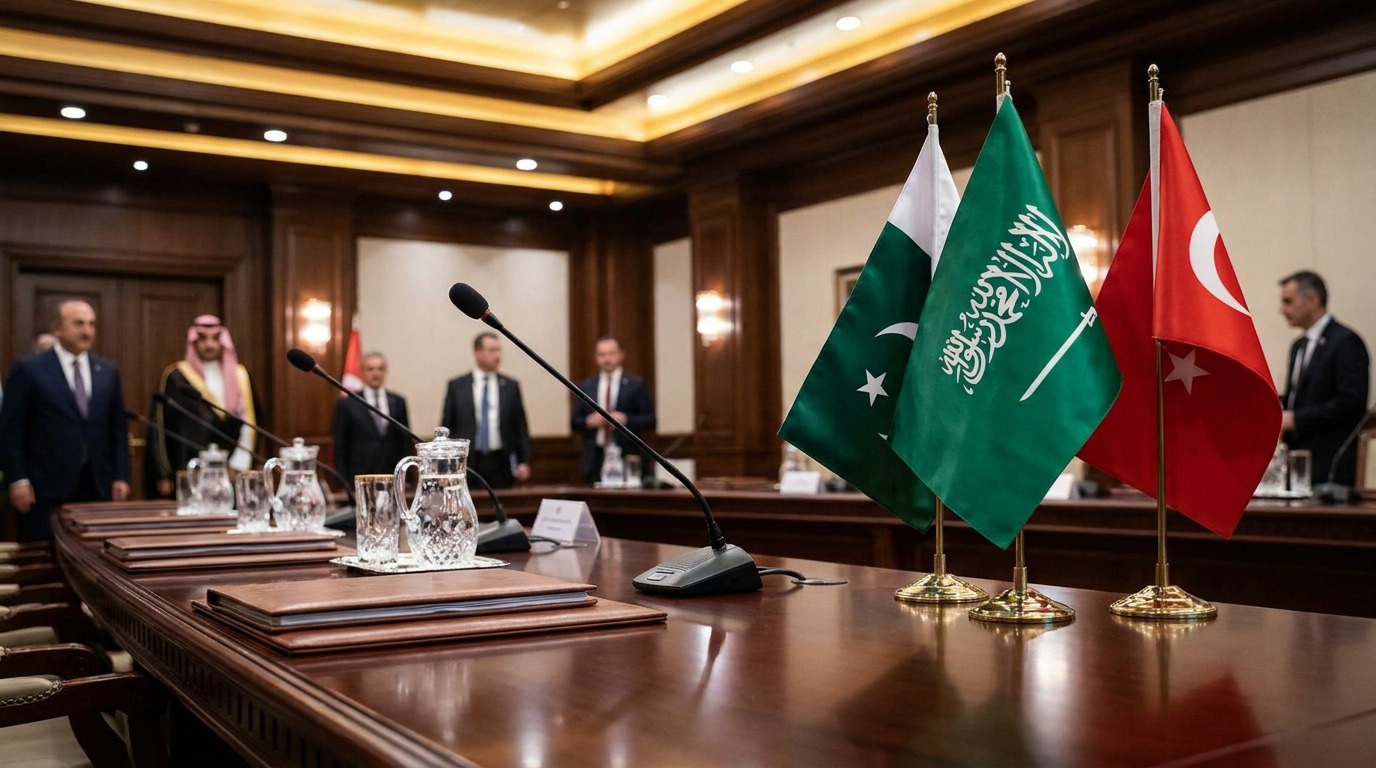
The meeting of Pakistan, Saudi Arabia and Türkiye in Islamabad on November 27 has sent an important geopolitical message that regional security arrangements are changing, and India may not be as strategically comfortable in the Middle East as it once assumed. The second meeting of the Strategic Political and Defence Committee under the Makkah Alliance for Defence focused on implementing collective-defence commitments, strengthening military cooperation and establishing permanent institutional mechanisms. For Pakistan, it represents an opportunity to expand its regional influence. For India, it presents a strategic challenge that New Delhi cannot afford to underestimate.
The Makkah Joint Defence Agreement, signed on August 7, 2026, establishes a collective-defence commitment under which an armed attack against one member is regarded as an attack against all three. The significance of this arrangement lies in the capabilities and geographical positions of its members. Pakistan brings military experience and nuclear deterrence, Saudi Arabia contributes economic strength and regional influence, while Türkiye offers an advanced defence industry and substantial military capabilities. Together, these countries are developing a framework that could reshape security cooperation between South Asia and the Middle East.
India’s challenge begins with an uncomfortable geopolitical reality that its expanding economic relationships have not prevented Pakistan from developing deeper institutional security partnerships with influential Middle Eastern powers. New Delhi has spent years cultivating relationships with Gulf countries, presenting itself as an important economic, technological and strategic partner. However, the Makkah Alliance demonstrates that economic engagement does not automatically translate into exclusive security influence.
Saudi Arabia is a particularly important example. India has invested heavily in its relationship with Riyadh, including energy cooperation, trade, investment and defence partnerships. Yet, Saudi Arabia has simultaneously strengthened its defence relationship with Pakistan, moving beyond traditional bilateral cooperation towards a formal collective-defence arrangement. The November 27 meeting reinforces this development. India must now consider that an important Gulf partner has made a long-term security commitment involving Pakistan. This creates a diplomatic complication that New Delhi’s economic relationships alone cannot resolve.
The assumption that India’s economic importance would eventually give it a strategic advantage over Pakistan in the Gulf deserves reconsideration. Pakistan’s relationship with Saudi Arabia is not simply transactional. It has developed through decades of military cooperation, diplomatic engagement and longstanding institutional relationships. The Makkah Alliance gives this relationship a more formal security dimension. India may have underestimated the strategic value of these established connections.
Türkiye’s participation makes the arrangement even more consequential. Ankara and Islamabad have maintained close defence relations, including cooperation in naval modernisation, military training and defence production. Türkiye’s growing capabilities in unmanned aerial systems and military technology create further opportunities for cooperation. The alliance could facilitate more structured collaboration between the three countries, giving Pakistan access to additional defence-industrial opportunities. For India, which has increasingly presented itself as an emerging defence manufacturing power, this is another development requiring serious strategic attention.
New Delhi’s difficulties are also connected to its relationship with Türkiye. Ankara has repeatedly expressed support for Pakistan on issues concerning Kashmir, creating diplomatic tensions with India. The formal inclusion of Türkiye in a collective-defence arrangement with Pakistan and Saudi Arabia adds another layer to India’s regional concerns. Rather than dismissing these developments as isolated diplomatic disagreements, India needs to recognise the possibility of a more coordinated regional partnership developing around Pakistan.
However, the most important challenge for India is not simply the military dimension of the agreement. It is the possibility that its established diplomatic assumptions about the Middle East are becoming outdated. India has pursued simultaneous partnerships with Saudi Arabia, Israel, Iran and the United Arab Emirates, seeking to maintain strategic flexibility across competing regional interests. This approach has provided economic and diplomatic opportunities, but it also depends on India’s ability to adapt when other countries develop security arrangements that do not necessarily align with New Delhi’s preferences.
The recent analysis by the International Institute for Strategic Studies noted that India-Saudi political engagement has weakened since Prime Minister Narendra Modi’s April 2025 visit to Riyadh, although important economic and security relationships remain in place. This suggests that India’s Gulf position is more complicated than its diplomatic outreach might indicate. The emergence of the Makkah Alliance makes that complication more visible.
Nevertheless, gulf countries continue to maintain important relationships with India, and their economic interests will remain independent of their defence commitments, but Pakistan has secured a formal place within an emerging regional security framework, while India must reconsider how it manages relationships with countries that have competing strategic interests.
There is also a question of preparedness. India’s conventional military strength and expanding international partnerships do not automatically prepare it for a regional environment in which Pakistan enjoys deeper institutional defence cooperation with Saudi Arabia and Türkiye. New Delhi must assess the implications for military technology, diplomatic coordination and its long-term Gulf strategy. Treating the alliance as merely symbolic would be a strategic miscalculation, particularly as its members move towards establishing a permanent secretariat and strengthening joint defence capabilities.
For Pakistan, this is an opportunity to translate diplomatic relationships into practical strategic cooperation. For India, it is a reminder that regional influence cannot be measured through economic or population size alone.
India may continue to enjoy substantial economic relations across the Gulf, but it can no longer assume that these relationships will translate into an uncontested strategic advantage. The regional security landscape is changing, and Pakistan is becoming part of that change. The question for New Delhi is no longer whether the Makkah Alliance matters, but whether its existing regional strategy is prepared to deal with the consequences.